Episode 171: How to Build a Homestead from Scratch | Lifestyle, Gardening & Real-Life Skills
- Homestead Education Team
Episode Highlights
Homesteading isn’t just about land, animals, or how much you can produce. It’s about the mindset, lifestyle, and intentional choices behind how you live.
And the truth is, more people than ever are craving a slower, more self-sufficient life… but many feel like they don’t have enough land, time, or experience to even begin.
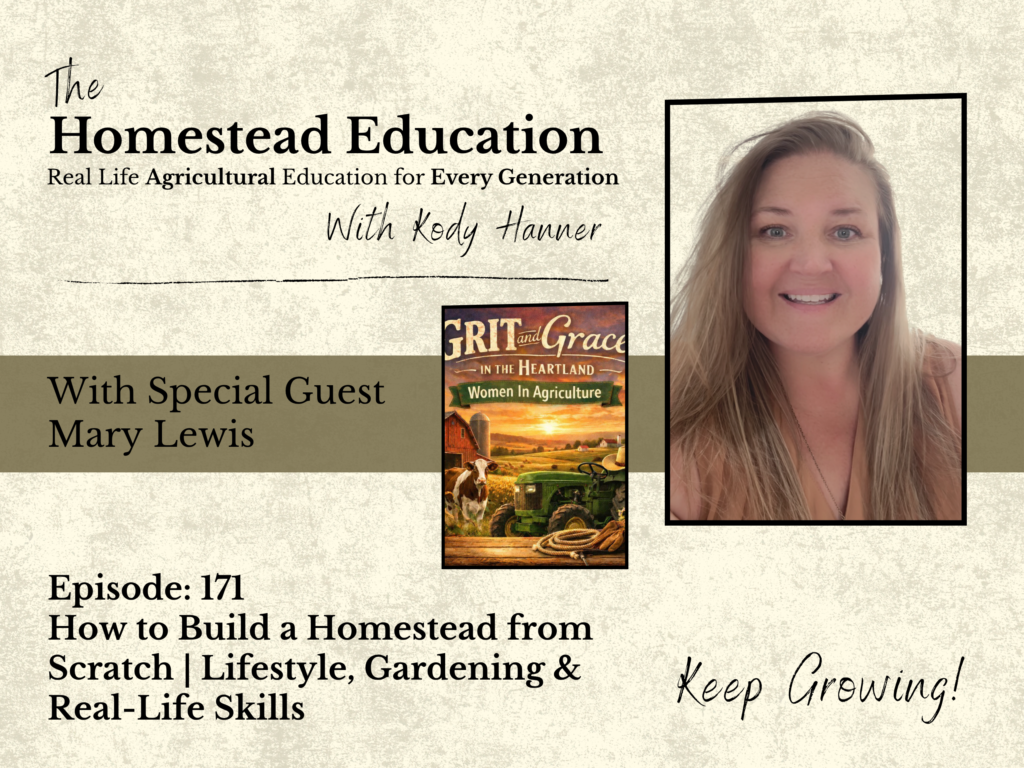
In this episode of The Homestead Education Podcast, Kody Hanner sits down with Mary Lewis — host of A Tiny Homestead Podcast & Grit and Graceland in the Heartland Podcast to have an honest, real-life conversation about what homesteading actually looks like day-to-day.
From starting a homestead later in life to navigating gardening challenges, empty nesting, and building a life rooted in purpose, Mary shares her journey of stepping away from “city living” and into a more intentional, self-sufficient lifestyle.
Together, they talk about the realities of gardening, raising food, learning new skills, and redefining what it means to “be a homesteader” — whether you have acres of land or just a small backyard.
This isn’t just a conversation about homesteading.
It’s about learning to live differently with purpose, creativity, and a willingness to grow.
If you care about:
- Starting a homestead later in life
- Building a self-sufficient lifestyle without overwhelm
- Growing food in any space (big or small)
- Learning homesteading skills step-by-step
- Balancing real life with homestead goals
- Finding joy in simple, everyday living
This episode will remind you that homesteading isn’t about perfection. It’s about progress.
In This Episode, We Cover:
- Mary’s journey to starting a homestead at 50
- Why homesteading is a mindset, not a measure of land or animals
- The transition from city living to rural life
- Real-life gardening challenges (weather, timing, and expectations)
- How homesteading looks different in every season of life
- The importance of starting small and building skills over time
- Balancing homestead work without burnout or overwhelm
- The role of community in modern homesteading
- Why learning to cook is a foundational homesteading skill
- Simple ways to begin growing and preparing your own food
Podcast Links and Resources
If you enjoyed this conversation, be sure to connect with Mary and follow along with her work.
🎙️ Podcasts: Grit and Grace in the Heartland | A Tiny Homestead
🌐 Website: Grit and Grace in the Heartland
📘 Facebook:
Mary Lewis
Grit and Grace in the Heartland – Women in Agriculture
Kody's Links
Homestead Education Curriculum:
https://thehomesteadeducation.com
Shop Books & Resources:
https://thehomesteadeducation.com/shop
Join the Email List for Resources & Updates:
https://www.thehomesteadeducation.com/subscribe
Instagram:
https://www.instagram.com/homestead_education
Facebook:
https://www.facebook.com/thehomesteadeducation
TikTok:
https://www.tiktok.com/thehomesteadeducation
YouTube:
https://www.youtube.com/@homesteadeducation
ShowHide Full Transcript
Introduction
Hi everyone and welcome back to the Homestead Education Podcast. Today I have my friend Mary Lewis from A Tiny Homestead Podcast on and we are just going to talk all things homesteading and I’m really excited to have this chat because I’ve been really diving into the agriculture end of things and I really talk about specific things on the homestead but I haven’t really had a chance to just chat with somebody about our homestead, how our homesteads run. So thank you for joining me today, Mary.
You’re welcome. Thank you for having me, Kody. I appreciate it.
Yeah, I’ve been really excited for this chat. Do you want to just give everybody a little bit about you and we’ll kind of go from there.
Starting a Homestead Later in Life
Okay, I am 56 years old. I always say that because people are like, you started a homestead when you were 50, what? So 56 now. And my husband and I live in Le Sueur, Minnesota in the middle of basically cornfields and soybean fields. Our nearest neighbors are about a quarter mile away, which is miraculously wonderful.
And we have chickens, have barn cats, have a farm to market garden, and we have the most perfect dog in the entire world.
I always love that. We have six dogs right now, but we just lost our Great Pyrenees and had to replace them and I’m very, very sad about that.
It’s so hard when you lose a love of your life.
Absolutely. So you started a homestead at 50, but I love that. So tell me what prompted you to make that change.
Okay, the honest truth is I just didn’t want to live in town anymore.
Leaving City Life Behind
Our neighbors literally—the house to the right of our house in town—you could stand between the two houses and touch the outside walls with your fingertips.
Oh my gosh, I just got that anxiety.
And the neighbor to the left—we could literally chat with her from her kitchen window while she was doing dishes and we were sitting on our porch drinking coffee.
I go to the city for the weekend and I’m like nope, I’m out. Can’t wait to get back to my homestead where there’s no one around me.
We just wanted to have the room to stretch with the homesteading skills we had already learned.
Growing Up with Homesteading Skills
It’s so hard when people ask me why we did it, because I was brought up not knowing that homesteading was something that people didn’t do.
My parents had a house on an acre and they heated with a wood stove in the wintertime. We always had a garden. My mom was big on making use of what nature provides. When berries were in season, we were picking berries.
I didn’t know that everybody didn’t do this.
Yeah, I kind of grew up similar. We had a cattle ranch, processed our own meat, had a garden—that was just life.
Homesteading is a Mindset
Homesteading is a mindset and it’s a lifestyle choice. It’s not how much land you have. It’s not how many animals you have. It’s doing what you can with what you have where you are.
You could be a homesteader living in downtown Seattle.
Homesteading and self-sufficiency—that’s a sliding scale. You’re just moving that ticker a little bit.
Learning Skills & Starting Small
You don’t have to have a hundred acres and a hundred head of cattle when you first start. That’s not how this works.
People think if they want beef, they need a whole herd. The average family needs one beef a year.
That’s a ranch. That’s not a homestead.
First Experiences with Food Preservation
One of the first things we learned to do was making strawberry jam. My husband brought home flats of strawberries and we spent hours cutting them up and canning.
When we heard those jars ping and seal and saw the sunlight through that jam, I just felt like—we have arrived.
I vividly remember that.
The Beauty of Harvest & Abundance
When we first moved to our property, the grapes were ripe. We processed 500 pounds of grapes that week.
We weren’t even unpacked yet. It always feels so abundant.
We had cabinets full of canned goods—peach butter, tomato sauce, strawberry jam—and I was so proud.
When the sunlight hits those jars, it feels like jewels. I literally feel rich.
The Reality of Gardening
Gardening isn’t perfect. Some years are rough.
Sometimes life doesn’t allow you to start 500 plants. You just plant what you can.
There is no right or wrong as long as you have food that you’re growing.
Dividing Roles on the Homestead
I’m not the gardener. My husband is.
It’s his happy place. It’s where he feels most productive.
That’s how it worked out for us too. I’m the gardener, he’s the livestock guy.
The garden became my quiet place.
Finding Purpose Through Podcasting
We moved during COVID and I felt isolated.
I needed a project. I decided to start a podcast.
I wanted to have conversations with homesteaders, cottage food producers, and crafters who need to be promoted and get their voices out in the world.
Community, Teaching & Events
When I go to events, people are seeking me out. I know my place in the conversation.
But afterward, I need a reset. My social battery is drained.
Same here. I love it—but I need time to recover.
Homesteading Skills: Cooking & Food
If you can run your coffee pot, you can cook.
People think cooking takes an hour. It doesn’t. You can make dinner in 20 minutes.
It’s not that people can’t—it’s that they don’t want to.
There is absolute satisfaction in cooking food for your family.
Starting Where You Are
Start small. Dream big.
Pick one meal and get really good at it.
Healthy food isn’t more expensive—it’s just more work.
Keep Growing
What does “keep growing” mean to you?
Everything. If you’re not growing, you’re dead.
Final Thoughts & Public Service Announcement
Get to know your local growers and producers.
Support them. The supply chain can go down for many reasons.
If you know your local producers, you have everything you need.
Where to Find Mary
My podcasts are A Tiny Homestead and Grit and Grace in the Heartland.
They’re both on Apple and Facebook.
Closing
Well, thank you so much for coming on today. I super enjoyed this conversation.
It’s just living your life and doing what you do best.
Well, thank you so much.
All right, thanks, Kody.