
Episode 141: How to Control the Chaos of Adult ADHD with Jaclyn Paul

Episode Highlights
Solutions for controlling the chaos of adult ADHD can be as diverse as the people who manage it every day. Jaclyn Paul shares how she approaches ADHD with her family.
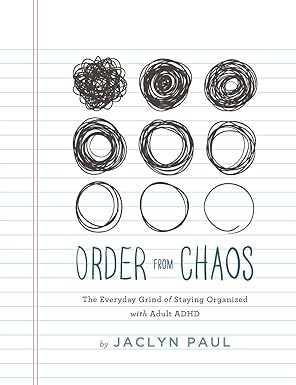
Jaclyn Paul lives in Baltimore with her family and is the author of the bestseller Order from Chaos: The Everyday Grind of Staying Organized with Adult ADHD.
Podcast Review
Did you enjoy this episode? Please drop a comment below or leave a review to let us know. This can help other folks learn about this podcast and we also really appreciate the feedback!
Podcast Links and Resources
Find Jaclyn: https://jaclynpaul.com/
Get Jaclyn’s ADHD Book: https://amzn.to/4m7e5tW
Comfort Crisis: https://amzn.to/3EToYi5
Little Critters Books: https://amzn.to/42IihIP
Getting Things Done by David Allen: https://amzn.to/43eZhBQ

Want to be a guest?
Want to book Kody as a guest?
Email: hello@thehomesteadeducation.com
Advertise on The Homestead Education Podcast:
Website: https://www.thehomesteadeducation.com/
Shop Curriculum: https://www.thehomesteadeducation.com/shop
Speaking Events: https://www.thehomesteadeducation.com/events
Facebook: https://www.facebook.com/thehomesteadeducation
Instagram: https://www.instagram.com/homestead_education
Watch episode on YouTube: https://www.youtube.com/@homesteadeducation
Read The Transcript!
Read MoreLess
Introduction
Hi, everyone, and welcome back to the Homestead Education Podcast. Today, I have a special guest. Her name is Jaclyn Paul, and she wrote a book called Order from Chaos, the Everyday Grind of Staying Organized with Adult ADHD.
And when I saw that title, I just knew that that was going to fit every conversation that we have on this podcast. So welcome, Jaclyn. Thank you.
Thank you. Yeah, I am mine. I started the book from a blog actually long ago called the ADHD Homestead, which is I think how you.
Did you find my book or the blog first? Homestead is the book, actually. But so it’s just so that’s actually how it’s been in the past several years is people find the book and then don’t realize, oh, you did a blog. So well, you know, I like the name the ADHD Homestead because it’s where you plant your feet, you know? Mm hmm.
Yeah, and it was kind of a lighthearted title at the time. They dispatches from the ADHD Homestead and is really about caring for you. Whatever size and shape your quote unquote homestead may be tending to it in the way that you want to, even if you have these struggles.
Early Love of Writing and “Gifted” Label
But so that’s how I got there was, you know, a long and winding road and writing is something I’ve always done. I was a kid in elementary school. They sent me when I was in first grade to the third grade reading class and this, this.
And interestingly, that gifted tag probably. But how are you doing now with that gifted and talented? Oh, my gosh. You know, there’s so many posts you’ll find online of, hey, here’s where the gifted kids are now.
And it is very interesting. Yeah. Well, at least I know about it now.
But yeah, it’s but there’s that constant pressure to live up to your potential. And when you do struggle, it’s maybe a little bit baffling to those around you. And if I look at my elementary school report cards and notes home from teachers, in hindsight, it’s so obvious what was going on.
But I was obviously a quote unquote smart kid, and I just wasn’t thriving in the environment. And I didn’t know how to be around the other kids. And at the time, I did not have siblings.
And that, I think, played into it as well, because I didn’t have that social testing ground at home. And then in kindergarten was the first time I really had to be around a lot of other kids and figure out how to navigate that. So anyway, by high school, I kind of suspected the ADHD thing because I had a boyfriend in ninth grade who was diagnosed.
And when he was telling me what it was like having ADHD, I was like, well, OK. I mean, that just sounds like. Life, but it’s but it was the early days of the Internet, so I was able to do a little bit.
Yeah, right. I was like, oh, that’s not the way things are supposed to be. I kind of, for many reasons, brushed it under the rug throughout college and stuff.
When Structure Disappears: Adulthood Hits
And then when I got out of college. Had my own house, had an office job for the first time in my life, that’s when it all sort of fell apart, and that’s where the ADHD Homestead blog and then later the Order from Chaos book, that’s where those were sort of born from is that moment of everything falling to pieces because I didn’t have. School was very structured.
And so you can figure out the formula to get an A or what you need to do day to day, show up to class, do this and that. But what once you’re out of college, there’s not a formula to get the easy A. There’s not. And I had coasted by being a really good underachiever in that I took the advanced classes in high school, but only in classes that I actually felt like doing more work in.
And, you know, and then later compared that to my sister took the guidance counselor’s advice and just stacked up all the AP classes and really struggled because some of those were subjects that she didn’t really care for. And so, yeah, it’s like I took honors trig, but I was not interested. Oh, my goodness.
Like that was the yeah. And for me, it was, yeah, trig trig geometry were. Very weak subjects for me and remain so my family kind of laughs at me for it, but.
Yeah, so but making your own schedule and your own accountability in adulthood is very hard. And then, you know, eventually I went through a winding path academically and professionally, and eventually I ended up back with writing when I published Order from Chaos, and then I published a novel a couple of years ago as well. So now I’m back where I began at age four with, which, you know, is funny because as I was doing my winding path in college, my mom was like, why don’t you just do something you’re good at? Well, don’t overthink it.
And then she suggested art, which. She was like halfway there because I should have done something I was good at, but I should have done writing English literature or something like that, but.
Majoring in the Wrong Thing
What did you end up majoring in? Visual arts.
Oh, which sounds close, but it’s it’s I am returning to the trig and geometry are my worst subjects. I’m not a visual person at all. So I knew how to work hard and try to meet expectations.
But I was very burned out by the end because of how much harder I felt like I had to work than.
Photographic Memory and the “Real World”
I feel like I can definitely understand that, because like when I was in high school and college, I have an almost photographic memory. Oh, wow.
So I didn’t have to really do homework or study. Even in college, like as a science major, I had ways that I could kind of skirt around the amount of work that everybody else had to do. Yeah.
And still be able to ace my classes. And yeah, then I get into the real world where I kind of have to work like that eight hour day. And I mean, and I did do like I went to. I got a job for several years and then went to college kind of later in my 20s.
And then but I still kind of shifting from working in a smaller office in a small town where you could just kind of get away with a little more, I guess, to suddenly working out in the real world and having to like commit to that eight hour a day and follow all the rules and be on time and be on time. And yeah, when I go to a meeting and then everybody takes their action items away and then you have to integrate those into your workflow. And it was yeah, that was a big yikes.
Because I don’t, I still don’t know how to study. I never learned how to study because I was a linguistic thinker. And so I was very good at stories and I could ace a multiple choice test very easily.
And I didn’t necessarily retain the information, but I was very good at writing about it and being tested on it within a short time span. Yes. So, yeah, but it’s interesting because I can see how.
I had an advantage because of the way our education system is set up, but I’m not the best learner I know, even if I was like among the best students in terms of being able to do what was asked academically.
Why We Homeschool
Well, that’s probably a big reason why we homeschool. Yeah, you can tailor it to because our kids were struggling with that.
They either had one that was very charismatic and was like a single in his classes and had no clue what they even talked about. Or then I had like my daughter who very much wants to do everything right and perfect, but her ADHD made it where she couldn’t. And she was a constant, like just an emotional wreck.
Yeah, that’s hard. Yeah. And school is if you have sensory because my kid has sensory sensitivities and school is very challenging that way, because even I’ve learned when they break up for group work in class and it’s just small groups and like what you and I might consider a normal level of like background chatter is just so overwhelming for him.
Mm hmm. And then he’s kind of losing his mind. And I’m like, well, OK, but this is a situation that you have to.
Learn how to be in and. But it’s like, yeah, and then if the work isn’t challenging enough and they get bored, it’s like they can’t corral themselves and all right. Some of these challenges are good to work on generally, but some of them it’s like this is learning how to deal with this really long term.
Teen Sensory Stuff, Conferences, and “Suck it Up, Buttercup”
I have a 16 year old son who’s autistic and ADHD, and he likes to go to my conferences with me. Well, there’s 10,000 people in a room all talking. And he’s like, it’s really overwhelming.
I just can’t handle it. And I’m like, yeah, this is kind of one of those points where you’re 16 and you wanted to come with me, suck it up, buttercup. Yeah, that’s I mean, that’s I was raised in a very different environment than I feel like we are.
And there was one’s intolerance for discomfort was not something that. Entered the conversation, shall we say? Yeah, it was just expected that you deal with it and certainly don’t make everybody else’s problem. And that has been an interesting negotiation because I say, all right, I know more.
I know how to be understanding. But also, there are times when you need to figure out how to deal with it yourself, because that’s putting the loopy plugs in or what. But yeah, sometimes you’re going to walk into a restaurant and there are people talking at other tables.
And, you know, you could never go out to eat. But what if somebody is having a thing that you really want to go to? So just yeah, that’s kind of where we’re at. I can’t express that that bothers you. But there’s certain things in life that require you to be in uncomfortable situations.
Discomfort vs. Character Building (The Comfort Crisis)
Yeah, it’s actually discerning when that’s bad and when it’s just like character building. Have you read the book, The Comfort Crisis? No, but it sounds like one that I would want to read. It’s very good.
He’s a reporter, but he just kind of talks about how as a nation, like we are allowed to be too comfortable. Everything is too convenient and how you kind of have to push through that for your own betterment. Yeah, yeah, it’s really good.
And he talks about being on a caribou hunt in North Alaska where they’re living in like tents and negative 30 degree weather. And it’s like a trip of a lifetime.
Teaching Kids When to Push Through
Yeah, that’s an interesting one, because and especially for, you know, kids, ADHD, autism, there’s a lot of stuff that is uncomfortable and there is an ethos now, I think, among parents of our generation that, well, don’t don’t teach kids to override their discomfort because your instincts about what you need are important and we were taught to suppress those. And, you know, it’s like, well, that’s true. But there’s a discernment of when do I need to push through this to give myself the rote knowledge that I can do it? And when am I uncomfortable because something bad is happening? And to me, that’s two very different things.
And even we climb and climb. I’m like, all right. So there are times when you’re feeling fearful.
Because there’s a situation that’s not good and you should listen to that. And there are times where you’re like. Oh, this is scary and I might fall.
But it’s not. It’s not dangerous to fall at that point. You know, the person, somebody, you know, the ropes going to catch you or whatever.
But that’s been an interesting mental training ground for me. Oh, there are times when I’m afraid to tell you not to go any further. And then there are times when the fear is just innate and something that you have to teach yourself that, oh, it’s OK.
It’s OK to do something, even though it’s uncomfortable. And, you know, trying to teach that was very.
Farm Chores in the Cold
We see that a lot with the kids on the farm, because we live in North Idaho.
It gets very cold here. And there’s farm work that needs to be done no matter what the temperature is. And our son, he’ll like our one son that’s the most sensitive to that.
You know, like he’s almost 17 years old now and he’s out there like my hands are cold. My hands are cold. And it’s like, I don’t know what to tell you.
Yeah, well, there’s a difference between being uncomfortable, cold and well, and here. So in Maryland, it’s not usually dangerously cold. And so I’ve I’ve I know some friends locally who really enforce, you know, between these temperature ranges, you need to wear a jacket.
And I’m like, I’m not going to do that. If you’re just going outside to play and he gets too cold. Big deal, but then it’s if we’ve actually lived in places where they didn’t stop recess until it was negative 15.
So, wow. You see, they stop recess, outdoor recess. I think too soon here that I’m like, oh, come on.
If it’s 30 degrees, the kids can definitely go outside, like put them out because the school building is right there. If somebody gets too cold, like when I just go in. But I feel like, you know, it’s on the farm.
You know that at the end of the you know, at the end of the task, you’re going inside where it’s warm. Like this house is right there. It’s fine.
Now, if we’re skiing in northern Vermont, I’ll like it very much. Strict, because I’m like, all right, all day. Yeah.
And I’m like, OK, this is actually if you don’t do it right, it’s dangerous. And so you need to put the right gear on or else you could, you know, have a real problem. But yeah, it’s if or if you like to go off the wrong way and get stranded or lost or something or yeah, and you’re laying in the snow for hours.
The margin of error is just much smaller. But if for me, I’m like, well, if inside is right there and you can go back in after you’re done the thing out in the cold, then, you know, then that’s just a time. Yes, it’s cold.
But I actually wrote a book. I love the cold. I wrote a book called Raising Self-Sufficient Kids.
And I actually do cover a big section on that where like sometimes they’re just going to be uncomfortable and that’s OK. Yeah. Sometimes they need to make the mistake, too, if you say, you know, well, you have to put a certain kind of shoe on your foot to do this job.
I mean, yeah, not if you’re going to lose a toe if something goes wrong. But well, like my five year old who hates blisters but refuses to put on socks. I’m like, he’ll figure it out.
That’s the cost of doing business. Or the other day when I had videos of him playing in the snow in muck boots, swim trunks and a tank top. Which, yeah, I used to carry a jacket with me when he was really small, because I’m like, well, I want people to know that I tried to provide a jacket.
If I’m out somewhere, you know, in public where people are like, doesn’t that child have a jacket? And I yeah, you just didn’t feel like wearing it. And, you know, it’s some kids, everything is a battle and you really have to choose which ones are and then. Let the rest go, let them learn.
But absolutely. Yeah. It’s hard to make mistakes sometimes.
If you don’t want to wear a jacket, don’t wear a jacket. Yeah. But then don’t complain.
Yeah, that too.
Chaos to Control: Family Method
Yeah, I love this chat about the kids, because I mean, especially like I said, in homesteading, we do a lot of things that are uncomfortable. And even as homeschoolers, because I don’t make them go to school and be in those uncomfortable situations.
But I also I’m like, you’re going to be learning in a whole different way. And we’re going to push those limits without it having to be that really uncomfortable, like in front of your peers. Yeah.
But what led you to write this book? Because I love order to chaos. We actually do things in the house. We call it chaos to control.
And we like to put a board up and we list all the chaotic things that are happening in the house that are bothering people or making life not run right, because, you know, things get out of order. You know? Yeah. And then everybody sits down and they take ownership over one thing that they’re going to put into control.
And then we write it up and put it in the fridge and we follow that until it gets out of control again. I love that, actually. Yeah.
When I like that, you said it’s making things not feel good, because I did at the time that I wrote the book. Not as many people were talking about this sort of mundane experience of a quote unquote regular adult with ADHD. We had a lot of 20 something influencers and then.
It always feels a little late. I’m like, yeah, I have adult ADHD, ADHD. They’re like, sure.
Yeah, well, I got that. But you’re so smart. And I’m like, well, that’s not mutually exclusive, actually.
But yeah, so I’m actually worse. I’m so smart. And like a million different directions.
Well, exactly. And like having an aptitude for a lot of things, then you really have to be able to narrow the focus in a way that I’ve not I’ve not always succeeded in doing.
Why She Wrote the Book
But I yeah, so I just wanted to write for people who wanted to bring things in like a little bit more under control and who that I mean, there’s and there still is a lot of that affirmational messaging about like, yeah, let it go.
Things can be a little messy or you don’t have to conform to all of society’s expectations, which is helpful in some ways. But I’m like, actually, my mental state goes the way of the clutter in the house. And I didn’t want to be living in a big mess.
And so my message was, it’s OK if you want to be living differently than you are, even if someone’s telling you, oh, you should just accept who and how you are. And yes, but gain the self-knowledge and. Bring things into a level of order that ownership in your in like advocating for yourself.
Yeah, because I wouldn’t. I wasn’t happy. And I also because it’s the kind of thing I do. I mean, I had like months of unopened mail piled up.
And meanwhile, I had decided I wanted to replace the plaster in one of our bedrooms with drywall. And so I knocked down all the walls, got rid of the plaster. And my husband was like, well, but what’s your plan for having walls in the room? I was like, I don’t I mean, I don’t know.
Just get drywall and put it up. And he was like, ah, I didn’t. I’m not good.
I’m not laughing at you. I’m laughing with you right now. Right.
I just think it’ll just happen. We’ll do it. But I tend to think of a job like that as.
One thing like, oh, yeah, hang the drywall. It’s actually a big, big multi-step project, and it’s something that’s a little bit more fussy and detail oriented than I’m really suited for. So that room sat stripped down to the studs for over a year.
And at some point I was like, well, I’m paying a mortgage on a three bedroom house and I made it into a two bedroom because I just have this construction zone that I and stuff like that I just didn’t feel good about. You know, I would get back then we had to submit for reimbursements for work expenses and then they would cut you a check. And I would just forget to deposit those checks until they expired.
And then I would have to ask my employer for a new check or depending on the amount, I might have been a little too embarrassed and decided like, I’ll just let that one go. I’ll ask for it. So it’s all these things.
It was like really cutting into my quality of life. And it’s like all these little ways that it was costing me literally and figuratively. And so, yeah, the book is a little bit of a story about how I brought all that chaos under control and then hopefully, you know, helpful advice for others to chart their own path.
Family Ownership Example (Messy Floor)
I love that, because, yeah, like I said, we definitely acknowledge like I said, as a family, we are all very chaotic, but we’re also thriving, too. And it’s a lot of that taking the chaos and and for a long time, I couldn’t figure that piece out. And that’s when I figured out the chaos to control method, especially when our kids started getting older, where they could take that ownership in it.
And, you know, like one of them, you know, my daughter was like, I just hate that the kitchen floor is always messy. Farmers, you know? Yeah. Yeah.
And she’s like, and it’s just like, I’ll go in and I’ll do the kitchen. You know, my kitchen chore. She’s 16.
I have twins. So, like, you know, she goes in and it’s like, I’ll do my kitchen chore. And then it’s just dirty again.
And so then her twin brother was like, well, I’m the one who comes in with the milking equipment in the morning and makes the mess. So part of my routine will be to sweep the floor. And he took ownership in that.
So then he felt good about doing that for everybody else. Yeah. When that’s someone coming with a problem and then someone else proposing a solution, which is, you know, I try to do that objectivity because then you’re not accusing anybody and you’re not judging.
You’re just saying, you know, I’m that way about the floor, too. That’s why I got a Roomba, because I. Like to be barefoot in the house, but then I hate the feeling of walking on like I’ll be barefoot outside, too. So I don’t mind walking on dirt.
But then for some reason in the house, I want it to feel nice and clean under my feet. But I said, all right, OK, you run the room every day and then it’s nobody has to vacuum. But we had a Roomba in our old house and it worked really well, but it was only like a sixteen hundred square foot home that was two stories.
So it only went downstairs. Yeah, it’s what ours does. And now we’re in a 4000 square foot home and are full blown farmers now.
And we tried to keep our Roomba alive and it just didn’t happen. Like, yeah, a tractor size Roomba. We actually have family who live in it like a big old farmhouse.
And I noticed when we were over there, I was like, oh, they have like two Roombas for their downstairs. I wonder if each of them is like its own. Ours is a very primitive one that just kind of bumps into stuff and figures it out.
But there are ones that you can give them like in territory. The inventory or the invisible fences or something. Yeah.
That might be something. I wonder if they have them, you know. So one is like this part of the house and this is because, yeah, ours is getting a little bit old and worn out just from our downstairs and our row house.
But yeah. But it’s the lack of judgment, too, is that and like for yourself and for others that, oh, this is a problem. Is it fair for me to ask others to accommodate this problem? And also, you know, just how can we fix it and not, you know? I like why? Why are you making like why are you making the floor so dirty here? And then it becomes like an interpersonal tension or even just alone, like, oh, why? You know, it builds animosity and stuff.
How We Run “Chaos to Control” as a Family
So I figure if we all out there and we all list what we are struggling with and then we I let them all take something that they want. And then if there’s a few others, then I might be like, OK, we’re going to assign this one or and that seems to really work. But yeah, that you were talking about the project thing.
And I was laughing at that one because we all have those in the house.
ADHD Project Cascades (Fishing Gear Story)
But our one son, thank goodness he moved out. But he was the kid that would decide he was going fishing at the pond and pull out.
And this is like, you know, in his teen years and stuff, he’d pull out all of our fishing gear because he needed some certain lure that I’m not even sure we ever owned. And so then in the garage, all the fishing gear is dumped out. But then while he was doing that, he realized he needed a pocket knife and then went and found his pocket knife.
And then his pocket knife is too dull. So then he gets out the equipment to sharpen his pocket knife. But while he’s pulling out the tools for that, he remembers that he wanted to take apart an engine.
So then he takes all the tools out and completely dismantles our lawnmower in the driveway. Then, I don’t know, it heads on to something else. And like we are still he moved out over two years ago, and we are still finding things like taken apart equipment and his clothes all over the property.
Like, why did you have so many clothes all over the property? He’s like, that’s how I roll. Yeah, no, that’s like the whole I’ve thought about writing out stories of one simple task just as a demonstration like that, because it cascades. And even this morning when I went to get this dirt, I was like, why need some plastic tubs? I said, oh, well, all of our duffel bags and backpacks are in this big plastic tub in the closet.
And so I pull out the tub and I put all the bags on the bed. And I thought, you know what? I really can’t put these away until I sort through them, because there’s probably some that I need to get rid of. But then I know, well, there’s one that I want to sell, but then I need to get a different, more suitable bag to replace, you know, because it’s what I want. It’s like a backpacking backpack and I want a climbing backpack.
And it’s and then I say, oh, no, this is starting to get to be a big project when really I like I got this dirt and now I have these tubs of dirt. I need to put the dirt where it belongs. So you have your tub back to be able to put the tub back.
But I mean, that’s like a small scale example. But there are so many things that, yeah, it leapfrogs like that. And then every place you go to get a supply for what you’re doing, there’s another sidebar project that comes on with it.
So what’s all this stuff out? I said, well, you wouldn’t believe where this started, but I think it’s actually a children’s story that goes like that. Like, I don’t know. I feel like there’s got to be a good like Little Critter or something.
Little Critter is one of my, you know, favorites. I don’t know if the author describes Little Critter specifically as having ADHD, but there are so many that I was like, oh, Little Critter, like there’s one whole book called I Just Forgot. I was taking a bath, but I just forgot to turn the tub off. And like I was just.
Yeah, that sounds very familiar. Yeah.
Defining “Project” for ADHD Brains
But yeah, it’s and the seeing things as projects and the actually the definition of a project that I talk about in my book that I got from David Allen’s Getting Things Done was one of the most significant discoveries of my ADHD life, because I said, oh, I’m writing things on my to do list that are actually multi-step things.
And that’s why those things aren’t getting done, because I need to put it in a list of projects where I can then be like, all right, now what’s the next step? I’ve discovered a sauna. Oh, yeah, I’ve heard of that. Yeah, it’s a digital planner, project planner type thing.
Yeah. And I’m not a digital planner like I need to write it down and see it visually, probably in different colors. But I put it all in there, like if I have a project and then I break it down by subtasks and I add any links or documents or whatever I need into it.
But then every morning I sit down with my paper planner and write down everything that’s due that day. Or and then I can look at the next day, too, and see, like, is there something I need to do to be ready for the next day? Yeah, I do that in the morning, too. I look at my calendar and I write down only things that have to be done.
Today, because then it’s another David Allen thing, because if I start writing things on my to do list, my paper one that doesn’t have to be done today, it’s like your subconscious knows that we don’t really have to listen to this list now, do we? Because there are things that don’t really have to be done today. And so I really am fussy about, you know, only writing things on the today list that don’t matter after today.
Hybrid System: Digital + Paper
I do have a like when I write it, it’s on just like a note page.
I found like a note page is a better planner for me because.
I can design it however I want for that day, but I will put like the next couple of days on it. But then I’ll like it if there’s something that isn’t for like Monday, I put it on the Tuesday list just so I’m planning for it, because otherwise knowing that it’s there and I didn’t document it somewhere.
Yes. I’m worried I’m going to forget that I didn’t document it. Yeah.
Documenting it is like how I reduce the anxiety around me. When is the other shoe in a job? Did I drop the ball on something? Like am I forgetting something or that? Oh, I need to do this right now, even though it’s not a priority, because I’ll forget it if I don’t. But I do.
I don’t know if my guess it’s a bullet journal. If my system kind of started in bullet journal land. And I have like a weekly spread that is kind of a planner I make as I go.
And yes, so I have each day. But then I have at the beginning of the week, if there are things that have to happen that week, I have like this week box at the top that I’ll write down. You know, it doesn’t matter when, but it’s got to happen.
It’s got to happen this week. And I have what I call it like projects. And it’s like running down the side of my page.
And like I even do it where, you know, we’re always screenshotting stuff and putting it in our notes on our phone and that type of thing. So I have an asana task that pops up every Monday to check phone notes. Oh, yeah, it’s a good one, because like the notes app, the voice memos app, the photos app are three places that things go to that.
I don’t always get the stuff back. Yeah, it’s just yeah, that my notes app is the biggest junk drawer. And sometimes on Mondays I don’t get around to it because it’s not like the most pressing task.
But I find if I at least do it a couple of times a month, it keeps it under control. Yeah. Yeah, I definitely have things like every Monday I have a checklist that I go through to capture all the outstanding nonsense that and it’s yeah.
Even if I shortchange it one Monday because it’s, you know, things are tight. If I get to it, yeah, it really it’s then the next week I’ll be like, all right, now I really got to be serious and go through all this. But yeah, that regular reviewing of the stuff, because I don’t hold it in my head at all.
And so it really has to I need the checklist of.
I either don’t hold it in my head or it’s so held in my head that I’m almost like I can’t like I’m obsessing about it. It’s pushing out the other stuff.
Elevator Speech: Where to Start When You’re Overwhelmed
Yeah. So what are some tips that you have, like if somebody like comes to you and they’re like, I’m going to lose it, like what’s your elevator speech on getting them lined out? So if at the very beginning of the process.
I am all about sort of containing and then also reducing the incoming flow. So, you know, make some discrete containers for like. All right.
I’ve been writing sticky notes and then they just end up all over the place. Well, there needs to be a bin or something where you put those sticky notes into. So I know that all the stuff that I wrote down and I need to look at later is in one place and I can get it there.
But then even if we have the best process in the world for dealing with those sticky notes or managing our projects or doing our email or whatever, at some point, I think you might determine that the incoming flow is more than you can accommodate. So it’s like, all right. I have subscribed to all these email newsletters.
I can’t read them all. Some of them I have to unsubscribe to or, you know, if I’m. Doing, you know, stuff in my community where I have like three leadership roles, is that really reasonable? No.
And so, you know, I just had to do that recently. I said, I need to step back a little bit. I often don’t have the concept that I don’t have time to do everything that my brain thinks I can.
Right. And it’s like everything that sounds good or, you know, feel like you should do and then jump on board. And it’s too much.
And I think that the self-knowledge piece was very important to me, especially early on figuring it out. How do you naturally work well? What do you think? You know, what are you good at and lean into that as opposed to fighting against the parts of yourself that are creating the struggle?
Working with Visual Thinkers and Clutter
And so for us, you know, our family is a mix of different sorts of thinking styles. But for a visual person, you know, if I’m going out of my mind with clutter in the house, just yelling at everyone to clean up their stuff and put it away isn’t going to work.
And especially if they’re very visual, because some people, especially ADHD, your working memory is not holding all this stuff in your head. When you put something away so that you can’t see it, it’s like it’s gone. And so in addition to being a tedious chore, sometimes putting away your things feels uncomfortable because, well, if I can’t see it, I’m not going to remember it exists.
And so for some things we keep in baskets. And that’s what my compromise is like having. A basket, if you can’t put it away where you can’t see it, at least put it in the bin and not just spread out all over the place and just kind of contain that stuff and work with your thought process.
And then, you know, I had a boss who liked to go to those open file racks where the hanging files hang on them. But because she wouldn’t use a file cabinet. And so, you know, it’s like you might read getting things done and it’s like you need a file cabinet where you put all your stuff and it’s alphabetized.
But if you’re the type of person who won’t use it because you can’t see the folders, then, you know, those open racks and stuff like that. So figuring out where the actual barriers are. And yeah, I do.
I have different colors like just folders on my desk. And they’re for different businesses that I have or different projects I’m working on. And then that way, when I’m like, OK, this is my block time to work on this writing project or something.
I just pull that color and everything that I’ve been working on is crammed in there. Yeah. And so there’s no reason there, but yeah.
No, it’s you know, it’s interesting. And going back to like chaos situations that are bugging people. And one example I give in my book is like our bedroom.
There were just clothes all over every surface. And finally, I asked my husband, like, what the heck’s going on here? Because we can’t just leave our clothes all over, put them in the hamper. And he was like, well, no, because they’re ones like a hoodie.
Yeah, it’s like a hoodie I wore once and like on laundry day. I might wash it, but like I might wear it again because it’s yeah, it’s not dirty, dirty. I was like, oh, OK.
And so we each now have a basket where those clothes go. And then laundry day, I’ll. Like go through the baskets and put stuff in the laundry that needs to go in there.
Creating Nonjudgmental Systems
That’s we have a couple of coat racks that we do that with. Like this is like, you know, like this flannel that I’m wearing, like I’ll wear it right now and go hang it back on the coat rack and not wear it again until I go outside later. Yeah, but it’s like finding a place.
And so it’s not like, oh, why? You know, why are you such a slob that you can’t pick up your clothes like, oh, but why is it happening? And then we don’t have clothes all over the place in the bedroom now because they either go in where the clean clothes go or in the laundry basket or in the basket of stuff that I might wear again. And but it’s that like objectivity and kind of curiosity about, you know, getting to know yourself and just asking why something is happening as opposed to passing. Because I think that we’re taught to pass judgment.
And be like, wow, like you walk into my bedroom and you just know like I’m such a slob and all my life together. And, you know, I catch my kid doing that, you know, talking like that kind of self talk that’s like, oh, well, I’m just stupid or bad at this and.
Like, no, and actually spending your energy being upset about being, quote unquote, stupid or bad at something is preventing you from coming up with a solution that’s going to actually make it better.
So, yeah, that’s a bummer. I’ve heard my kids do that. And I do it to myself sometimes.
I’m like, why do I let my bedroom get like this? Like, I have a clean house. I have a clean office. I run three businesses, you know, like I homeschool my kids.
And we’re so organized with all of that. And I’m like, oh, that’s why my bedroom’s a disaster. Yeah, well, that’s any space and even like the office before, I guess, pre-pandemic, I was it was my office and it was like the one room I didn’t clean because it was like my room.
And so I made sure the rest of the house was fine. And then I was like, oh, but I like to summon the energy to clean my space, this, you know, I’d rather be doing literally anything else. And yeah, but that’s yeah, it’s not like, oh, I’m just well.
And sometimes I am choosing to do something fun instead of doing it. But yeah, a lot of times it’s I mean, for us, I feel like also a lot of stuff takes more time and more energy than it would for someone without ADHD. So that’s another thing.
It’s like it’s why you don’t get to some things because it’s like sometimes I’m working twice as hard to get the same, you know, to get to the same place. And I just don’t have it left in me at the end of the day to do that extra stuff. Right.
ADHD Is More Than Hyperactivity
Do you find that I’m like a lot of other people, even like medical professionals don’t realize that ADHD goes beyond just being hyperactive? Yeah, that’s and that’s the very first.
And that’s something I’ve tried to write about on the blog in the past, too, is that there’s so much more to it. And even I mean, there was I hesitate to even bring it up.
But The New York Times had an article about ADHD recently that I was like, oh, do I want to read this? Because I’ve disagreed with their coverage of ADHD in the past. And do I really want to be mad about the news again right now? But I’m not allowed to watch the news. No, it’s, you know, stressed down.
But Russell Barkley did a YouTube series kind of picking apart the article. But, you know, I finally did read it and I was like, so we’re talking about ADHD in the context of work and school. And that’s not that’s not it.
There’s so much more. And there’s like the emotional regulation piece, which I think is so important. And that people with ADHD are at a really, really significantly higher risk for self-harming behaviors, for eating disorders, for the stuff that’s like sleep, very serious, like all sorts of.
Yeah. When especially like women, I think, tend to internalize more. And so there are a lot of chronic health concerns that come up because of internalizing all this for so long.
And so, yeah, when I hear people. Reduce it to just work and school and, you know, the funny parts, it’s like hyperactive or impulsive. Yeah.
But there’s a dark side to that impulsivity and the, you know, big feelings and all that. Like if your big feelings are happy and entertaining. OK, but they aren’t always.
And it’s like something that I feel like is important to think about. Even if you have kids teaching them to self-regulate and to deal with that stuff and know that there’s risk, you know.
Impulse Control Is More Than Rowdy Kids
One thing I see a lot is that people hear impulse control and they just think of it like a little wild kid, like jumping off a rock or something, you know.
Yeah. And I was actually really frustrated. Our 17 year old son, we recently decided like, you know what? I think he needs some ADHD meds.
Like he’s kind of really struggling in this next part of transitioning into adulthood. And we always like to advocate for the kids. Like if you want medications, you can be on them.
Take them for the time that feels comfortable to you. You know, like my daughter, she was with him during junior high because she wanted to learn coping mechanisms. She was off him for a couple of years.
And she’s like, Mom, I’m really struggling again. OK, let’s go get back on something. I started taking meds.
Oh, my gosh. I slept for the first time in like three years. And so anyways, we took our son in and we’re like, hey, we think he needs to be on something.
They ended up sending us to a psychiatrist because of his age and one and his autism as well. And I said, yeah, you know, he goes up to the barn and he just won’t do his chores and comes back. And she’s like, well, we can try a medication, but medication won’t make him want to do his chores.
And I was like, but the medication will make it where he doesn’t have the impulse control issues of, hey, I’d rather be in the house eating breakfast than feeding pigs. So, yeah, you don’t want to, but you can, even though you don’t want to. Yeah, there’s like the and like the teenagers, they’ll really take that risk of like, I would rather have instant gratification right now and face the chance of consequences.
But there’s always a chance they don’t find out. And then there’s no consequence. Yeah.
And I’m like, that’s actually a huge part of ADHD, especially in teenage boys. Oh, yeah. And yeah, she just looked at me like, well, you can try it, but I don’t think it’s going to do any good.
Well, he’s on meds now, and not only is he doing all of his chores, he’s coming back down and he’s like, hey, mom, you’ve been kind of busy. Do you think I can go ahead and start your seed? And he just did a whole round in our incubator and hatched out like an 85 percent hatch rate on his first time running the incubator. And like, I mean, he’s just taking on these extra responsibilities because he sees the long term benefit rather than his own personal instant gratification.
Yeah. Well, and it’s that the effect that has on their like self-worth feelings is so huge. And it’s like, you know, I yeah, I hate to see that.
And we’re well, if it’s not I had a friend who’s a teacher tell me, oh, yeah, we can’t. We can’t refer kids for an ADHD evaluation unless it’s affecting their grades. And I was like, OK, but I mean, I was a student and I’m like a model ADHD year.
Yeah. So what? OK, in elementary school, I was getting fine grades, but I socially struggled so much in ways that I probably would not have with, you know, even knowing what ADHD was. But what do they call it? Like we’re like the internalization of everything, you see, like all criticism is just like, I guess, a personal attack or something that was really hard for me in school and even as an adulthood, even sometimes with my stuff now. Yeah, we get that rejection sensitivity and the. Just the accumulation of negative feedback and the experience, you know, for me of like I did wear out my welcome with people.
And so it I still to this day kind of am a little bit vigilant about like, oh, are people like are these people tired of me? Did I do too much? And I know that that’s not healthy or helpful. And so, you know, I kind of just tell yourself, you know, what if your friends want to hang out with you and that’s why they invited you? But it’s just allowing that to accumulate throughout an entire childhood. It has a tremendous effect.
And just that rejection sensitivity is why most girls do well in school with ADHD, because they’re afraid of getting a bad grade or getting wrong or not having their teacher or their parents happy with them. Yeah, because, I mean, I would have been punished if I got bad grades, so I where the little boys are more they go for that impulse control of the. Well, maybe I won’t.
I’m just not going to do it and see what happens, because I’d rather do whatever it is I’m doing right now. Yeah. Yeah.
Kids’ Perspective on Medication
No, it’s interesting. So my son first started on the ADHD meds when he was in kindergarten. And I asked him after he had tried them for a day or two.
I said, what do you notice? And he goes, oh, I’m like a whole different person. I said, what do you mean? And he goes, no, I just make all different choices. And what he had been doing was just really belligerent.
Like not. Yeah. They’re like just not you send them to do the chores and they don’t do that.
And he’ll still do that if he had a situation where the medication wasn’t working right. And I was like, what is going on here? Because he will start being very disrespectful and then he feels terrible about himself because it’s not actually what he wants to have done. You know, so it’s like, yeah, he’s making these choices that are objectively not great, but then he is feeling terrible about himself.
And then that’s like digging a hole deeper. And it’s just like, yeah, it’s like, well, we don’t need to make things this hard. And so he is. I told him, I say, yeah, when I was your age, I had no idea about ADHD.
And he was like, oh, I don’t even want to think about that. Like you didn’t have medicine or like know how to do it. I was like, no, nothing.
None of that. And our parents weren’t thinking about our diets. Like they were like, here’s your mac and cheese four meals a day.
Yeah, I have the Velfita shells and cheese. That was so good. Like your mac and cheese and your, you know, your Kool-Aids with all your red dyes and, you know, like, yeah, we love have at it and see what happens.
Yeah. And yeah, and it’s so hard now because then so many kids are just, you know, is it ADHD? Is it environmental? Is it, you know, their diet? And, you know, like my one son who’s seven, I know he has ADHD because he’s homeschooled. We opted to not medicate him, at least not at this point in life.
But oh, my gosh, like I let him have a Gatorade the other day. And he was literally like he just could not control his body. Like he was slamming his head into the wall.
And yeah, they say sugar doesn’t do that. And then I’m like, there are so many anecdotal reports that it does. And he’s like he’s a squirrely kid, but like his personality is mellow.
So for him to be aggressively playing like that, like that was not his. Yeah. Yeah, no, it is interesting.
And the environmental factors and also the fact that like I mean, ADHD is a thing. And then the core symptoms of ADHD can also be caused by other stuff. And so, I mean, I had a friend who was telling me all these like symptoms she’d been having.
And I was like, OK, well, this sounds like textbook ADHD, but like this is new and not your whole life. So you should really ask a doctor about it. And it turned out she had a thyroid issue.
And I mean, that’s my doctor before she put me on stimulant medication, made sure to do a thyroid check because the symptoms are a lot of them are the same. Yeah. And so that’s the thing before I got put on a stimulant.
Stimulants, Sleep, and Pain
But I was shocked by a stimulant. Not only was I able to focus and get things done, but like I said, I slept for the first time in years and slept like I got up to an alarm clock. Like, are you kidding me? I’ve never been able to get up to an alarm clock.
But what really surprised me is I had body aches that my doctors were just kind of telling me like, well, you’re getting a little older and you’re a little overweight. You know, like that’s probably where your body pain is coming from. Which is the scapegoat for everything.
You’re maybe you’re perimenopausal and they test all my hormones and I’m fine. And I’m like, thank you. Now, will you listen to me that my body hurts like and I started these meds and like, bam, it was like my body didn’t hurt at all anymore.
That’s crazy. And so then I went back to my doctor and I was like, wow, these are amazing. Like my body doesn’t hurt anymore.
And he’s like, well, that’s just the fact that it’s an amphetamine and it’s just making you feel better. And I was like, and I’ve been on them for almost a year now and I still get the same benefits every day when I take them. Yeah, well, you know, you have to wonder is that like some like internalized stress that, you know, that I got Lyme disease when I was in my early 20s.
And then shortly thereafter, I did the trifecta of things. I was looking for a job, buying a house and getting married at the same time. Oh, fun.
And I thought that I had not gotten rid of the Lyme because I was like, you know, my knees are like I’m just having this joint pain. And like and so I went to the Lyme disease center in Pennsylvania and they took five five vials of blood and I did all the tests. They’re like, no, you’re fine.
And I’m like, but why are my joints still hurting so bad? And then after all that stuff was over, you know, I started to feel better. And, you know, an older co-worker said to me, she goes, you know, you’d be really surprised at the things that stress can do to your body. And, you know, I think there’s only been more research to back that up, that it’s like stress is literally toxic to your body.
And, you know, just being on the wild ADHD roller coaster can be really stressful. Like it’s hard. So I think anything to reduce that.
That roller coaster is a constant ride, for sure.
Final Question: Keep Growing
So we’re about at the end of our time. So my favorite question of everyone who comes on the podcast is what does keep growing mean to you? Oh, I would like to stay curious because, yeah, we change all the time.
Life changes all the time. And so what worked for you two years ago might suddenly not be it. And just, you know, it’s been a lifelong project for me to, you know, not get mired in what’s wrong with me and instead ask questions so that I feel, OK, what’s really going on here? And, you know, approach it like a, you know, like the engine that your kid is taking apart.
And I use a lot of car analogies in my book. That’s, you know, if your car, if something’s weird with it, you’re not usually like, why is it so bad at being a car? This is so embarrassing. I mean, unless you’ve gotten a lemon, right? You take it to a mechanic and they can precisely diagnose the problem.
And like, oh, you know, actually like the alternator is bad. So that’s why it’s bad at being a car. And, you know, and then you fix that and things are running smoothly again.
But, you know, why don’t we do that in our own lives and continue to grow our self-knowledge and improve on things and test out solutions and, you know, keep trying to do better. You know, that’s my goal is to stay curious about stuff. And I love that.
Where to Find Jaclyn
So do you want to tell everyone where they can find you? Sure. Yeah, I’ve taken a little step back from social media. I am on it.
But you can find me at adhdhomestead.net or jacklynpaul.com. Or since my real name is hard to spell, I write fiction under the name Lena George. And so Lena George author goes to the same place. But yeah, there I have all my stuff and my email list signed up, which I still do. I’ve been leaning into the email list and not so much the social media this year.
So I didn’t feel you there. Well, I want to be sure and go check out Jaclyn Paul and her book on ADHD and the ADHD homestead and all her good things that she has. And thank you so much for coming on today.
Yeah, thank you. This is fun. All right.