Description
Agriculture, Culture, and the Story Behind Being Green
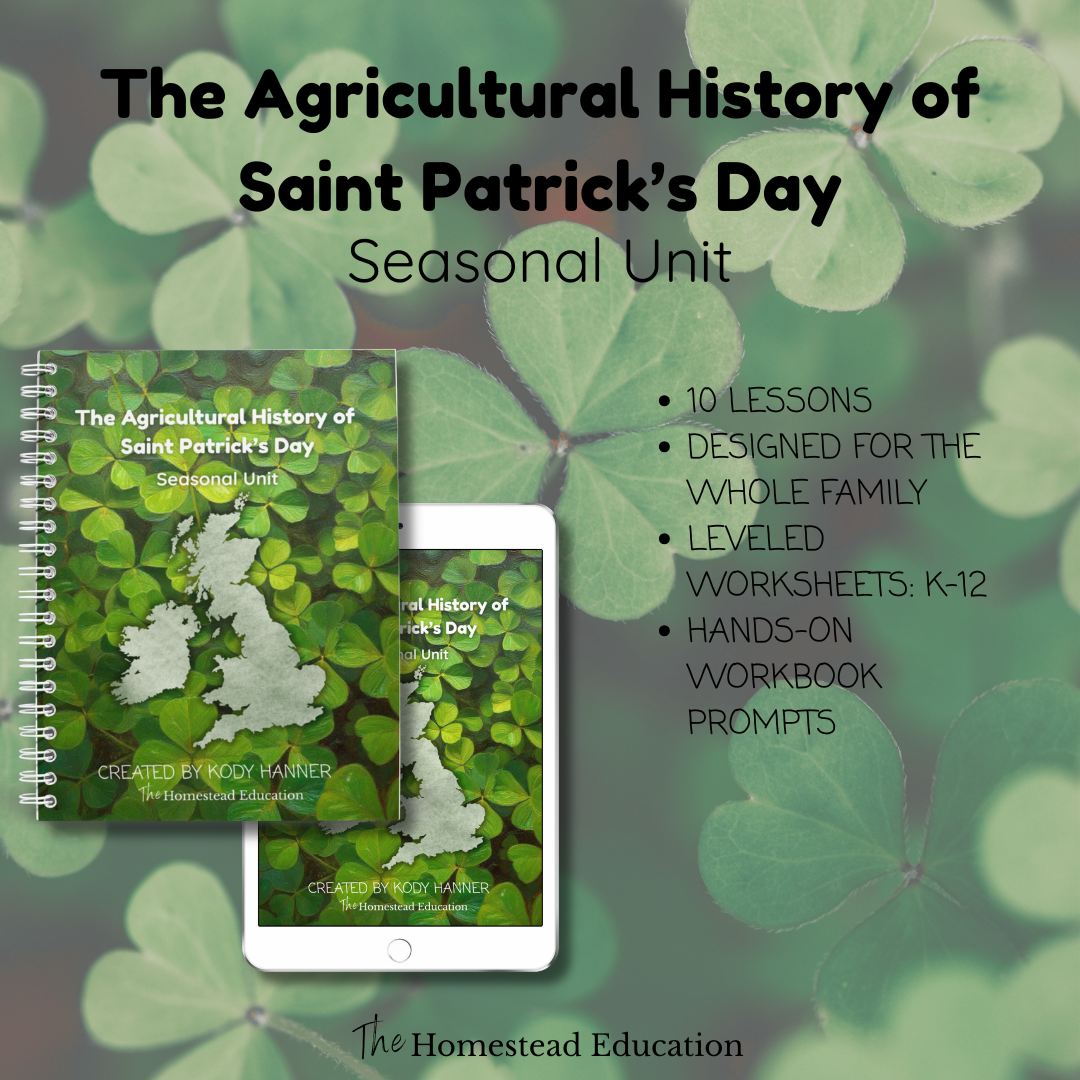
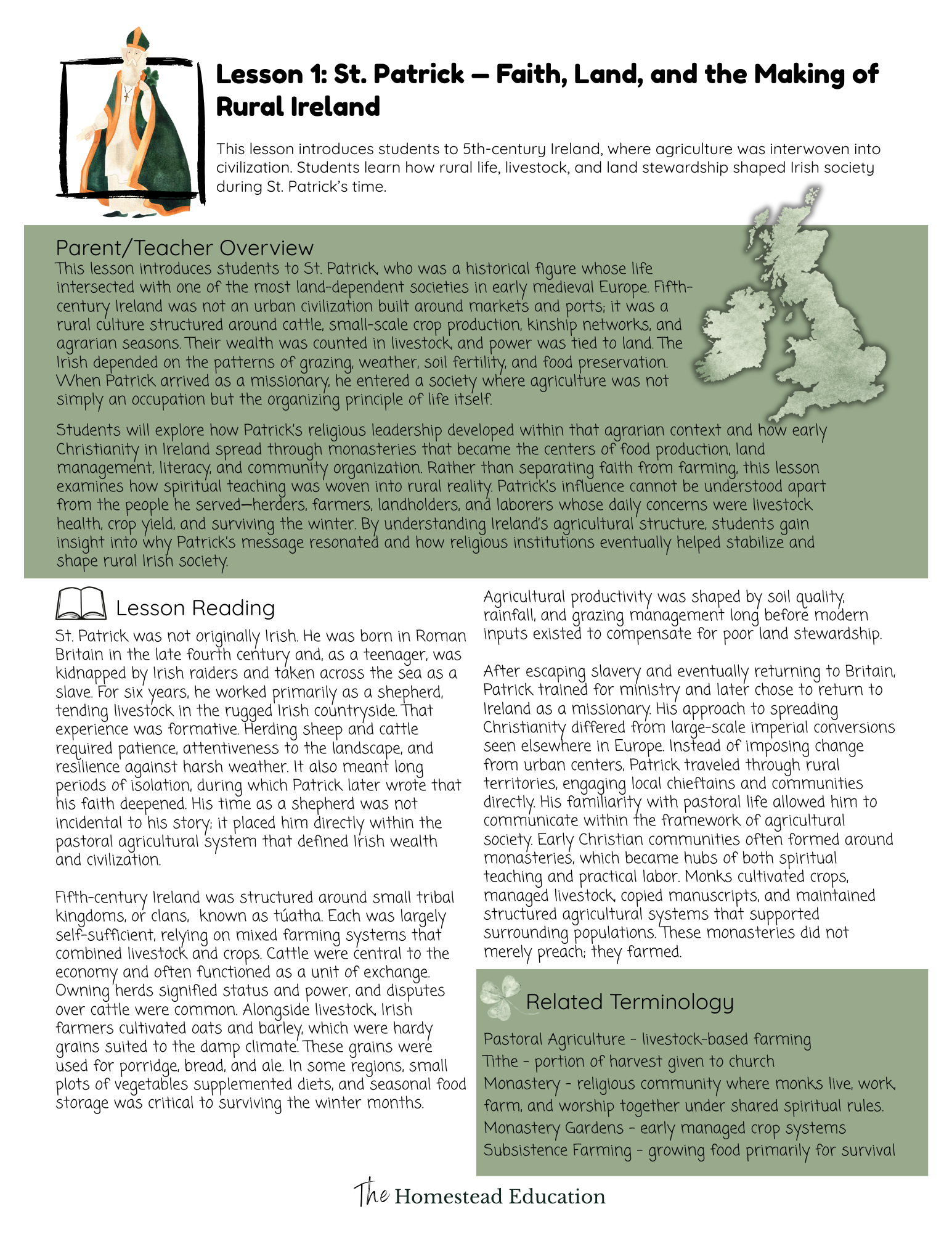
A St. Patrick’s Day Agriculture Unit
St. Patrick’s Day is often celebrated with parades, shamrocks, green shirts, and plates piled high with corned beef and cabbage. But long before the decorations and festivities, the story began in the fields of Ireland—shaped by what people could grow, raise, and preserve.
For centuries, Irish life revolved around agriculture. Livestock, barley, oats, and potatoes sustained families, while clover quietly rebuilt soil and supported crop production. Food wasn’t just part of the culture—it was the foundation of survival. Potatoes became Ireland’s primary crop, barley fueled brewing traditions, and the land itself dictated daily life.
Agriculture, Culture, and the Story Behind Being Green explores the agricultural roots of St. Patrick’s Day and the farming systems that shaped Irish identity. Students will look beyond the holiday and examine the real agricultural forces beneath it: crop failures that reshaped global migration, the role of clover in soil health, how corned beef became an Irish-American tradition, and what “going green” truly means in both sustainability and marketing.
Through this unit, students will explore topics such as:
-
The role of livestock and pasture in traditional Irish farming
-
Monocropping and the Irish Potato Famine
-
Cover crops, nitrogen fixation, and soil health
-
Grain production and brewing traditions
-
Migration patterns driven by agricultural collapse
-
How food traditions adapt when cultures relocate
-
The economics of agriculture and global trade
-
Modern claims of sustainability and “green” marketing
Inspired by the system-focused approach of Animal, Vegetable, Junk by Mark Bittman, this unit encourages students to see food not as nostalgia, but as a complex system—economic, ecological, and cultural.
Students will connect history to soil health, tradition to trade, and symbolism to science. They will explore how agriculture influences identity, policy, consumption, and even diplomacy.
By looking beneath the green dye and holiday marketing, students will discover that St. Patrick’s Day tells a deeper story—one about food systems, farming, and the land that sustains us.



Reviews
There are no reviews yet.