Homeschool Curriculum for Neurodivergent Students: A Hands-On Approach
Homeschool Curriculum for Neurodivergent Students: Why Hands-On Learning Makes a Difference
Not every child learns best sitting at a desk, reading a textbook, and filling out worksheets. And not every student should be expected to.
For many families homeschooling children with ADHD, autism, dyslexia, or executive functioning challenges, finding the right curriculum can feel like an endless search.
Some children struggle to focus on long reading assignments but can spend hours learning everything there is to know about their favorite animal. Others understand complicated concepts when they see them in action but have difficulty explaining those same concepts on a written test.
And some kids simply need the freedom to get up, move around, work with their hands, and learn at their own pace.
That’s one reason I believe agricultural education is such a valuable addition to homeschooling.
At The Homestead Education, we approach learning through agriculture, science, food systems, and practical life skills. Our Homestead Science curriculum was intentionally designed with organized visual layouts, manageable reading sections, and opportunities to apply lessons in real life.
The result is a flexible approach that can work particularly well for families teaching neurodivergent students.
And the best part? You don’t need a homestead to use it.
Why Traditional Homeschool Curriculum Can Be Challenging for Neurodivergent Students
Neurodivergence is an umbrella term describing differences in how people think, learn, process information, and experience the world.
It can include ADHD, autism, dyslexia, and other neurological or learning differences.
Of course, no two neurodivergent students are alike. A curriculum that works beautifully for one child might not work for another.
However, families may encounter common challenges, including:
Difficulty maintaining attention during long reading assignments.
Feeling overwhelmed by visually crowded textbook pages.
Challenges with planning, organization, or transitioning between tasks.
Difficulty demonstrating knowledge through traditional written assignments.
Needing additional time to process information or complete work.
Strong interests that don’t always align with conventional classroom lessons.
These challenges don’t necessarily reflect a student’s understanding or ability to learn.
Sometimes, changing how information is presented or how students demonstrate what they’ve learned can make a meaningful difference.
That’s where flexible, hands-on homeschool education becomes especially useful.

My Challenges in Finding the Right Curriculum For Our Neurodivergent Kids
When we first started homeschooling, we knew our kids had various diagnoses that might make homeschooling them harder than for the average student. In those days, we barely knew how to pick a curriculum, let alone choose one that also met the needs of our unique children.
Eventually, what started as sneaky ways to get the kids to want to learn (yes, I was manipulative, no, I’m not sorry) turned into an entire way of teaching thousands of kids now. I quickly learned that these kids need purpose behind what they are learning. Otherwise, it’s just repetitive work that doesn’t satisfy their brains’ dopamine needs.
I began giving them every opportunity to learn through hands-on labor, problem-solving, and praising personal responsibility. This began to shape into what has now become the largest-selling homeschool agriculture science curriculum!
1. Visual Organization Can Make Learning More Manageable
One of the intentional design features of Introduction to Homestead Science for middle and high school students is its visually organized page layout. Rather than presenting students with large, uninterrupted blocks of text, the curriculum uses color-blocked sections, clearly defined reading areas, and a consistent visual hierarchy.
These design decisions are intended to help students identify the information they’re working with and navigate the lesson more easily. My dyslexic daughter was very insistent that I incorporate this feature!
Color-Blocked Learning Sections
For students who find visually dense pages distracting or overwhelming, organized sections can provide a clearer place to begin.
Color blocking can help distinguish one part of a lesson from another, while consistent formatting makes the textbook easier to navigate.
However, visual preferences vary. Some students benefit from additional visual structure, while others prefer simpler pages or reduced color.
Information in Manageable Chunks
Instead of requiring students to process an entire chapter at once, Homestead Science organizes information into smaller sections.
Parents can use these sections to create natural stopping points, incorporate discussion, or introduce an activity before continuing.
For a student who struggles with sustained attention, completing one meaningful section before taking a movement break may be more productive than pushing through an extended reading assignment.
Practical homeschool tip: Try dividing a lesson into reading, discussion, and application. Let your student complete one portion at a time rather than expecting everything in a single sitting.
2. Hands-On Learning Gives Science a Real-World Purpose
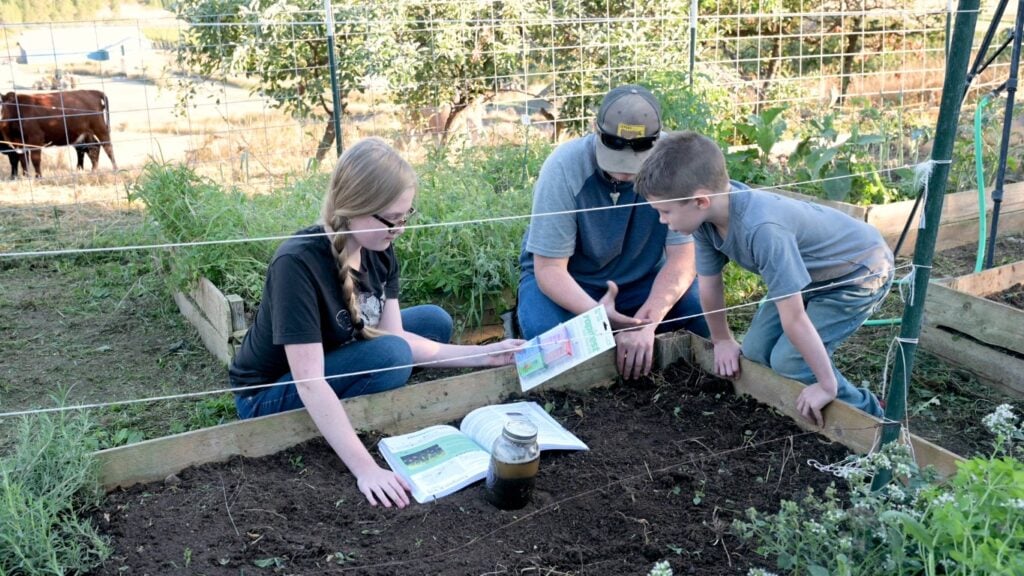
Agricultural science provides opportunities to connect academic concepts to things students can see, touch, investigate, and experience.
Instead of learning biology exclusively through diagrams, a student might examine plant growth, observe animal behavior, or explore the role of microorganisms in composting.
Instead of studying measurements only on paper, they might measure garden spacing, calculate feed quantities, or compare ingredients in a recipe.
These experiences give students additional ways to engage with the material.
Examples of Hands-On Agricultural Learning
Plant science: Grow seeds, record germination, compare soil conditions, and observe changes over time. Even Little Learner’s Homestead Science has real projects!
Animal science: Study livestock anatomy, nutrition, behavior, and responsible animal care.
Food science: Explore preservation methods, fermentation, cooking chemistry, and food safety.
Environmental science: Investigate soil health, ecosystems, pollinators, water conservation, and composting.
Agricultural economics: Calculate project costs, compare prices, develop budgets, and explore how farms operate.
These activities aren’t just busywork added to a lesson. They connect academic subjects to practical situations.
For students who need movement or concrete examples to stay engaged, that connection may be especially valuable.
What If You Don’t Live on a Farm?
You don’t need livestock, a large garden, or even a backyard to teach agricultural science.
Students can investigate seeds in containers, study grocery-store food systems, experiment in the kitchen, observe local ecosystems, and complete many activities with ordinary household materials.
Homestead Science is designed for students living in apartments, suburban neighborhoods, rural communities, and working farms.
Agricultural education is for everyone because everyone eats.
3. Interest-Based Learning Can Encourage Engagement
One of the most useful things about homeschooling is the ability to connect education to a child’s interests. Some neurodivergent students develop particularly intense interests in specific subjects.
A child fascinated by horses might be eager to learn about animal anatomy, nutrition, genetics, or veterinary science. A student interested in machinery might enjoy exploring agricultural engineering. Another student might be fascinated by insects, plants, food preservation, or environmental science.
Agriculture brings many of these subjects together.
Rather than treating science, mathematics, reading, history, and economics as completely separate topics, families can explore how those disciplines connect through food production and everyday life.
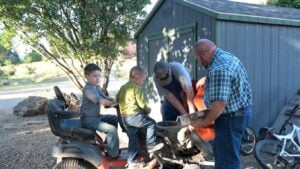
Practical homeschool tip: Start with something your child already loves and identify the academic subjects connected to it.
A student interested in chickens, for example, could explore biology through egg development, mathematics through feed calculations, and economics through the cost of raising a flock.
When a student can see why they’re learning something, the work may become more meaningful.
4. Flexible Pacing Allows Students to Learn at Their Own Speed
One of the benefits of homeschooling is the ability to adjust the schedule to the student. A child who needs additional time to understand a scientific concept can spend several days practicing it. A student who quickly masters a topic can move forward or explore it in greater depth.
Homestead Science includes suggested schedules, but families can adapt how they complete lessons and activities.
The elementary program generally suggests three days per week, while the middle and high school program follows a four-day schedule with an optional additional day for projects or assessments.
These schedules provide structure without requiring every family to complete the material in exactly the same way.
For neurodivergent homeschool students, flexibility may mean:
Shorter lessons with more frequent movement breaks.
Completing a practical activity before discussing the reading.
Using oral discussions before writing an answer.
Revisiting difficult concepts through demonstrations.
Spending additional time on a topic that captures the student’s interest.
Adjusting written assignments when appropriate to their learning needs.
The goal isn’t to eliminate academic expectations. It’s to provide reasonable flexibility while students work toward those expectations.
5. Homesteading Can Provide Opportunities to Practice Executive Functioning
Executive functioning refers to cognitive skills involved in planning, organization, working memory, attention regulation, and completing goal-directed tasks. These skills are important for academic work, but they’re equally important for everyday life.
Homesteading and agricultural projects provide practical opportunities to work on them.
For example, planning a garden may involve deciding what to plant, gathering supplies, creating a schedule, monitoring progress, and adjusting when something doesn’t go as expected. Caring for animals involves remembering routines, recognizing changes, organizing supplies, and responding to problems. Even preparing a meal can involve reading instructions, estimating time, sequencing tasks, and cleaning up afterward.
Practical Activities That Exercise Executive Functioning Skills
| Activity | Skills students can practice |
|---|---|
| Planning a garden | Organization, sequencing, decision-making |
| Following an animal-care checklist | Task initiation, routines, responsibility |
| Preparing a recipe | Working memory, planning, time management |
| Tracking plant growth | Observation, recordkeeping, consistency |
| Managing a small business project | Budgeting, goal setting, problem-solving |
| Preparing for seasonal changes | Prioritization, planning, adaptability |
It’s important to remember that participation in these activities doesn’t automatically improve every aspect of executive functioning. Students may still need visual reminders, checklists, assistance, repetition, or individualized support.
The advantage of practical projects is that they create meaningful opportunities to practice these skills with guidance.
Using Student Planners to Support Independence
Our Homestead Education Student Planners are designed to help students organize schoolwork, responsibilities, and personal goals.
For older students who benefit from having information collected in one location, a planner can serve as a useful organizational tool.
You can also listen to Episode 165: How to Build Executive Functioning on the Homestead for more ideas about using everyday homesteading responsibilities to practice important life skills.
6. What Makes Homestead Science Different?
Homestead Science combines structured academic content with opportunities for practical application.
Students explore agricultural science through reading, discussion, experiments, and hands-on activities.
Depending on the course level, topics include animal science, plant science, soil science, ecology, food systems, environmental science, and homestead management.
The curriculum is intended to provide academic structure without requiring families to recreate a traditional classroom at home.
For parents teaching students with ADHD, autism, dyslexia, or other learning differences, these features can offer useful flexibility:
Visually organized lesson materials.
Manageable reading sections.
Practical activities and laboratory experiences.
Opportunities for discussion and observation.
Adjustable scheduling and pacing.
Connections between academic subjects and everyday life.
Learning options that don’t require owning a farm.
Homestead Science is not a specialized therapeutic program or a guarantee of success for a particular diagnosis. Families should evaluate the materials according to their student’s individual needs, including reading level, sensory preferences, and required accommodations.
-
Sale!

Introduction to Homestead Science – Agriculture Curriculum Complete Set
From: $160.00 Select options -

Introduction to Homestead Science – Workbook
$45.00 – $60.00Price range: $45.00 through $60.00 Select options This product has multiple variants. The options may be chosen on the product page
7. Is Homestead Science a Christian or Secular Homeschool Curriculum?
This is another question families frequently ask when choosing homeschool resources.
Homestead Science is written from a religiously neutral educational approach.
Although I am a Christian educator and our family values influence the importance we place on personal responsibility, hard work, and practical skills, the core Homestead Science curriculum does not include religious instruction.
The focus is agricultural science, food systems, and real-world education.
This makes the curriculum an option for families who prefer secular-friendly academic materials, as well as Christian families who want to incorporate their own beliefs into their homeschool.
The broader Homestead Education product line includes resources with different approaches. For example, the Homestead Kids fictional book series focuses on traditional values.
Families should review the specific product when religious content is an important purchasing consideration.
Can You Use ESA or Charter School Funds?
Because all Homestead Educaion curriculum is religiously neutral, it qualifies for educational funding through participating school choice, charter, and Education Savings Account programs.
The Homestead Education works with several programs, including certain ClassWallet and Odyssey programs, and can provide invoices for qualifying school and education purchases.
However, eligibility depends on the program, state, product, and individual funding rules. Religious neutrality alone does not guarantee approval.
Families should confirm their program’s requirements before purchasing.
8. Choosing the Right Homestead Science Curriculum for Your Student
There are two primary Homestead Science levels.
Little Learners Homestead Science
Designed for younger students, with flexible use from preschool through approximately fifth grade depending on the child’s development and abilities.
This program introduces agricultural science and practical skills through age-appropriate lessons and activities.
Introduction to Homestead Science
Designed primarily for middle and high school students, with applications for older learners interested in agriculture, food systems, and homesteading.
The course includes academic reading, workbook activities, experiments, and laboratory experiences.
Families can adjust pacing and instructional methods to accommodate different learning needs.
For students working toward high school credit, review your state’s requirements and complete the appropriate labs, documentation, and assessments.
Explore the Homestead Science curriculum.
The Goal Is More Than Finishing a Textbook
Ultimately, education should help students develop knowledge, confidence, practical abilities, and the capacity to navigate the world around them.
For neurodivergent learners, that may mean providing more visual structure, additional time, hands-on experiences, or different ways to demonstrate understanding.
And for any student, learning how food grows, how animals live, how resources are managed, and how everyday systems function can provide a valuable foundation.
That’s why I created The Homestead Education: to make agricultural education accessible to homeschool families, small schools, and students with a wide variety of backgrounds and learning needs.
Because everyone eats, and every student deserves an opportunity to understand the world that feeds them.
Ready to Explore Homestead Science?
If you’ve been searching for a hands-on science curriculum that offers flexibility, real-world learning, and practical applications, take a look at Homestead Science.
You don’t need a homestead. You don’t need to know everything about agriculture. And you don’t need to teach every child exactly the same way.
You just need a place to start.
Explore Homestead Science and find the right level for your student.
-
Introduction to Homestead Science – Workbook
$45.00 – $60.00Price range: $45.00 through $60.00 Select options This product has multiple variants. The options may be chosen on the product page -
Introduction to Homestead Science – Test and Answer Key PDF
$25.00 Add to cart