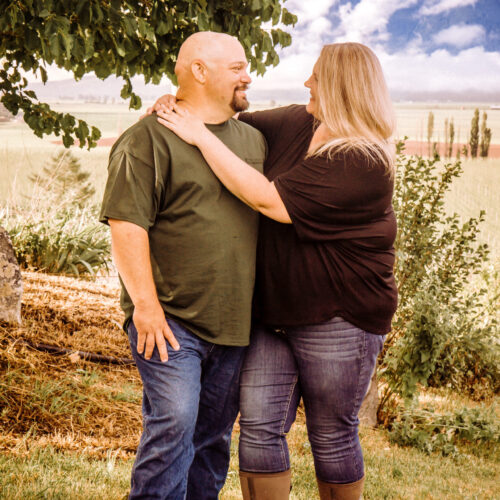
Episode 137: What its Like Being an Overweight Homesteader Navigating Through the Healthy Food Movement
- Kody Hanner

Episode Highlights
As our country embraces an amazing new grassroots health movement for our families, we will also be looking at healthy foods, weight, and childhood obesity. I, for one, am 100% on board for this, as I am one of many in my generation facing the results of an unhealthy America. We have chronic diseases, struggle with our weight, and deal with inflammation, all while helping our kids who struggle with nuerodivergencies from the same food issues.
This episode is packed with great information on homesteading, homeschooling, and how health can look different for everyone.
Podcast Review
Did you enjoy this episode? Please drop a comment below or leave a review to let us know. This can help other folks learn about this podcast and we also really appreciate the feedback!
Podcast Links and Resources
Tuttle Twins Magazine: https://www.tuttletwins.com/magazine
Homestead Bundle: https://homesteadeducation–impactbundles.thrivecart.com/homestead-bundle/
Submit a Question: https://www.thehomesteadeducation.com/helpmegrow
Raw Milk Reel: https://www.instagram.com/reel/DHAa6jrxjHS/?utm_source=ig_web_copy_link&igsh=MzRlODBiNWFlZA==
Cookbook Waitlist: https://thehomesteadeducation.myflodesk.com/cookbook
Farmer’s Defense Sleeves (Get 10% off – HOMESTEAD_EDUCATION) – https://farmersdefense.com/HOMESTEAD_EDUCATION
Redmond’s Real Salt – https://glnk.io/oq72y/homestead-education

Want to be a guest?
Want to book Kody as a guest?
Email: hello@thehomesteadeducation.com
Advertise on The Homestead Education Podcast:
Website: https://www.thehomesteadeducation.com/
Shop Curriculum: https://www.thehomesteadeducation.com/shop
Speaking Events: https://www.thehomesteadeducation.com/events
Facebook: https://www.facebook.com/thehomesteadeducation
Instagram: https://www.instagram.com/homestead_education
Watch episode on YouTube: https://www.youtube.com/@homesteadeducation
Read The Transcript!
Read MoreLess
INTRODUCTION & REMINDER
Hi and welcome back. I just want to remind you that you can get all of my homestead science books on my website and many on Amazon for a new way of teaching agriculture to today’s youth and aspiring homesteaders by focusing on small scale farming and self-sufficiency. If you’re a school co-op or retailer that needs invoicing, please feel free to reach out to me directly.
HOME FROM THE TRIP
So guys, I am home from my trip. I did skip last week because I was, well, I was flying all day on the day I normally record. And because I’d done a later episode in the week, I said, you know what, with a 12 day trip, I think everyone’s going to be fine with it.
But I am so, so happy to be home. I have really missed just being here, being with my littles, the farm life, food that doesn’t come from a grocery store or like a fast food or even a restaurant. Like, I mean, I know grocery stores, I do buy a lot of food at the grocery store at home, but when you’re living out of hotel rooms in your car, there’s not as much as you can do.
So, I mean, it’s a lot of cold cuts. I did, we did like some frozen breakfast burritos for when we were at an event for several days so that we had something like that we could cook right there in the hotel room. I mean, it’s just not, it’s not my thing.
It’s not my normal. You know, when I go for like a five day trip or something, we can, we’ll buy like sandwich stuff and things like that. But I mean, you can’t just live off sandwiches for 12 days.
And for like almost four of those days we were in DC. So I was kind of at the mercy of the people that we were with. So it was a lot of eating out and like catered meals and things like that.
So, I mean, I did have some very wonderful, delicious food, but I was definitely feeling it in my system. I was happy to be home. I always get dehydrated on the road no matter how much water I drink.
So I was excited to be home and to get my well water and get some electrolytes back in my system and just feel human again. And I would love to say that I came home and slept like all day, but I was so behind on work from traveling and just driving and conferencing and everything that I woke up and all I could do was sit there and think about everything I needed to do. So I jumped out of bed and I actually worked like midnight that night.
So I was up for almost 24 hours, slept for like four hours and then was up for, I don’t remember how many hours it was, but I was joking that it would have been 24 hours like if I did it again. Like I went to bed at midnight. So, you know, in East Coast time that would have been three in the morning.
So I mean, that was like, it took me a couple days to get back into a routine.
WINTER PIGLET PROBLEMS & FARROWING STORY
So since I’ve been home, we had a litter of piglets. We were trying something new because we’ve been losing a lot of piglets in the winter time.
We don’t lose as many in the summer. And we don’t have heated spaces, but we do have barns that are definitely warmer than outdoors. And we have heat lamps and, but we’ve just, we’ve been losing a lot of piglets and we’ve been trying, you know, a lot of them get squished and that’s a real bummer.
And, you know, everyone just says use Fairwind crates. Well, we have a Fairwind crate and we have a lot of the same issues. It’s a lot of it is just in the winter time, no matter how warm we try to keep them.
The piglets get up under the moms and she’s not even necessarily stepping on them. Sometimes they’ll just kind of get up under her and then they’re so teeny tiny when they’re born. I mean, our moms are seven, 800 pounds and these piglets are maybe three pounds.
And when she’s got 14, 16 of them, she just doesn’t know they’re there. And, you know, they’ll kind of get up under her teats or something and then suffocate because they’re just there. And I mean, other than us sitting out there all night long, staring at them, we’re going to end up losing piglets.
And so this litter, she had 14 live, one stillborn. We don’t think there’s anything wrong with the stillborn one. She got one like stuck and we had to like try to adjust it.
We this is the first time that’s really happened on our farm. Luckily, I’ve dealt with this like in college and stuff. So we tried to stick it.
We couldn’t really do that. Her labor had stalled for almost an hour. It was the middle of the night.
It’s a weekend. And actually our vet is in New Zealand right now. So we were like, let’s do a small dose of oxytocin, which our vet keeps us in the things that we need because we have that good working relationship with him and see if we can’t get that piglet to pass by like her having some better contractions because she wasn’t contracting really good either.
And that was only after four piglets. And we gave her the oxytocin and she took like 20 minutes and then she passed that piglet and he was fine. And after that, oh my gosh, like it was like every breath she took, another piglet was popping out.
So man, that must have been so uncomfortable. I’m glad we decided to go with the oxytocin because we tried adjusting the piglet manually and it was too high up for any of us to do that. But the very last one was stillborn and the one before that, my husband said he had to give it mouth to snout.
I was already back at the house by then and I just don’t want to imagine my husband doing mouth to snout with a pig. But what ends up happening is when you give them oxytocin, the contracting causes the umbilical cords to detach prematurely. And then because she was still stuck, they didn’t come out.
Like if she hadn’t have been stuck, those piglets would have immediately started coming out and we probably wouldn’t have lost any and that second to last one wouldn’t have been lethargic. But because they were still stuck in there for 20 minutes or so, we ended up losing one from not having like oxygen and stuff, which is a bummer. And one of the things that happens on farms, if we hadn’t have given her that dose of oxytocin, probably all of those piglets would have died.
And we wouldn’t have had a way to get them out of her with our vet out of town and everything. So we probably would have lost the sow too. So, I mean, big picture, that’s the better route.
So she had 14. We were really excited. She was doing super good with them.
The next morning she had lost two because we didn’t. So we’ve been using a farrowing crate and we’ve had some better results. She farrowed outside of the farrowing crate because we have the farrowing crate like inside a nursery pen and we’ll separate the sow a few days before when we think she’s getting close.
And then when she starts showing milk, which is anywhere from 12 to 24 hours before they farrow, then we put them in the farrowing crate. So when the boys milked that morning, they checked her for milk and she had no milk yet. So like, okay, we have 12 to 24 hours and we still have to milk this evening.
So we’ll be up here to check her this evening or not milk, separate the calves. And so they went to town, did whatever they needed to do. They got home right before milking or separating.
So they stopped at the barn and lo and behold, she’s in labor. So we tried to move her. She just wasn’t interested in moving.
So set her up where she was. After she had the piglets, it was really late. We just didn’t want to push her.
So we just let her be. She ended up losing two probably to being squished overnight. But although sometimes there’s just loss with large litters for a lot of different reasons.
So we were excited though, because with some of our other sows that we’ve been struggling with, we’ve been losing like half the litter or more. And so we were really happy with only losing two. So we moved her over to the farrowing crate and checked her multiple times throughout the day and everything was good.
And then at some point she pulled the heat lamp out of the plug. And so then it got cold in there and the piglets tried to get under her and we lost some more piglets. And the kids were like, oh, there’s only six left, which I mean is a huge hit from 14.
I mean, when we sell them 150 to 200 apiece or more depending on what’s going on as piglets or 1000 to 1200 apiece as a whole hog, that’s a huge hit for our farm. But of course, I do have to say that we account for some of that, but we always hope for better. And so then my husband went up the next morning and we hadn’t lost any more.
So we were good with that. So we decided let’s go ahead and let them back out of the farrowing crate because it had been two days and we usually like to do at three days old, we’ll pull them out the farrowing crate, because usually the piglets are strong enough then to not be getting squished. So we pulled them out and then there was another piglet in there squished and we were like, oh, no, like it wasn’t part of the six that we had left.
It was just the kids said when they when there was only six left, they could only find six. And so my husband went to pull it out and it was still alive. So we brought it down to the house just to see what we could do.
We’ve been filling it, feeding it milk replacer and it is living in a dog crate in our living room, which our dog crate is actually it’s like an actual piece of furniture in our living room because with us having like our labs, we like to have a place where we can lock them up but not, you know, have them out back. And so this crate is actually it’s a really nice it’s black. It’s got a wood top and it’s my husband’s stand behind his beside his chair.
And so we have a piglet living in there on a heating lamp and we’re feeding it with a syringe because we can’t find a bottle every three hours. And we gave him a shot of iron and B12 to just kind of boost his system. He’s walking great.
So he’s probably going to go back to mom in the next day or so. We’d really hate to lose him after all the work we put into him. So we want to make sure he’s really strong.
But in case you’re ever wondering what it’s like to raise pigs. Yeah. And if you ever wonder if farmers care about their animals, I think that might be your answer.
DEALING WITH EXTRA MILK & KITCHEN PROJECTS
And I also also my husband and had a lot of time to do dairying while we were gone. So I think let’s see. I mean, we had to throw some out or not throw it out.
We feed it to our pigs. We feed our cows a non GMO feed. So I feel comfortable.
I clobber or make yogurt out of the extra milk and we feed it to our feeder hogs that we’re raising out to sell for meat. So I feel really comfortable because I feed them a non GMO feed so I can advertise that way and they grow really great on the yogurt. Besides that point, I had 15 gallons of milk because he wasn’t dairying, which means, you know, he’s not pulling cream, he’s not making yogurt, he’s not making cheeses, any of the things that we kind of do on, you know, every few days we get into a routine.
And he also wasn’t marketing our milk to sell. And we only have a couple of regular customers. So it just wasn’t.
And he even said at one point, like, I was so busy working on my car, my cars had no engine for two months, because my husband’s replacing it. And he’s an amazing mechanic, but we’re constantly like running into parts, he has to order and it takes a little longer. So he was working on the truck.
And he actually told a couple customers like, Oh, I just can’t meet you. It’s like we needed the money and we needed the milk on but life. So we had 15 gallons of milk.
And yesterday I challenged like my husband and kids to let’s go in the kitchen and get out the cheese making books. Let’s figure out what we can do. So we made yogurt, we pulled cream for butter, we made cream cheese.
Well, I’m still in the process of making cheese cream cheese that has to culture for 24 hours, and then hang for like another 12 hours. So I mean, I won’t be done with that till tomorrow. And I made cottage cheese, which I’m kind of bummed.
The curds didn’t turn out great. This is the first time I’ve tried cottage cheese. They’re kind of more like squeaky cheese like curds.
So I went ahead and still put a little cream in and salted it. And I was like, you know, I can just have it with a piece of toast or something. It’ll still be good.
But I really want to try that one again. But it takes three cups of cream. So that’s kind of one.
I don’t always have enough for but my husband tried making our first hard cheese that needs to be aged. So we have a cheddar that is being pressed on the counter right now. And then after it’s pressed, we’ll take it out and wrap it in like a cheesecloth and it’ll just sit on our counter for like a month.
The only thing we have to do is like wipe any mold off of it. And we’re gonna see how it turns out. We’ve never done that before.
So although I did tell my husband every Sunday, make another wheel because then if it did turn out good, then we have cheese going rather than liking it and then having to wait another month for more cheese. So I’ll let you know how that all goes. I made sour cream.
My cream was a little on the light side because I wanted to use the real heavy stuff for butter. And then you mix it with buttermilk, which I culture my own buttermilk. And actually my buttermilk actually over cultures and it gets like almost like a yogurt consistency.
And so I have to whip it with a little milk to use it for pancakes or something. So I used the buttermilk to make the sour cream. Like I said, it sat out all day or all night and then I put it in the fridge this morning.
Another one. We’ll see how it goes. We also have like 20 dozen eggs and I only have two incubators.
We were supposed to start incubating also before I left and that didn’t work out. So we put almost 100 eggs in the incubator yesterday and still have like 20 dozen eggs. So I’m trying to get those sold.
We live in a community where people are really big on local food, but almost everybody has eggs. You’re even allowed to have chickens inside the city limits and a lot of people sell eggs. The only reason we even sell ours is because we sell other products where I do like a breakfast box where you can get sausage, bacon and a dozen eggs.
And if you want to add a half a gallon of milk or yogurt or something to it, you can. It’s 25 for like the pro or for the milk eggs and or sorry, the meat and the eggs and then to add on the milk is another $8. So that actually sells really good and we’re supposed to be doing the farmer’s market this year.
So I think that’s going to be a huge seller because it’s so easy to just grab and go home and have your breakfast. However, we’re not doing that and we haven’t had milk customers coming up. So we have this abundance of eggs.
So I found a recipe for it’s kind of like it’s called a yogurt cake. It’s kind of a mix between like a cheesecake and a custard and it’s pretty much just yogurt, sugar, eggs and vanilla. It’s kind of like a flourless cake.
So we’re going to try one of those today. Again, that’s another one. I’ll let you know how it turns out.
I’m kind of excited for it because I like flourless cakes, but I’ve never had a vanilla one. But I do love like custard and you can do like a creme brulee on top. So I think that’ll taste really good.
Anyways, if you’re dairying and needed some ideas, I hope I gave you some or if you’re considering considering getting a cow or a goat or something, then hopefully that kind of, you know, made you excited for processing 15 gallons of milk. Like I said, I hope it’s a good thing. It’s a good thing for us.
ANNOUNCEMENT: GRANGE MEETING
I have a couple of really big announcements. I talked a little bit, you know, last week about working with the Grange and doing some rural education stuff. We don’t have a final answer on that or what direction we’re going to go.
But I do have the membership coordinator of the National Grange and the Idaho Grange president coming up to my place here in a few weeks. And we’re into like an informational meeting for our community. I am going to be like starting to advertise that here in the next couple days.
So if you already live in my community and are interested, go ahead and please reach out to me or, you know, watch for that invite on I’ll do like an event on Facebook. Which it’ll be an in-person event, but the invite will go out via Facebook on my personal page. So I mean, don’t everybody go run over to my personal page.
I mean, like no issues with it. Just I’m never going to respond back to you there because I don’t respond back to like my family there. So definitely like the Homestead Education page, but that might be where you’d find the Grange thing.
So yeah, I don’t know what’s happening with that yet, but I am excited to get a Grange off the ground locally because I think that there’s a lot of positives that our community needs from it.
ANNOUNCEMENT: TUTTLE TWINS FEATURE
The next one. Okay, as homeschoolers, I’m sure you are all familiar with Tuttle Twins.
It is a like storybooks and history curriculum and economics curriculum designed to teach kids about free market and, you know, personal responsibility and all those wonderful things. They have books, they have stories, they have a TV show. And now they have a magazine which has been out for about a year.
And in April’s episode, they are going to be doing a featured interview or episode with April’s volume, I guess that’s what they call them with magazines. They’re gonna be doing a featured interview with our family. So definitely, if you haven’t already subscribed to that magazine, hop over there and do that.
I will be sharing about it on my page, but we feel really blessed because Tuttle Twins is huge, and they’re doing a whole section on organic and regenerative farming. They are also interviewing Joel Salatin. Many of you are familiar with him.
He’s kind of one of the biggest guys in regenerative farming and homesteading. And so for them to be interviewing him and us, and then a CSA out of Utah, I think that was just really exciting to be a part of that.
MINI COURSES & WHY THEY MATTER
The next thing is, apparently I still need water.
I was working on my mini courses, which some of you have already gotten my mini course on survival. It’s 15 lessons that can be one day lessons or a week long lesson. Just depending on how your family wants to do it, it’s a really great, engaging, hands-on thing to do.
But I realize there’s a lot of topics I want to cover, and it is a lot to write a full year curriculum. I mean, I’ve been working on homestead history for almost two years now. It’s slowly but surely coming together, but there’s more that people want.
People take Build Your Own Homestead or Introduction to Homestead Science, and they’re like, OK, what’s next? I’m ready. We loved that. We want to keep learning in this way.
So I realized that I needed to just get more of these mini courses out. And when I say mini courses, that does not mean that they aren’t packed full of information and activities and still worth the credits that you need. It’s just that they are either a quarter or a semester course, depending on how you teach.
So it’s not a full year curriculum, but it’s not a unit study either, because I really only cover that subject. But I make sure that there’s lots of opportunities for research and math and things like that, because there’s a lot of unschooled families that’ll use curriculums like mine as the base for everything they’re doing, because they’re already farming. I’m hoping to have four to eight out by school starting in the fall.
HOMESTEAD ECONOMICS & BUSINESS COURSE
But the one that I’m working on right now, I came home from my trip and I was really just kind of digging on what I could jump right into that would be an easy right for me. And what was kind of in my head at that time, based on some conversations I had on my trip, both in D.C. and at the Great Homeschool Convention in South Carolina. And I decided that I wanted to write a homestead economics and business entrepreneurial course for high schoolers.
I think a lot of homestead and homeschool families are big on entrepreneurship with their kids. And when it falls into agriculture, there’s a much bigger concept, which is ag economics. And I will admit I am not going super deep into some of the stuff with ag economics, with commodities and subsidy payments from the government.
I will cover those because I feel like they are part of what makes up even homesteaders. Or if you’re going to go into a food based business, you may need to be associated with those to know what the cost of, say, your flowers or milk is going to be. But I’m covering the economics more on a small scale, like how local food networks work, how you can market your food, how you work with processors, any of those things from that small scale standpoint.
I was a food safety specialist for several years. I did consulting on small farms to set them up for working with government agencies and setting up their accounting. I have an accounting degree, that type of stuff.
So this is definitely something that it’s easy for me to sit down and teach that in a way that really resonates with families. The same thing I’ve done with a lot of my other curriculums. And so I had a lot of families coming to me and saying that they’re really interested in kind of more of an applied mathematics for their kids.
And even though I think that there is definitely space for an applied mathematics course, that’s something I might have to do a little more research on. Not that I can’t do the math. I’m great at it.
I just want to make sure that I cover all the bases so that it covers the unit requirements that families have. Which on that note, this Homestead Economics is going to be a half a credit for agriculture, for agriculture economics. Economics also crosses over to some of the humanitarian type or humanities type credits.
So it will meet those. And there’s also going to be suggestions on how you can make it a full credit or get your like unofficial SAE, which is the supervised agriculture education, which actually does need to come through an accredited school. But if that’s not something that is an option for your family, which is why a lot of people like my curriculums.
It does give suggestions on how if kids are putting together their high school transcripts, they can say that they had the supervised agriculture education by doing internships and things like that based on the education they’re receiving from my curriculums. So just working on how to put that all together. But I’m hoping to have this done fairly quick.
I’m already done with several lessons and it came together super fast. So I see it going really well, but I wanted to have lots of resources and I’m going to be doing some videos on how to do the mathematics and adding in some of my insights on the Homestead Economics just in general that wouldn’t translate to a page really well. So adding the video, you know, the students can read and then watch the video to get tips on how to study or how to use the book or some real life examples that, like I said, just won’t translate well into the book.
So make sure you keep your eyes open for that. I don’t have a link up for it or anything yet, but I think that’s going to be a really awesome option.
IMPACT BUNDLES / HOMESTEAD BUNDLE PROMO
The next one is I am part of a bundle of products.
It’s through Impact Bundles. It’s called the Homestead Bundle. Big surprise.
And I have my Homestead Business course in it where you get, I think it’s 10 hours worth of video education along with printouts on how to plan your Homestead business, how to market it. Kind of similar to what I’m doing in the Homestead Economics as far as the business starting part, but this one is really like specific to, you know, kind of homesteaders, like how to market in your community where the Homestead Economics is going to be more law based and things like that. Although I do cover a lot of laws in this course.
The course is with 79 other Homestead educational products. There’s ebooks, there’s courses and a couple other things like, well, I think there’s still considered courses, but they’re like a long video of teaching you how to do something. And it’s $4,800 worth of products for 50 bucks.
Yes, you heard me right. Almost $5,000 worth of products for 50 bucks. And I mean, I’ve seen the other products.
They are great. These aren’t like, you know, you go to someone’s site and you get a freebie and it’s like a one page download that just gives a sample of what they’re doing, which I have those myself. But these are no, these are their actual products.
They are, you know, like 100 page PDF on how to do something. I there’s cookbooks, there’s herbalism stuff, how to raise different types of animals. I mean, it’s really, really great products.
Like I said, you know, my course is I usually sell it for $47 on my site. It not only gives you all the education and downloads and access to some proprietary products, it gets you discounts, links and access to my new Facebook business group where you can network and bounce ideas off of people. It’s kind of news.
There’s only a few people in there, but it’s building and you can be a part of that. So if you’re interested in getting that bundle, the link is going to be in my bio. So or not my bio in my show notes.
So just make sure you pop in there. Go check that out. It’s something you don’t want to miss out on.
And it’s only good until March 9th. Okay, I’m repeating that again. March 9th, 2025.
Midnight Eastern Time. You cannot get this anymore. Like done.
There’s no other options. So if you want it, go grab it. 50 bucks.
TRANSITION TO Q&A
Okay, moving on. I’m going to have like a whole podcast just on these topics. I never even get to my actual thing that I came to talk to you guys about.
But that might be okay. I am. I’m going to get to all of it.
So I have been asking people to send in their questions on different things that they want to know about homesteading, homeschooling, personal health, personal growth, business, whatever. And I will answer I usually answer most of them, like right away, like I get a email or a DM on Instagram, and I go ahead and answer to the best of my ability right away. If I think it’s something that everybody could benefit from, I will be answering the questions here on the podcast.
So I’ve had a couple recently that I want to go ahead and share with you guys.
Q&A: HOW TO GET FARM VISITORS TO LEAVE
The first one is how do you get farm visitors to stop talking? And, you know, just not kind of hang out when you have work to do? Yeah, I am the worst person to ask for that, because I will talk all day long. But I do think that there’s some validity to that, because we’re farmers, we’re busy, we have things to do.
And even if it isn’t all farming, we set aside a certain amount of time to farm to sell our products. And a lot of us have other jobs or other businesses that we’re a part of. And a lot of us are homeschooling our kids.
So we have other things to do. So what I really suggest on that is, if you have an open door policy where people can come to the farm, just as they’re swinging by to buy something, you either need to have set hours that you’re available, and or an honor system. So if they’re just coming for eggs, they don’t need to chat with you.
Unless you want to chat with them, like, or don’t, it doesn’t matter. So just have a nice chest out there, a price, a little jar says honor system have let them buy their eggs. Honestly, if somebody’s stealing your eggs, I mean, you’re gonna know right away.
But like, if one person does it, either on accident, or just because they’re like, ooh, honor system, I’m just gonna do this. Nobody cares. If they needed $5 worth of eggs that bad.
Maybe they needed it more than you. So just roll with that. You know, if it becomes a problem, obviously, you can’t continue to do that.
But anything you can do with an honor system. So we do that with our milk and our eggs. It’s something that’s regenerating constantly, if I lose out on some, you know, there’s a really good chance that the milk might have gone bad in the fridge, and I had to feed it to the pigs anyways.
So that’s a really easy one, especially for regular customers, they just come, they leave their jars, they grab anything, a milk and off they go. Now for my pork, we put a lot of money into that. And we only butcher a few times a year.
So no, I’m I don’t want anyone to steal my pork. So those I actually have under lock and key. And you either have to schedule, you know, a pickup, you’re buying a large amount, or we have our set farm hours were certain days a week, if somebody shows up, even if we’re not like sitting in the farm store, because I’ll be honest, we live in the middle of nowhere.
And it’s been winter. So we haven’t had a lot of customers. The dogs let us know they’re here, we try to make sure we’re always home during those hours.
We go out, whatever they buy, we unlock the freezers, and we sell it to them. But those are during my set business hours. So if somebody stays on visits for a little while, well, they showed up during business hours, and I have to expect that that’s going to happen.
Now, if I’m scheduling somebody to pick up like a half a hog or something outside of business hours, depending on who it is, if I don’t know who they are, you know, I’ll just when I schedule, I just say things like, Okay, yeah, 10 o’clock works great, because I have an appointment at noon. So yeah, 10 works perfect. Then if they get here, and the kids are having a good time, and we’re checking out animals, and we’re doing a whole tour and everything, then I’ll just tell them my appointment got canceled.
Like it. I mean, not that I’m condoning lying. It’s more setting good boundaries for your personal time, your business time and your farm.
If somebody does show up, and they do just keep talking, it is hard to just, you know, but go ahead and just let them know like, Alright, I had such a good time chatting with you today. I do have some stuff I need to get done. So why don’t you know, I would love for you to swing back by sometime, you know, next time you buy eggs, maybe give me a call.
And if you wanted to get a tour or something, I’ll totally set that up for you. That’s a great way to do it. If you feel somewhat comfortable with the person just be like, Hey, I’ve got work to do.
But if you want to walk along with me, you can maybe they’ll do some work too. And it’ll make your day easier rather than harder. I mean, of course, you have to consider that liability insurance with people and stuff like that.
But you know, whatever makes you comfortable. I have liability insurance for farm tours and my farm tours sometimes include people helping out. So I’ve never I wouldn’t get hurt, knock on wood.
And I’m just gonna roll with it. The I hope that helps. But yeah, just be really set boundaries with your own time.
Q&A: WHEN THERE’S NO CURRICULUM FOR WHAT YOUR KID WANTS
The next one is what do you do if your child wants to learn something that there aren’t curriculums for? I love this question. And that is because it’s literally the basis of my entire business is that I needed my kids to learn farming. My kids were interested in the farming and I had no resources to teach them.
So, but I created it and you can too. You could even create a curriculum just like mine. But I already did it for you.
So you don’t need to do that. But say your kid wants to learn like really go into small engines. Now I do have a small engines unit in my book.
And it covers like really the basics of how to do preventative maintenance, how to identify things on your equipment, basic repairs, troubleshooting, that type of thing. And sometimes that troubleshooting is just so you can call the repairman and say, I think this is what it is. With if they’re really interested in working on a specific piece of equipment, or they have a, say, broken rototiller and they want to get it going.
My kids did this. I got the manual for that piece of equipment. And that’s what we used.
Like we use this, you know, our skill sets, plus the manual and the kids figured it out. We now have two running rototillers. So that’s awesome.
I think it’s just we sometimes feel as parents that we don’t have all the skills that are necessary to teach our kids everything. And maybe we don’t and that’s okay. But that’s kind of what I’m getting at is if you don’t have the skill or you don’t know how to do it.
Find someone who can teach both of you learn with them or find someone that can just tutor them or a class in town, or, you know, put on Facebook, local Facebook group, like, my kids are really interested in learning. I don’t know. Ancient Egyptian agriculture, architecture, whatever.
And we just aren’t finding a curriculum on that. Is there, you know, another group of kids that is interested and we can do like a book club or I mean, just create these scenarios for your kids. And just because so like I mentioned, we used the manual.
That was our curriculum. Literally, I didn’t use anything else. I will be used to YouTube a little.
And if you’re worried about you have state requirements for certain hours and you want to say that they have, you know, half a credit of small engines, or something like that, or mechanics or whatever you want to call it. I have some planner pages on my website. I think they’re like $1 download, really just to cover my cost of putting them up.
And they break it down where you how you can keep track of your hours when you’re doing school projects and stuff that don’t have curriculums where so if you have a state and you’re like, Okay, we did a Becca this year, that Rebecca says that if you complete everything, it’s worth this amount of credits and blah, blah, blah. If you don’t have that, then you can use my planner pages. Also, my research pages are really good too.
If you’re doing a specific project and you want like a project based hours. And then you can say, Look, you know, like we journaled this every day what we did what resources we use. And then you can show that as your hours at the end of the year and some states just want to see what your hours were and you only get audited if there’s concern.
There’s other states or programs where you’re working directly with a teacher and need to turn that in. So these planner pages work really great for that. I’ll link those in the show notes.
And yeah, if you ever have questions about how to create a curriculum for something, I mean, not not even like an extensive curriculum like I do, but just a basis of, you know, how do we get started? How do we walk through this? Feel free to reach out. I always have some great ideas and I might have some resources for you.
MAIN TOPIC INTRO: FOOD, NUTRITION, WEIGHT, MAHA
So now to today’s actual topic is that I have no clue how long I’ve been talking, but it’s a good one.
So we’re going to just keep going with that. Okay, so this topic kind of have to work myself up for. I want to talk about food, nutrition, weight, and the elephant in the room.
And I’m not referring to myself, but I hope that was good joke. Anyways, I want to talk to you about my health journey in particular, but also the Homestead and Make America Healthy Again movement and what that means for some people. So right off the bat, like raise your hand if you’ve ever struggled with your weight.
And I don’t just mean you are heavyset. That can also include if you’re underweight. But if you’ve ever just struggled with your relationship with food, and not understanding your health, raise your hand.
Okay, now put it back because you’re driving. Maybe I’m in a mood anyways. But I want to tell you a little bit about my history with my health or history, my weight history.
And then I want to talk to you about what that means kind of moving forward. And I think that this is a really important topic. Before I get started, though, I want to be very, very clear that anything that I’m talking about with my health or weight journey is not an excuse.
Not at all. And that I am 100% behind keeping children from being obese. I am 100% behind encouraging healthy food options.
And I’m going to get into that all a little bit more. But I going into this conversation right now. Before any of you hear it, I don’t want you sitting here thinking, oh, she’s talking about how she’s always been heavy.
That’s just some excuse. That’s not what I’m trying to do. I’m trying to bring awareness to what it was like growing up in a time where there was misconstrued ideas as to what healthy actually was, and how that has actually negatively impacted my health today, and what I’m doing for my family, my kids, and all of you that I talked to, to change that moving forward.
So even though those of you who know me, or have seen me, or can even look up my picture online, we all know I’m not a size two. It’s not a secret. I’m not trying to keep it one.
But just because I can’t always be who I want to be, in that sense, it does not mean that I do not have the tools and the resources and the education to try to change this. So let’s go ahead and get going, because I think this is a good one, and I’m excited. And I want to share with you, because I don’t want anyone else feeling like I am right now.
And I’ll get to that.
CHILDHOOD WEIGHT & 90s FOOD CULTURE
So I do believe that genetics absolutely play a role in people’s size. That does not necessarily mean it plays a role in their health choices, that people can’t keep that at a minimum.
But I also know that even if I lost every ounce of fat off my body, I would still probably be about a size 14, because I’m almost six feet tall. I have lost a lot of weight before in my life. And at what felt very, very healthy and thin to me, and looking at pictures, I looked healthy and thin for my body frame.
I was still a size 16. And so I think that that’s something to really consider. I am one of the smaller people in my family.
At least on those of us who are on that heavier side. There’s definitely family members who are real thin and could eat anything they want and never gain a pound. Where then there’s like me and my brother, who at times in our life would hike 10 miles a day, only eat, you know, venison and like drink coffee and struggle with our weight.
So just something to kind of cover there. Now, when I was younger, I was always a big kid, like that’s not a secret either. But I also had an issue with my mom felt a lot of guilt over my parents’ divorce.
So she, or I don’t know if it was always guilt, she also didn’t want to be the bad guy in the divorce. And so she would never say no to me. And that made it where if I wanted to eat a box of Cheez-Its when I got home from school in first grade, she let me.
And you’re thinking, gross, why would anyone do that? And you did it. But I was six. I didn’t know that that was bad.
I just liked Cheez-Its. There was no conversation about portion control, or you can have Cheez-Its if you also have fruit. I mean, it just wasn’t, it wasn’t a thing.
My mom still struggles with nutrition. She’s a very small woman. But I mean, her blood work is all over the place.
She has high cholesterol, she’s borderline diabetic, all these things because she does not eat healthy at all. And what she believes is healthy from the media, and what was common, like when I was a kid, when she was a mother, or she’s still a mother, but like, you know, a mother raising children, just totally led awry, which is also the core of my health issues. Exercise wasn’t really a thing in our family.
My mom was always in great shape, or, you know, was always very small. She wasn’t necessarily like, you know, working out all the time, but she didn’t need to exercise in that traditional sense, because she had a really high metabolism. Whereas my dad exercised all the time, but not, he wasn’t going to the gym and working out, we went hunting, and we hiked and hiked and hiked and hiked, and we were farmers and ranchers, and my dad was a member of the California Cowboys, and we went to rodeos, and our lives were super active.
And when I was with my dad, I was just as active as he was. But I was also a 150 pound third grader. And I’m sorry, I don’t think that a third grader should be blamed for their weight.
It’s just not something that should happen. It’s just not a thing. They don’t, for the most part, they don’t know, they’re just starting to learn.
I know that there’s a lot of more healthy food movement type things. My third, well, almost third grader, I don’t know, he’s seven and a half, but we homeschool, so he’s somewhere in that range. He knows what healthy foods are.
And he’s not in there trying to be on a diet. He says things like, is there enough protein on my plate for my snack? I love that. He just knows that he needs to have well balanced foods.
And then he also says things like, hey, mom, can I have chocolate milk with lunch? If I can get some, if I can have chocolate milk, I’m going to go for a run after lunch to make sure that I burn all those calories. And I’m going to like, we are not like that family. That’s like, you have to exercise your calories.
He’s just learned healthy eating, through the shows, we allow him to watch the conversations we have in the house. He’s really bright and he just does it. So I do believe that third graders can understand those things, but if they aren’t taught them, which I was not taught those things in school, and I was not taught those things at home, I didn’t know I was doing anything wrong.
And I would get made fun of for being fat and I was heartbroken, but I didn’t know how to fix that. I really honestly had no clue that if I didn’t eat Cheez-Its or whatever it was that I wanted at that time, that that was what would make me lose weight. I was on the swim team.
I played basketball. I played softball. I, I mean, I did every sport there was and I hunted and with my dad and everything.
I was hiking all the time, swimming. I mean, I was an active kid, but I was big. And I don’t think, I know that had my nutrition been better, I would have been smaller, but I would still not been a thin child.
It just wasn’t going to happen. And that 90s just food concept and just lifestyle. Like, for example, I had really bad tonsil issues.
I had strep throat constantly, like multiple times a year. And my doctor just kept saying like, Oh, they don’t really take people’s tonsils out anymore. And just antibiotics, antibiotics, antibiotics.
Like, and at the time, like my parents never thought to be like, wait a second, we’ve had our daughter on antibiotics six months out of the year. This doesn’t seem right. Nope.
They’re like, that’s what the doctor said to do. So I literally had strep throat like four to six times a year, every year from the time I was probably in first grade until I was 33. So that’s how many antibiotics I’ve had to take over my lifetime until they finally took my tonsils out and informed me that I had an encapsulated infection inside them that would have never, probably never gotten healed, but kept reoccurring.
And I also had issues where I wouldn’t get a positive on the rapid strep because it would have to come back as a culture because it’s actually strep F. I have no clue what that means. I mean, I know what it means, but I don’t know like what the implications of that work. So I know that that wreaked havoc on my body and I have worked very hard on rebuilding like my gut health.
I also drank no water. Just wasn’t even a thing. Maybe I have a bottle of water, like when I was hiking sometimes, but it was usually warm because we were hiking and that was really gross to me.
And so that just wasn’t something that I ever saw as refreshing.
NOT WANTING TO BE SEEN, BUT BEING ACTIVE
I wasn’t even the funny fat kid because I did not want to call any attention to myself. Like I did not want to be made fun of.
I didn’t want to be noticed. I was embarrassed over my weight, but again, I did not know how to fix that. And even with the exercise concept, I mean, I worked out a lot.
I was an active, active kid well into high school and stuff. And when I would diet, I slim fast, diet coke, I don’t know, whatever they fed us in the lunchroom at the high school. And I’m going to tell you right now, I was not eating like high school cafeteria lettuce.
Like it just wasn’t happening. Vegetables do not taste right from there. So I would try to do like a better option, like a chicken sandwich, but I didn’t realize that a fried chicken sandwich on processed bread was not healthy.
Just, it didn’t even occur to me that it wasn’t. I heard chicken’s better. So I did, I ate chicken instead of beef.
Like, I just, it’s really sad what we were taught in that, you know, millennial kind of early millennial. We were like late Gen X timeframe that that’s what healthy food was. And there’s also many of us that are dealing with chronic diseases now in our late thirties, up to mid to late forties.
And we should not be having chronic diseases at this age. I mean, it’s, it’s really scary. And there’s, I mean, that’s where this entire Maha movement has come from is we’re like, wait, hold on a second.
My food was not good. My healthcare was not good. I am not allowing this for my children because also what’s happened is not only were these things bad, they’ve become law where you have to do them.
I mean, maybe not the food part, but they’ve been allowed. Like this big question right now is whether or not sodas should be allowed with food stamps, but technically it’s legal. So for families that don’t know any different or don’t care, they’re not going to make those changes.
And a lot of families still believe that diet Coke is good for you. So, I mean, and then when you talk about some of the other medical stuff, like it’s law that some of this medical stuff has to happen and our kids are getting sicker from it. And that’s why people are like literally begging for a change.
ADULTHOOD: HOME COOKING & CONFIDENCE
So something that I immediately saw in adulthood was, Oh, there’s one of my children. Hello, child. Okay.
The kids just got home from town. So they have some responsibilities to handle, which includes coming in the office. So what I immediately saw going into adulthood, I mean, and I was heavy all through high school.
I mean, I wish I was the way that I was in high school now, but I still struggled. And I, got into adulthood. I was big on home cooking almost immediately.
And I’ll admit it was because I got a boyfriend that I wanted to cook for. And I wanted to do home cooking because I thought that would make me like a better girlfriend. I don’t know.
And so I really looked into home cooking him and I did a lot of hunting together. So it was easy to have home products. We had a garden, that type of thing.
Still wasn’t, I mean, I look back on it now and still the processed foods we ate. I didn’t, I didn’t know. He didn’t know, but we had home cooking.
I exercised more every day and not just, I was still not doing setups like, and not because I have any issue with them or they’re hard on me or anything like that. I didn’t realize how important things like that were. But man, our cardio, like we hunted all the time and we had hunting dogs and, because we hunted wild boar in California, like run, run, run, run, run.
Like that’s all we ever did. We worked full-time jobs where we were on our feet all the time. And I developed confidence.
That was the biggest thing for me in school is like I said, I didn’t want anyone to notice me, but I have a giant personality. Yeah. I don’t think you knew what I was going to say there, but yes, I have a giant personality and I love the work that I do now because I get to be out there and I get to be.
The person that I wanted to be when I was younger and just didn’t have the confidence for even into my twenties. I didn’t have that confidence right away, but I built a whole new level of confidence as an adult because I realized that not everybody’s goal was to make fun of me and make me feel bad for my weight. And that people actually cared what was going on in my brain.
WEIGHT LOSS SURGERY DECISION
Now, you know, fast forward to 30 years old. I was a single mom, two kids working lots and lots of hours and I was having a really hard time keeping my weight managed. I was eating much healthier.
I did have a gym membership. I went almost every day. The kids could go or, you know, my mom would hang out with them and one of my girlfriends and I would go just burn off some steam, you know, run on the treadmill, go for a swim, listen to some music, talk about life.
And, I really enjoyed that part of my day, but I was eating 12 to 1500 calories a day, working all day, working out all night. And I was still heavy, not huge, but heavy. And I didn’t think I had any other options.
So I opted to have weight loss surgery. I’m not going to say I regret it or anything like that. That’s not what I’m here to say.
I’m probably more embarrassed about it than I would have been 10 years ago, because now I know so much more and I probably could have gotten my health under control in different ways. But at the time, that’s what was the most recommended. And I think it’s still recommended a lot.
I’m not sure.
MARRIAGE, HEALTHY LIFESTYLE… AND THEN LIVER DISEASE
Shortly after that, I met my husband. Are you thinking like, Oh, I lost weight and finally met a husband? No, not really.
Because I had just started losing weight when I met him. And he’s not a small guy either, if you’ve ever looked at our pictures. So, but we started really like we worked out together all the time.
We hiked, we went to the gym. And that’s when he got, we found out he was sick. He had end stage liver disease.
Some of you have heard that story. Some of you haven’t. And we had to change all of our choices.
So I mean, it was like healthy choices, exercise, all the time, non toxic. We even had a baby during that time. So I mean, I went through pregnancy, postpartum, I mean, I hiked six miles down the PCT three weeks after my C-section.
Now my husband carried the baby, but I mean, that’s still not something that everybody can do. And because I was in amazing shape. Fast forward a couple years, got pregnant with another baby.
I literally hiked seven miles, the next day packed up our whole house, drove 12 hours to our new house. I don’t know if it was the hike, I don’t know if it was the drive, a combination of the two, I don’t know. Seven weeks pregnant, I had massive blood clots in my lungs, two pulmonary embolisms.
And pretty much had to be on bedrest my entire pregnancy, they actually strongly encouraged me to terminate because I was gonna have to be on blood thinners. And that’s just hard on your system. And it was devastating for me, because we had just moved on to our homestead, we had all these plans of building up a homestead, which would have been no problem for me through any of my other pregnancies.
And this one I could barely walk from the bedroom to the kitchen, without almost passing out. And even five and a half, six years later, if I take a really hot shower in my bedroom, and then try to, like where there’s all the steam, and then I try to kind of like move on with the rest of my day really quick, I almost have like a panic, not a panic attack, but like an asthma style attack. And I do have an inhaler I have to use for that.
POSTPARTUM, COVID, AND MYSTERY FLARE-UPS
Of course, COVID hit right after that. So, but that’s bedrest, like most my pregnancy. I have him seven weeks early.
We’re both hospitalized. He’s in the NICU for almost six weeks. I had a really, really bad postpartum, like full blown postpartum anxiety.
It’s different. It’s falls under like the PDD, postpartum depression. But instead of being like sad and suicidal, I pretty much didn’t sleep for like six months, because I was convinced that the baby was going to die in his sleep.
So I was just like a strung out wreck. And then on top of that, I developed some sort of something. Something is just I don’t know what it’s, I have these flare ups that are like allergic reactions.
And my last set of research actually suggests like mast cell activation. I don’t know. I wish I could give you an answer, because I want an answer myself.
But it has been five years of steroids, flare ups. I’m literally if I have a flare up, I am in bed for sometimes up to two weeks before I can get it back under control. I don’t always know what causes the flare ups.
I do know that if I’m having something that I could be allergic to, definitely, sometimes I can have an allergic reaction, like I’m allergic to a couple things like, something they put in bagged soil, one of the weeds on our property and yellow jackets. I’m allergic to all three of those. And, you know, sometimes I will work out in the garden all day long, be a little itchy, come in, get a shower, maybe have a few welts on my arms, and I’m fine.
And then there’s other days where I’ll do that. And it like activate something. And next thing I know, I’m having massive stomach issues, full body aches.
You know, shaking, brain fog, exhaustion, sleeping around the clock. I’ve even had it where the hives have continued over like a week long period to expand into my throat. And then the panic attack associated with that I my throat closes up and I have to I carry a EpiPen or end up having to go to the hospital for that epinephrine.
And it’s been a really rough few years. And I actually had a couple of those flare ups before my last baby. But I’d also been stung by a yellow jacket both times.
So even though it took like a week for the whole thing to happen, I just thought I was weird, like, okay, I had an allergic reaction to the bee and it just took a while to totally kick in. But it got really bad after the baby. I can guarantee I’m gonna have several of those.
I know some of my triggers. One of them I’ve talked about, you know, is the weeds in the soil. So I use farmers to fence sleeves when I’m working in my garden or starting seeds.
If you guys are familiar with those, they are a godsend. And they also help with like burn, you know, sunburns and scratches and that type of stuff. Kind of just a side note, I do have a coupon code for you.
If you guys want to go check those out, you can find that in the show notes. But that’s one of the things that I’ve been able to use to reduce some of my reactions. It’s also helped me not get a couple of bee stings or one or yellow jacket bites.
One time, one of them did bite me, but he didn’t get like all the way through the sleeve. And so I ended up just having like a sore spot rather than a full blown reaction in one of my episodes. So super awesome.
On those. But yeah, I’ve continued to fight this battle for a really long time. I mean, it’s almost six years now.
And so with the steroids. So usually after my pregnancies, I would go right back down to my original weight within, you know, a month. With this one, I did not.
I didn’t gain a ton of weight during pregnancy, which is really surprising with the bedrest and I know I lost muscle mass and just totally changed my body. But this one, I did not lose the weight. And then right after that started having to do it took me five rounds of steroids to get my first reaction to stop.
And then it’s been a constant battle ever since then. So I mean, I just think about my poor guts with all the antibiotics I’ve had to take, which I actually had to do a massive antibiotic while I was hospitalized because I got an infection after my C-section. I just feel like my body has been wrecked, wrecked, like, and there’s only so much I can do to heal that, although I’m constantly working on it.
And so I started gaining a lot of weight. I had a lot of stress taking care of a new baby, taking care of my husband, who we still thought was dying and his emotional stability with that. I started this business, which includes a lot of writing.
So I’m not as active as I’ve been, although we’re farmers. So goodness gracious, I am never sitting every day. And yeah, I’ve struggled with how I feel about myself when I’ve put on this weight.
My doctors, they have no clue. I mean, and so they’re like, okay, let’s just try dieting. I mean, I’ve tried every diet, very much supervised by my doctors, and just nothing.
We’ve tried medications, like we’ve gone like some really hardcore weight loss meds, and it would barely slow down the weight gain. Like it was actually scary a couple of times, like how bad it was, which has made me feel horrible. But yet I’m still, I’m still trucking along.
I’m still looking at it every day.
GOOD FOOD & STUBBORN WIVES TALK
And then we had like a switch in our lives. We call it Good Food and Stubborn Wives.
It’s the name of our talk that my husband and I do as well, and a couple of podcasts we’ve done. Because my husband got a clean bill of health. And he says that it’s completely due to good food and his stubborn wife.
And so we do this little talk about how we were able to heal him through food and non-toxic lifestyle. And talking about building a homestead with your spouse and the struggles that go along with that. And it’s a really powerful, powerful talk for a lot of people, especially those who are dealing with any type of chronic disease, which a lot of people in our age group are.
And a lot of them are starting homesteads and a lot of them are trying to figure out how to heal themselves. And it’s not just the healing part. It’s like how you can integrate that into your family.
How, you know, that whole stubborn wives thing. I mean, how many times have you like, you know, either told your husband, I have this really great idea and they’re like, yeah, no. Or vice versa, you’re the husband and you know, you’re like, we should do this.
And your husband’s like, I’m not moving. Or your wife’s like, I’m not moving to a farm. Or your wife’s came to you and had some crazy idea.
And you’re like, yeah, she’s off her rocker. I’m not doing this. I’m not saying you should follow every crazy idea.
But we do talk about how we have navigated that and how that we’ve worked on healthy relationships. But that’s a whole nother conversation.
KIDS OWNING THEIR FOOD CHOICES
So I talked a little bit about how these changes, though, have made it where our kids really like take a lot of ownership in their food.
I’ve talked about the cookbook I’m writing. My daughter is writing that with me, like 100 percent. Like she’s actually putting more of it together than me.
And some of it’s her recipes. I’m doing it based on what I’ve learned over the last 20 years, especially over the last 10. We have found a med that really helps my symptoms.
It’s actually an ADHD med. It has stopped the weight gain. I feel better.
I have not had a single one of my flare-ups since I started it. My brain is clear. I’m feeling better overall.
But I went through some bad health stuff. I mean, losing my hair, skin issues. I still don’t know.
And I still have to get through summer season to see if this med helps with my summer flare-ups. Because I actually heard it could be worse. Because the stimulant of the ADHD med, if I have itching, I might actually scratch until I go into full-blown hives again.
So, wish me luck on that one. But I am very excited about where this could go.
IMPOSTER SYNDROME BEFORE SPEAKING
But recently, my husband and I have been getting asked to speak at a lot of conferences.
One of which we’re a keynote at on this talk. Where we talk about health, growing food, routines in the kitchen, teaching our kids. This even includes our passion for rural education.
For teaching other families about this. Especially low-income and underprivileged families. And we don’t stop.
We work all the time. We work on the farm. Our hobbies are hunting and going hiking and huckleberry picking.
We are active people. My husband is on the volunteer fire department. He was a veteran.
We just definitely have this go mindset. But lately, with getting asked to speak at conferences, I had this blast of an imposter syndrome. And I don’t know if you’ve ever heard of it.
But it’s basically… And a lot of people with the new kind of education via social media have this. Where they say, am I qualified to teach on a topic? Or even, am I pretty enough to be a fashion influencer? Whatever, I’m not doing that. I mean, people are feeling those feelings.
And I had this brief, can I teach people about their health? When looking at me visually, I don’t want to say I don’t look healthy. I have great skin and great hair. And I’m active.
And I take really good care of myself. And I’m really clean. And all those things.
But yeah, I’m overweight. And I was like, wow, am I an imposter? Can I teach people? And you might be sitting here listening to this going, nope, you are not the person for this. And that’s okay.
I mean, you’re obviously here. And I’ve said things in the past that you do agree with. And that’s fine.
I hope you learned something about the struggles that not every fat person is lazy and just eats ice cream all day long. But to some people, we’re not imposters. Because we’re honest.
And we’re here telling a story. And we’re saying, hey, look what can happen to you. Or happen to your kids.
Like the struggles that your kids could have if we don’t get this health thing under control as a country.
LAB WORK THAT PROVED HEALTH GAINS
And so I wanted to be able to show somebody what the differences look like. So my husband and I went to the doctor.
And we asked for a full panel of our blood work. We both had this done right when he got diagnosed with his liver disease. Because we wanted to know where we both were.
What normal looked like. Have these conversations. And one of the things that we both had was very high cholesterol.
Which some people say, you know, cholesterol, the rating, like what healthy is should be a lot lower or a lot higher than what they’ve been saying. Because that’s what is in our brain that makes our brains work. And so on and so forth.
But, you know, we were definitely in that place where it probably wasn’t healthy. Now we had bigger fish to fry. And so, you know, and our doctors, both of them suggested we should try statins.
Which, oh my gosh, so glad we didn’t. Because now they’re showing that those cause Alzheimer’s. One of the ones that my mom had been on for her high cholesterol.
So we started changing our eating habits. And of course we went first to, oh you need to do all the like diet and low fat foods. And we’ve learned.
Now we eat all natural. And sometimes those are high fat, high cholesterol foods. But it’s the way in which we prepare them that makes them much better for us.
And so we had our lab work done so that I could share that with people. Like when we do our talks, have it up on the PowerPoints. And I’m still working on putting that together because I have to find our old labs.
But we were both over 350, pushing 400 on our bad cholesterol. And right now my husband is 183 and I am 190. I think that shows more what our health journey has done for our bodies.
Than whether or not we’ve lost weight that we’ve struggled with our whole lives. And I think that’s a huge piece about it. And I was like really excited to start sharing that with people before even our talks.
Because I want people excited for us, with us. So we can start having these conversations. You know, I’m getting ready to sell a cookbook.
And we’re on the road talking about our health journey. And so I wanted to be able to share that with people.
THE INSTAGRAM BUTTER REEL & TROLL
And before I had a chance, I posted a reel.
And it was just me doing some butter in the food processor. It was the first butter from our new cow. We haven’t had butter in a while because our other cow doesn’t give great cream.
I was so excited. It was like I was literally squealing when I made the video. And I did a little thing over it that said, If our grandmothers wouldn’t recognize it as food, maybe we shouldn’t eat it.
That’s a pretty, like I think a lot of people are saying that right now. And I had a woman literally like flip out on me. I mean, I left it all up.
So if you want to go to my Instagram and look at it. She was obviously insane. But it just it brought up a lot of thoughts.
And she flipped out on me like saying like that. I don’t know anything about food and ag history because our, you know, in the 1700s, they put plaster in their food. And our grandparents ate a lot of things with preservatives and stuff.
Well, at first she was like, there’s a lot of things that my grandparents ate that I wouldn’t eat. And I was like, oh, yeah, I totally agree. It’s more about all the preservatives and stuff.
I thought she was just starting a conversation. My bad. She started going off on me about how I don’t know anything about food and ag history, which I think is kind of funny.
Cause I’ve spent the last, not only was part of my degree in that, I spent the last year reading every book I can get ahold of and not just recently published books. I mean, last night I downloaded a book from, on like the history of Missouri from 1890 or something like that. I mean, the book’s yellow.
I’m definitely not just looking at one aspect of food and ag history. And I’m looking at a lot of different points of views. So that was kind of like, geez, lady, like that was really, that was unnecessary.
And, but, you know, I kind of still made a joke like, oh yeah, like during the depression, they would pickle tumbleweeds and eat it. Well, yeah, I wouldn’t acknowledge, I wouldn’t really say that I see pickled tumbleweeds as food, but I see it more as food than some of the other things we’re getting fed right now. So, I mean, both of my grandmothers were farmers in the Midwest.
And so, yeah, I, my grandmothers were not eating some of the things that we eat now. And a lot of people, when they’re saying, she’s like, well, our grandmothers were the queens of being sold convenience, which I absolutely agree that the boomer generation, and I, I mean the baby boomers, that’s a generation, were sold convenience. And I talk about that a lot, but my grandmothers, I had older grand, older parents and grandparents.
So my grandmothers were born like depression era, or even before that. I mean, my grandpa was born in 1912. His mother was born in, I figured it out last night.
She was 102 when she died and she died in 1979. So 1877 is when she was born. So yeah, she wasn’t, she was farming and her favorite food was okra.
I never met her, but some of my cousins did. So her favorite food was okra. Like I’m thinking she wasn’t eating like okra and Twinkies, like she might’ve, but you know, she also didn’t live to 102 eating Twinkies unless she was just preserved.
Maybe she was. But I think that’s kind of like, besides the point, like this woman was just like horribly attacking me. And I was like, well, you know, it’s more about the preservatives.
We’re really big on whole foods. It’s just a statement. And she’s like, if you’re going to put controversial stuff out there on the internet, you deserve this.
You deserve everything I’m saying to you. And I was like, what, excuse me? And I probably should have just stopped at that point, but I was kind of like, wait, what is happening right now? She goes on to say that it doesn’t matter how healthy my food is. I am obviously, I am eating too much of it because I’m obviously obese.
And I responded to her like, yeah, I am obese, but my food is very healthy. My kids are healthy. My lab show, how healthy we are.
And I mean, so she just kept like attacking, attacking, attacking. And then I said something about raw milk, which the whole post was about raw milk, which is really confusing to me. Cause you know, I did that little thing and then I did a blurb with it that was like, we’ve been drinking raw milk for six years.
Like we love it. We’re so excited to have raw milk butter again. All of our time and effort has been worth it.
Like that was what the entire post was about. Like the caption for the reel. And she’s like, nobody said anything about raw milk.
So obviously you’re as uneducated as you are fat. Like, I mean, just like on and on. And I was like, wow, like you can make fun of my weight all you want, but do not make fun of my brains because I know where they are.
And it just, it got weirder and weirder. And I was like, and she’s giving me all these historical facts and I was like, yeah, you’re right. You’re right.
And she’s like, yeah, I know I’m right. And that’s why you’re fat. It’s just like, I have no clue what’s happening right now.
And so I was like, ma’am, you’re arguing with yourself because I haven’t disagreed with you once. And she’s like, oh yeah, go back to that that I’m arguing with myself just so because you ran out of things to say that just shows like your educational level and that you’re stupid. And I’m like, okay, I’m done with this conversation now.
I mean the whole gist of it was like, I was laughing, like how warped this conversation went. Like I said, like it’s still on my Instagram. It’s, you know, the real with the butter being made and you can go take a look at that, but it kind of like, I don’t want to be that person that was like somebody who said something in line hurt my feelings.
But what it did do is make me realize that with the homesteading and Maha movement that’s happening right now. And one of the big ones is, you know, really trying to help obesity and children and all the stuff like that, that weight is starting to come up again. I mean, cause it was a thing when I was a kid.
It’s a, it kind of wasn’t a thing for a while, almost to the point of it was acceptable to be extremely large and weight struggles are not. I don’t think it’s acceptable to be extremely large like that. Like I can still run down to the feed store and buy a new pair of jeans.
So I think I’m still solid. Maybe not, but I feel pretty good about that. So I like, I’m just, I am 100% okay with their bigger goals.
I mean, there’s a few things. I think everybody’s not going to agree with everything completely. Some people are concerned that if they’re controlling what goes in food, can they also control things like our raw milk? I guess that’s a possibility, but I don’t feel like they’re going after natural foods.
And so many people in this like crunchy grassroots movement that have even made all this happen are big on things like raw milk. So I don’t think that that’s what they’re going to be going after there. They’re going after getting chemicals out of food and education.
And I mean, even some of this educational stuff that I’m talking about, I’m probably going to be getting some grants to find ways to teach natural cooking in rural communities. So, I mean, it’s a, it’s something that I’m a part of on the side of that. I want this to stop and I’m starting to see some other overweight homesteaders start doing like broadcast groups on weight loss.
I think it’s great. Like I think it’s good to see the health, the health movements happening in communities. I mean, it’s really positive.
YOU CAN BE PART OF THE MOVEMENT EVEN IF YOU’RE NOT A SIZE 2
But basically I always tell you guys to keep growing, keep learning, keep at whatever it is. And I’m growing too. I’m learning.
And I’m not saying that I’m going to be like starting a broadcast group and telling you guys about my weight loss or gain or whatever, because I’ve struggled so long. It’s, I don’t feel like it’s something where I can just say, I’m going to start losing weight and I’m going to share that with everybody. And that’s what’s going to keep me accountable because I eat pretty good.
I hit and miss count my calories. And most times I am about 1500 calories a day with the proper amount of protein, proper amount of fat car. You know, like I’m staying in, in my ratios.
Some days are not perfect, but I’m staying within my macro ratios. I’m working on my gut health. I’m working on my sleep.
I’m doing all these other health things that I feel like are helping me just as much or more than my weight. I just don’t always have a way to quantify that. And I think I want a lot of other homesteaders or anyone else that’s struggling with their weight to know that like we see you, we get that you’re just not sitting on the couch doing nothing and that you didn’t necessarily allow this to happen to yourself and that you can be part of the Maha movement.
I mean, and whether that’s you like cheering from your phone, liking people’s posts or me who is trying to get grants to teach rural communities how to eat healthier foods or home cooked foods. Like that diet Coke is not good for you. Like water.
You can be on any side of that and not have perfect health. It doesn’t make you any less engaged with what is happening. I think that it’s going to help everybody move forward.
I think that, like I said, a lot of us are saying, Hey, we are the victims of this. I mean, I don’t know. Like I think of like maybe somebody who was bit by a shark.
I think there’s a girl who was bit by a shark and teaches people how to be a surfer. And like, how could, you know, there’s people, how can you teach somebody how to surf if you have one arm? And obviously like you weren’t good at it because you got attacked by a shark. I mean, I don’t know if that’s maybe a really bad story, but I think a valid comparison in that she’s probably the best one to listen to because she’s going to tell you what to watch for, how that made you feel and she’s a master surfer with only one arm.
And I’m coming out here and saying like, I was a victim of, and I’m not like, okay, victim is such a bad word. I’m not saying that like I’m a victim of what happened in the like, I shouldn’t be allowed to be fat because I’m a victim. No, I don’t think I should be allowed to be fat.
I think I need to keep working at it. What I’m saying is when in the context of teaching, I am result, I am a result of what happened during the timeframe that we are trying to fix right now. And so I know how to make food that still resembles what we had when we were younger, as far as taste and things like that.
So we don’t feel like we’re having to completely change our whole diets. Unless that’s what you’re wanting, but and how to make choices of I want neither completely home cooked meal or just as home cooked as I can manage, you know, and those options of how to be flexible and that’s really what I’m working on. I love how my kids choose what they want to eat and how they advocate for healthy eating and look for new ways of being healthy.
You know, my daughter, she likes to have a sucking candy while she’s doing her schoolwork. It helps her concentrate. She’s also not munching all day long because she, you know, has her sour candies or whatever, but she realized that food dyes make her feel bad.
So she started ordering with her own money, uh, candy flavorings without food dyes and making like homemade Jolly Ranchers basically for her and her brothers to have candies that don’t have the food dye in it. And then we make it with raw sugar and stuff. So I don’t know that any candy is healthier than another as far as like the sugar content and stuff.
But the fact that it’s not high fructose, fructose corn syrup, there’s no food dyes in it. Like these are all positives that she’s doing not just for herself, but for her siblings. And then she teaches other people about it like when we go on the road and stuff like that.
So I’m making those changes that I want to make, whether it’s just with my family or it’s beyond there.
COOKBOOK PREVIEW & LINKS
And I’m gonna tell you right now, my cookbook is not a diet cookbook, not at all. It’s good food.
It’s about how to embrace home cooking and how to do that on so many levels. And the flexibility I was talking about and the rhythm to work that into your homestead life so that you aren’t a slave to your kitchen. And it’s, it’s just good, good, healthy, tasty food.
And when I say healthy, I’m not saying low fat, low sugar, any of those things I’m saying whole like whole ingredients that your body is capable of processing. There’s little to no seed oils in it, any of my recipes. And if I do have something that the recipe we have commonly used still has a seed oil in it, I will offer swaps like applesauce or lard.
Like I used lard to make bread the other day and it was very yummy. So I’m going to add some links for you in the show notes. There’s going to be a link to the wait list for my cookbook.
And I’m laughing right now because my notes, I actually put weight as in like my weight for the wait list. So yeah, I don’t know if that was at an oxymoron or a Freudian slip or something, but, the wait list for my cookbook, it’s got some freebies. Some of my favorites, the link to a discount for my favorite salt that actually really helped my husband during his liver recovery because we were able to use less salt, therefore lower sodium, because the flavor is so amazing.
I’m also going to link the sleeves I was telling you about that really helped me in the summertime. They could really help you, whether it’s allergies or just not wanting to get dirty or not wanting a bird or you, grow roses or you’re trimming bushes and don’t want cuts. They’re great.
Also don’t forget to go check out my new sponsor, base camp ed. I mentioned them earlier in the show. There’ll be links to all of this in my show notes.
CLOSING & INVITATION TO SHARE
And I want to remind you that I would love to hear about your health or weight loss journeys or any inspiration that you have for me or someone else. And remember that you can always go to the homesteadeducation.com forward slash help me grow, put in your questions, you know, put in these inspirational things. I would love to share them or, help you or maybe you want to help me, regardless of what it is.
I just want to remind everybody to keep growing and I’ll talk to you next week.