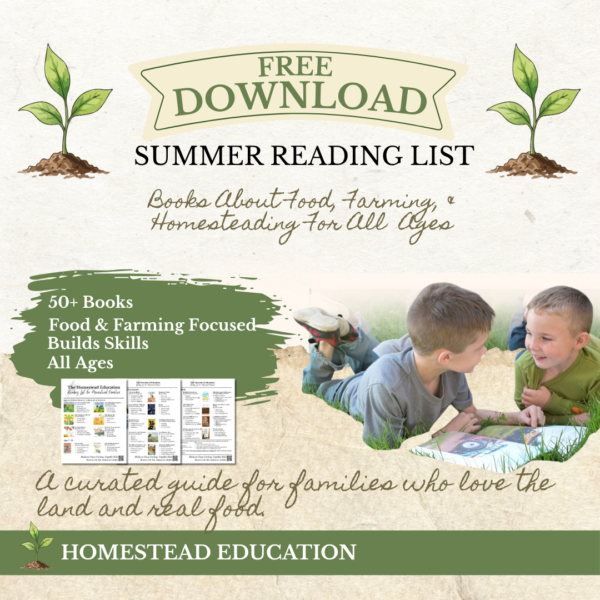
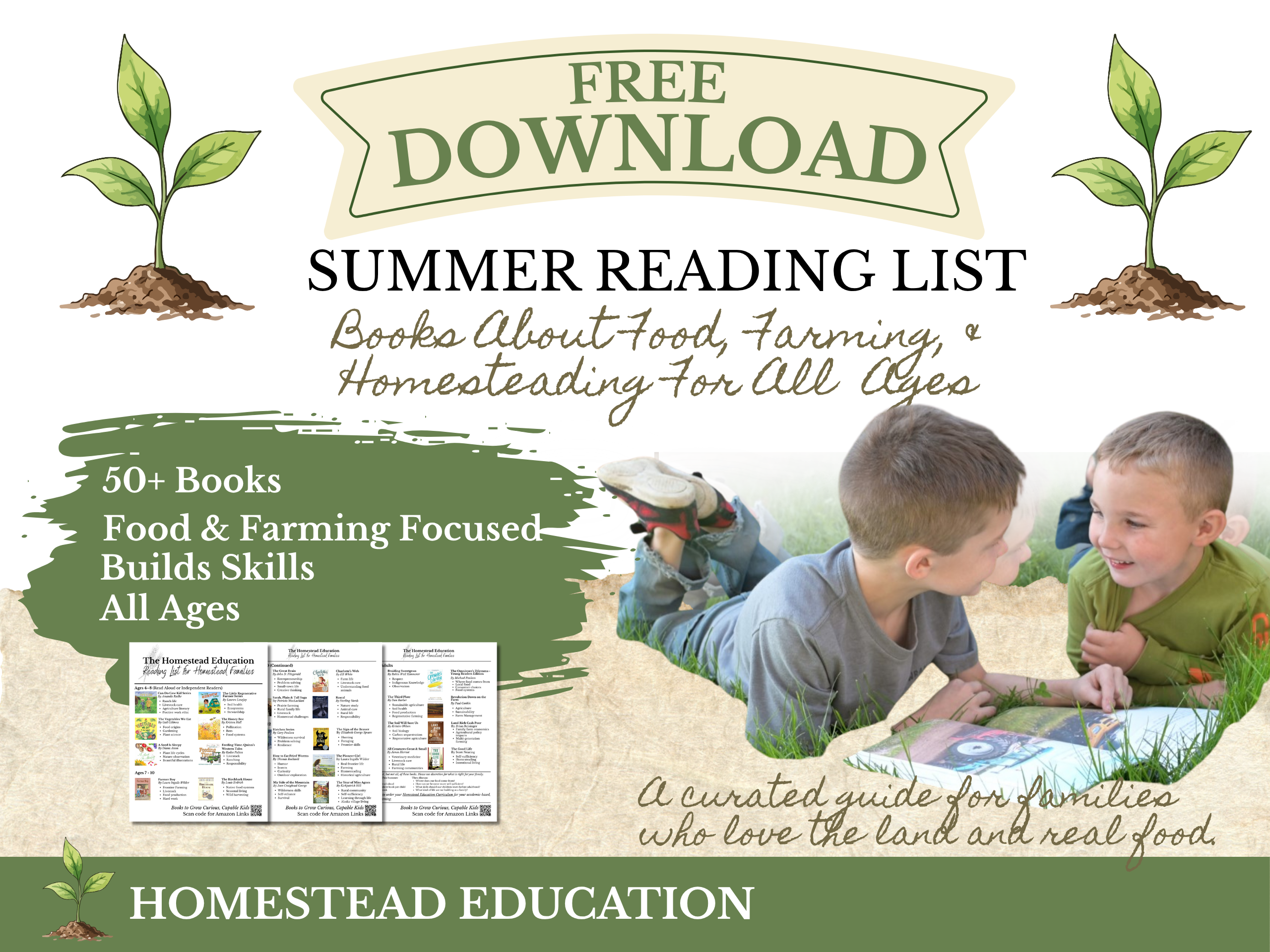
Books About Food, Farming, and Real Life: A Summer Reading List for Homeschool Families
If you’ve spent any time searching for books for your children lately, you’ve probably noticed the same thing I have.
Many modern children’s and young adult books seem disconnected from real life.
They’re often set in urban environments where food magically appears in grocery stores, people rarely make or grow anything for themselves, and the challenges characters face have little connection to the practical skills children need to navigate the real world. Even more concerning, many popular books contain themes, language, and content that parents may not be ready to introduce to their children.
As a homeschooling mom raising six children and someone who grew up farming, I’ve become increasingly selective about the books I place in front of my family.
That doesn’t mean every book needs to be about farming.
It doesn’t mean every story needs to be set on a homestead.
But I do believe books should help children better understand the world around them, challenge them to think deeply, and expose them to meaningful ideas and experiences.
I want my children to read books that inspire curiosity.
Books that teach them about food, nature, history, economics, responsibility, and the relationship between people and the land.
Books that help them develop character, resilience, and appreciation for the work that goes into producing the things we use every day.
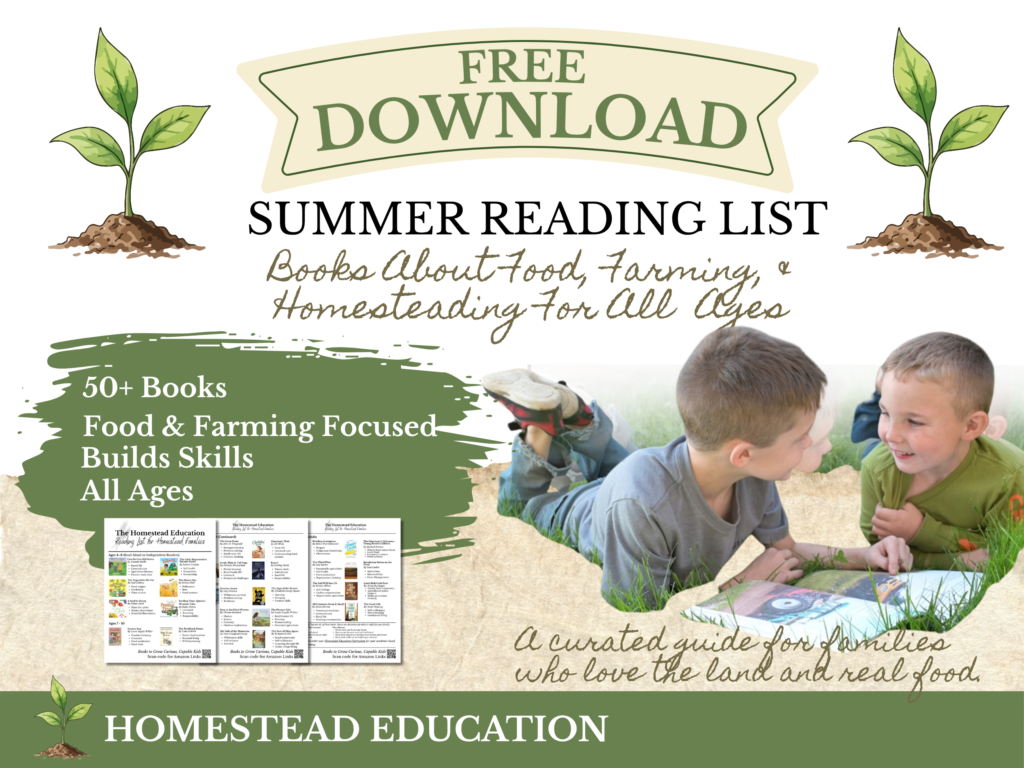
That’s why I created this Summer Reading Guide.
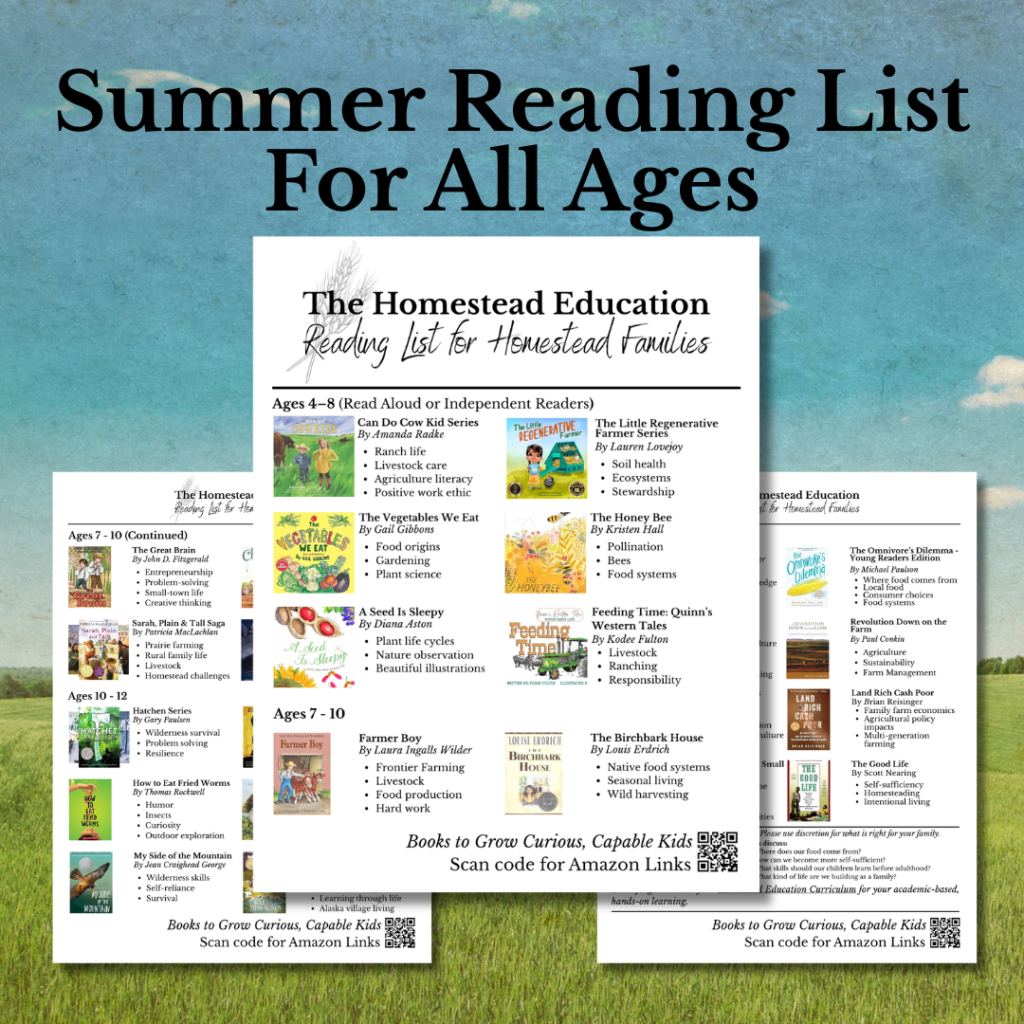
Some of these books are family favorites that I’ve personally read and recommended for years. Others are books currently on my own reading list because they align with the values and skills I want my children to develop.
Together, they create a reading journey that spans food, farming, nature, entrepreneurship, self-sufficiency, conservation, and rural life.
Why Books About Food and Farming Matter
Most children today are several generations removed from agriculture.
Even many rural families no longer grow food, raise livestock, or spend much time learning where everyday necessities come from.
As a result, children can grow up disconnected from the systems that sustain human life.
When kids understand food production, they begin to understand much more than agriculture.
They learn science through soil, plants, weather, and ecosystems.
They learn history through the stories of settlers, pioneers, and farming communities.
They learn economics through supply, demand, production, and trade.
They learn nutrition through understanding how food is grown and prepared.
They learn responsibility by seeing the daily care required to grow plants and raise animals.
Agriculture isn’t just another subject.
It’s one of the few topics that naturally connects almost every area of learning.
Books provide a powerful way to introduce these concepts, even if you don’t live on a farm.
The Value of Rural Stories
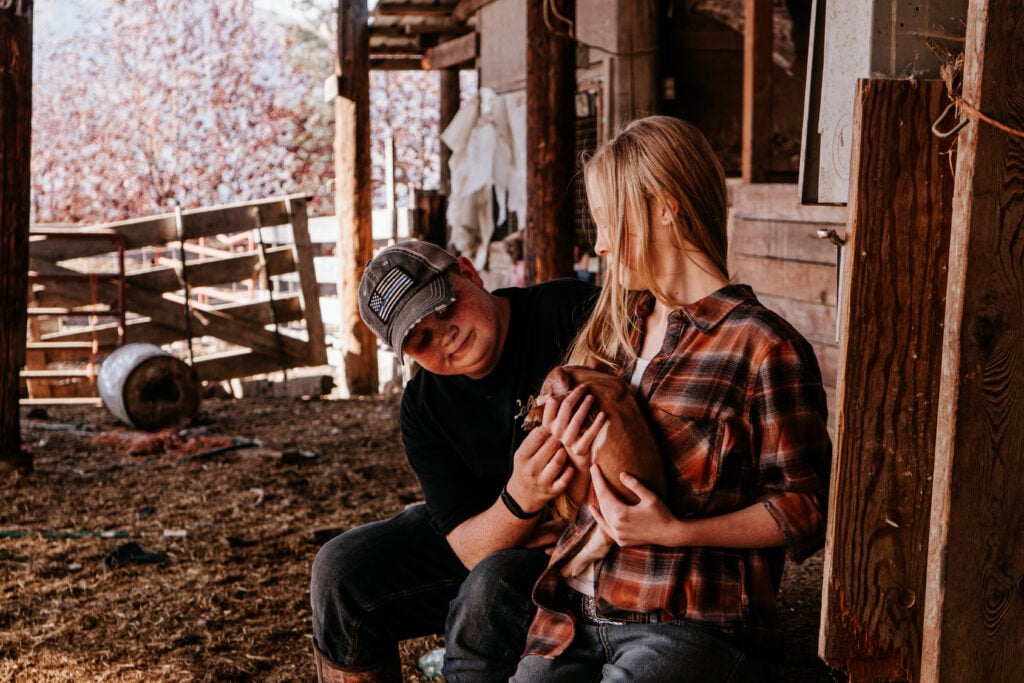
One reason I intentionally seek out rural and agricultural books is because they often tell a different kind of story.
Many rural stories emphasize:
- Responsibilities
- Family Relationships
- Stewardship
- Hard Work
- Resourcefulness
- Problem Solving
- Community
- Respect For Nature
Characters are often required to contribute to the success of their family or community. They learn from mistakes. They encounter real-world challenges. They discover that actions have consequences.
These are valuable lessons for children regardless of where they live.
Books like Farmer Boy, Little House in the Big Woods, The Birchbark House, My Side of the Mountain, and The Ox-Cart Man continue to resonate with families because they teach timeless truths about work, responsibility, and human nature.
Reading Doesn't Have to Look Like School
One of the biggest mistakes I see parents make is turning reading into another assignment. Reading should be enjoyable and feel like discovery.
Summer is the perfect time to relax your expectations to focus on a lifelong learning of books. So, instead of assigning chapters and worksheets, try creating a family reading culture.
- Leave books on the kitchen table.
- Read on the porch.
- Take books camping.
- Listen to audiobooks during road trips.
- Read while waiting for appointments.
The goal isn’t to check boxes.
The goal is to help children see reading as a natural and enjoyable part of life.
Independent Reading Tips
Let Children Choose
While it’s important to provide quality options, children are more likely to read books they select themselves.
Offer several age-appropriate choices and let them decide where to start.
Follow Their Interests
Does your child love animals?
Choose books about livestock, wildlife, or veterinary medicine.
Do they enjoy adventure?
Try wilderness survival stories.
Are they fascinated by gardening?
Introduce books about plants, pollinators, and food production.
Interest drives engagement.
Model Reading
Children are more likely to read when they see adults reading.
Let your kids catch you with a book.
Talk about what you’re reading.
Share interesting facts and stories.
Reading is contagious.
Follow Their Interests
Does your child love animals?
Choose books about livestock, wildlife, or veterinary medicine.
Do they enjoy adventure?
Try wilderness survival stories.
Are they fascinated by gardening?
Introduce books about plants, pollinators, and food production.
Interest drives engagement.
Keep Books Accessible
Children are more likely to read when books are visible and easy to grab.
Create a basket in the living room.
Keep books in the vehicle.
Leave a few on the kitchen counter.
Make reading convenient.
Why Family Read-Alouds Are Powerful
Some of my favorite homeschooling memories have come from reading together.
Family read-alouds create shared experiences that often lead to meaningful conversations.
A child who may not yet be ready to independently read a challenging book can still enjoy and learn from it through read-aloud time.
Read-alouds also allow families to tackle topics that benefit from discussion and context.
Books about agriculture, economics, history, conservation, and rural life often become much richer when explored together.
You don’t need an hour every day.
Ten or fifteen minutes before bed can have a tremendous impact over time.
Discussion Questions for Any Book
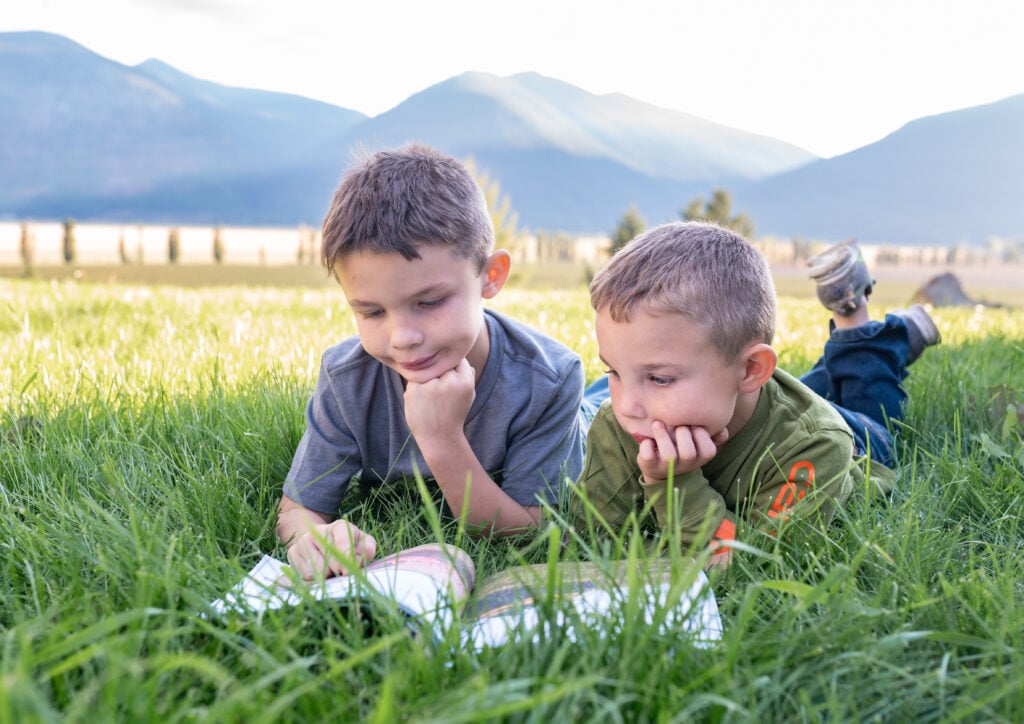
Whether your child is reading independently or you’re reading together as a family, discussion helps deepen understanding.
Try asking:
About the Story
- What was the most interesting thing that happened?
- Which character would you most like to meet?
- What problem did the characters face?
- How would you have handled the situation?
About Food and Farming
- Where did the characters get their food?
- What skills did they use to provide for themselves?
- How is life different today?
- What can we learn from their experiences?
About Character
- What character traits did you admire?
- Did someone make a mistake? What happened?
- What lesson did the story teach?
About Real Life
- Have you ever experienced something similar?
- Could our family try any of the skills mentioned in this book?
- What did this book make you curious about?
Simple conversations often lead to the most meaningful learning.
Learning Beyond the Book
The best books inspire action. Consider planting something after reading about gardening. Visit a bee aviary after reading about pollinators or visit a farm after reading about livestock. You can also go on nature walks after reading a book about foraging or plant identification.
Reading becomes much more memorable when children can connect ideas to real experiences.