You Don’t Need a Homestead to Homeschool – But Your Kids Still Deserve an Agriculture Education
I grew up in agriculture before I ever knew it had a name.
To me, food did not come from the grocery store first. It came from ranches, hunting, livestock, gardens, processing days, long work hours, and the kind of family life where children knew the story behind their food before it ever hit the dinner plate.
My dad was a cattle rancher and hunting guide. My mom was a taxidermist. I was around animals, meat processing, rural skills, open land, hard work, and food systems before most kids even knew those things existed. Agriculture was not a cute elective in our house. It was not a one-week unit study about farm animals. It was not a field trip where someone points at a cow, and everyone claps because they saw “where milk comes from.”
It was my life.
So when I talk about agriculture education now, I am not talking about some Pinterest version of “farm school.” I am not saying every family needs a dairy cow, a chicken coop, a barn, and an extensive sunrise chore routine. I am definitely not saying you need a homestead to homeschool.
Let’s just clear something about agriculture education up right now.
- You do not need a homestead to homeschool.
- You do not need chickens to homeschool.
- You do not need pigs to homeschool.
- You do not need forty acres, a barn cat, a milk cow, or a sourdough starter quietly judging you from the kitchen counter homeschool.
But I do believe every child deserves to understand food, agriculture, nutrition, economics, and the systems that keep human beings alive.
That is the part people seem to keep missing. When I chose to homeschool my kids, I did not do it because I wanted every one of them to become a farmer. Nor did I do it because I thought agriculture was the only career that mattered. And I certainly did not do it because I wanted to limit their futures.
I did it because I wanted their education connected to real life. And agriculture has opened their eyes to the way the world works in a way very few subjects can.
It has taught them confidence, responsibility, problem-solving, patience, compassion, work ethic, critical thinking, biology, economics, nutrition, entrepreneurship, stewardship, and, if we are being honest, probably a few colorful vocabulary words during livestock emergencies that we will call “language arts enrichment.”
That is the part people seem to keep missing. When I chose to homeschool my kids, I did not do it because I wanted every one of them to become a farmer. Nor did I do it because I thought agriculture was the only career that mattered. And I certainly did not do it because I wanted to limit their futures.
I did it because I wanted their education connected to real life. And agriculture has opened their eyes to the way the world works in a way very few subjects can.
It has taught them confidence, responsibility, problem-solving, patience, compassion, work ethic, critical thinking, biology, economics, nutrition, entrepreneurship, stewardship, and, if we are being honest, probably a few colorful vocabulary words during livestock emergencies that we will call “language arts enrichment.”
"But more than anything, agriculture has taught them that they are not helpless."
They understand that food does not magically appear in plastic packaging. That meals have a story long before they reach the table. They see the connection between soil, animals, weather, labor, health, money, and personal responsibility. They understand that farmers carry a weight most consumers never think about. They understand that health is connected to food. They understand that buying local is not just trendy; it changes communities. They understand that there is dignity in work.
That kind of education should not be reserved for farm kids. It should belong to every child.
Agriculture Education Is Not Just for Future Farmers
One of the biggest misconceptions I hear is that agriculture education is only necessary if a child plans to go into vocational agriculture.
And yes, vocational agriculture matters.
We need farmers, ranchers, mechanics, welders, agronomists, veterinarians. We also need people who understand large-scale food production, livestock management, soil science, equipment, technology, and the business side of feeding a country.
That kind of education should not be reserved for farm kids. It should belong to every child.
I am not against commercial agriculture. I am against treating it like it is only commercial. Those are two difference things.
Your child can become a doctor, engineer, mechanic, attorney, nurse, pilot, pastor, artist, software developer, entrepreneur, or stay-at-home parent and still benefit from understanding agriculture.
Actually, I would argue they will be better at whatever they do because they understand agriculture.
- A doctor who understands food systems thinks differently about nutrition.
- An engineer who understands irrigation thinks differently about water.
- A business owner who understands local food thinks differently about supply chains.
- A parent who understands food labels thinks differently about what they feed their family.
- A citizen who understands agriculture thinks differently about policy, land use, conservation, health, and community resilience.
Agriculture is not one isolated career path. It is the foundation underneath every civilization that has ever existed.
Every person eats. Every family buys food. Every child grows up making decisions about health, money, consumption, waste, and responsibility.
So why would we treat agriculture like it only matters to the small percentage of people who farm professionally?
That makes no sense. And frankly, it is part of the reason we are where we are.
You Can Teach Agriculture Without Living on a Farm
Some people hear “homestead education” and immediately assume it is only for families who live on acreage.
That could not be farther from the truth. Food literacy can happen anywhere, whether you live in an apartment, subdivision, rental, or city. You can teach your kids about food in a kitchen, the farmers market, grocery store aisle, and around the dinner table.
A child does not need to own a goat to understand milk. They do not need to butcher a chicken to understand meat production. And they do not need to grow an acre of corn to understand soil, weather, seed selection, pollination, harvesting, processing, and transportation.
Would hands-on experience help? Absolutely. I will always believe real-life learning sticks deeper than anything we can read from a page.
But accessibility matters.
Not every family is in a season where they can raise livestock or even want to. Not every family owns land. Not every family has the time, money, health, location, or ability to live a full homestead lifestyle. That does not mean they should be excluded from agriculture education.
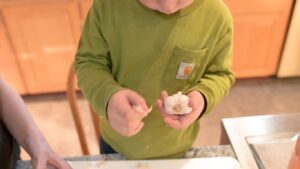
Honestly, I would have to say those families may need it even more, because agriculture gives them a way to reconnect with something modern life has almost completely severed.
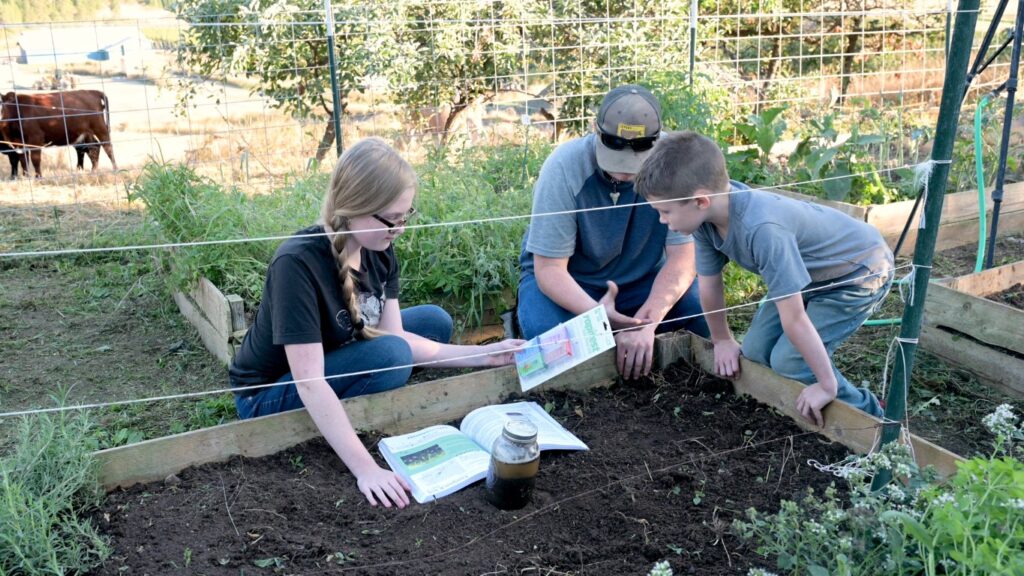
- They can grow herbs in a window.
- They can compare local eggs to store-bought eggs.
- They can visit a farm.
- They can learn to cook from scratch.
- They can study food labels.
- They can preserve a flat of berries.
- They can interview a farmer.
- They can plan a grocery budget.
- They can learn why grass-fed beef is different.
- They can understand the difference between whole foods and ultra-processed foods.
- They can ask better questions.
That is agriculture education. That is real life.
Food Is Science, Economics, Culture, and Responsibility
One of the reasons I get so passionate about this is because agriculture is one of the most naturally integrated subjects we can teach. People sometimes reduce agriculture to “farm animals and tractors,” but that is such a shallow understanding of what agriculture actually is.
Food is biology, chemistry, ecology, economics, geography, history, sociology, health, culture, family, politics, and personal responsibility for your health.
Take one simple meal and start asking questions.
Where did the ingredients come from? Who grew them? How far did they travel? What did they cost? Were they seasonal? What nutrients do they provide? How were they processed? What labor was involved? Could we make this ourselves? Could we source it locally? Could we grow any part of it? What happens to the waste? How did our grandparents make this? Why did this meal become part of our culture?
That is not “extra.” That is applied education. And honestly, it is the kind of education that makes kids care. When a child sees how food connects to their own body, their own dinner plate, their own family budget, and their own community, learning becomes less abstract.
Suddenly science is not just a diagram in a textbook. It is the decomposition of a compost pile. The anatomy of a chicken egg. The microbiology of spoiled milk. The entomology of garden pests. Consumer economics of freezer inventory or grocery shopping. It is empathy for the farmer trying to make ends meet. This is why agriculture education is so powerful for homeschool families. It gives us the ability to stop separating school from real life.
Agricultural Literacy Belongs to Everyone
There is a term for this: agricultural literacy.
National Agriculture in the Classroom describes an agriculturally literate person as someone who understands the food and fiber system, including its historical, economic, social, and environmental significance. That matters because agriculture is not only about production. It is about understanding how food, land, labor, culture, economics, and society are connected.
USDA’s National Institute of Food and Agriculture has also emphasized strengthening agriculture education in K–12 classrooms by using agriculture as a real-world lens for learning about farming, food and fiber production, environmental quality, and scientific literacy.
That is exactly the point.
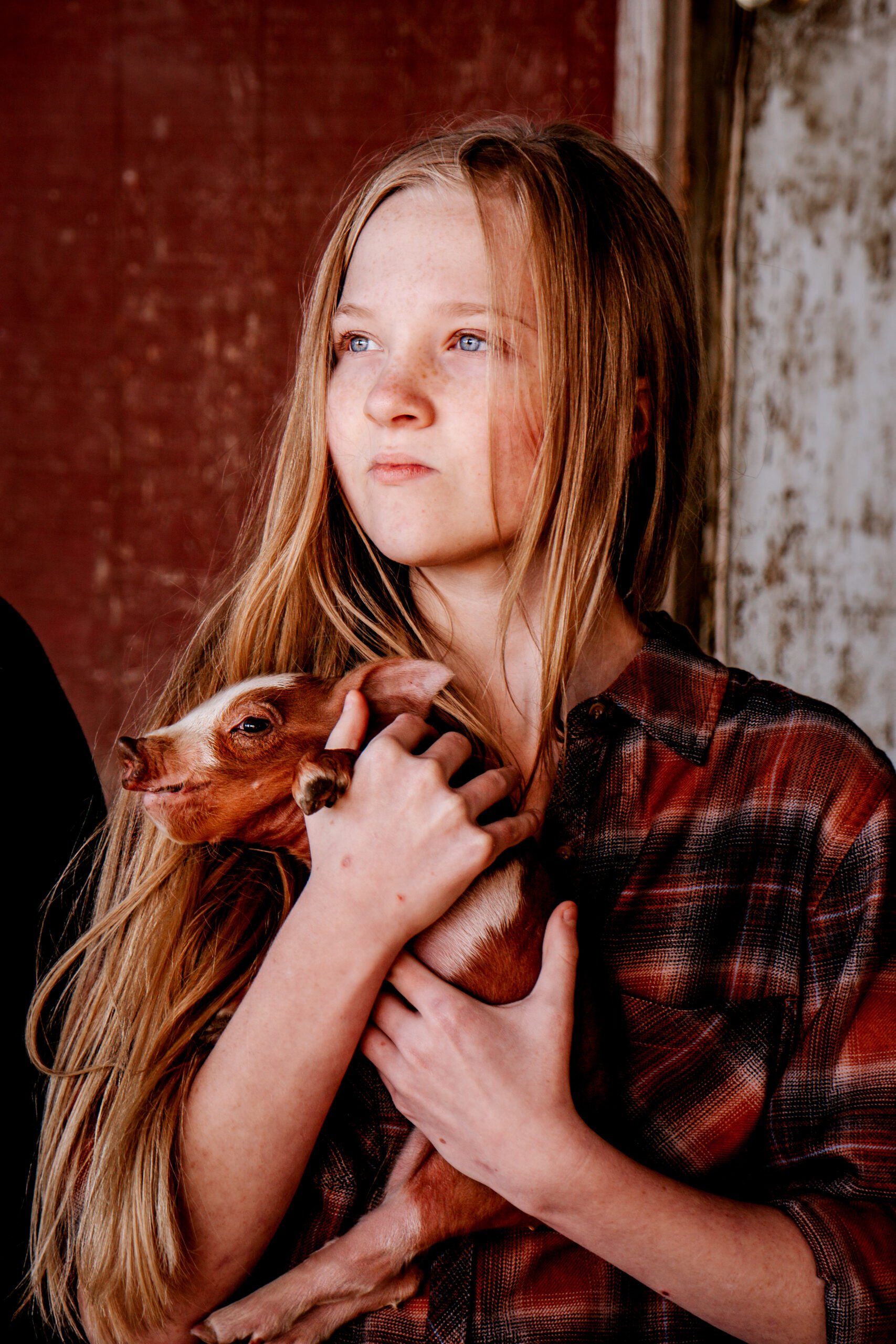
That is why food and agriculture belong in every education.
Agriculture education should not be treated as a narrow vocational track only for students who plan to enter commercial agriculture. It should also be used as a foundation for helping all students understand the world around them.
Because every child lives inside a food system. They will one day participate in an economy. They will grow up making decisions that affect their body, family, household, community, and land around them.
They may never own livestock or even drive a tractor. They may never sell produce at a farmers market. But they will eat it and buy it. They will vote on policy and politicians that will affect the nation’s food. They will be in charge of their own health, and hopefully will have the knowledge they need before they are faced with the nutrition-based diseases that are ravaging our country. And then they will teach that to their own children.
They will either understand those systems, or they will be dependent on other people to interpret them.
The Problem Is Not That Kids Don’t Know Enough About Farming
The problem is that many kids are growing up without understanding the systems that support their lives.
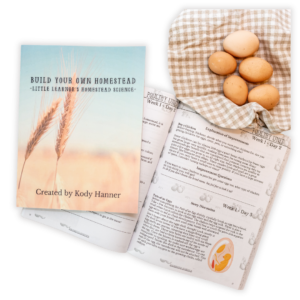
Why Homestead Science Exists
This is exactly where Homestead Education fills the gap.
For the last several years, I have been building agriculture science curriculum specifically for homeschool families, co-ops, and small schools because I saw something missing.
There were agriculture programs designed for vocational tracks. There were cute farm unit studies for younger kids. There were scattered resources about gardening, animals, and food.
But I did not see a full agriculture science curriculum created for homeschool families that treated homesteading, sustainability, food systems, and self-sufficiency as serious academic subjects.
So I built one.
Not because every kid needs to become a farmer. Because every kid deserves to understand the systems that keep humans alive.
Homestead Science was designed to teach agriculture in a way that is accessible to families with or without land. It brings together food systems, animal science, plant science, soil, nutrition, preservation, economics, entrepreneurship, and personal responsibility in a way that fits the homeschool lifestyle.
It takes the often fragmented, surface-level exposure most kids get to food and agriculture and turns it into a cohesive, real-world framework that connects science, life skills, and responsibility in a way that is accessible to every family—regardless of where they live or what resources they have. Instead of treating agriculture as a niche subject or a “farm kid elective,”
Homestead Education weaves it into everyday learning so children can understand the systems behind their food, their health, and their communities. It bridges the disconnect between academic knowledge and practical application, giving students the opportunity to see how biology, economics, nutrition, and environmental science all intersect in something as simple and essential as a meal. In doing so, it doesn’t just teach agriculture—it restores context, builds capability, and equips kids to engage with the real world in a thoughtful, informed, and confident way.
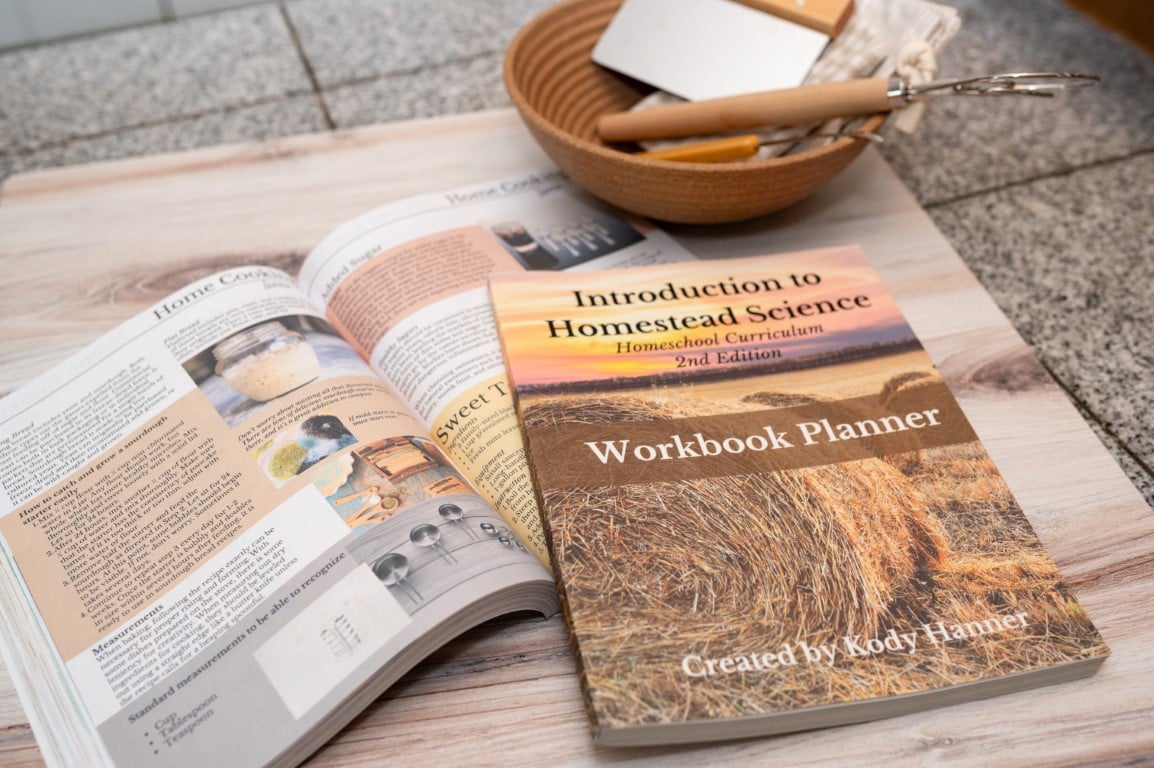
Ready to make agriculture education part of your homeschool?
Homestead Science helps your kids learn:
- Where food really comes from
- How science connects to everyday life
- Nutrition, soil, plants, animals, and food systems
- Self-sufficiency without needing a farm
- Real-world skills that build confidence and responsibility
No homestead required.
No farming background needed.
Just practical, meaningful agriculture education for real families.