
Episode: 183 Good Food and Stubborn Wives | Living a Natural Life After a Terminal Diagnosis
- Kody Hanner

Episode Highlights
Kody Hanner and Ron Hanner share a raw, practical story about marriage, parenting, homesteading, and rebuilding health after Ron was told he had end-stage liver disease and might have only a year to live. What follows is a story of fear, grit, and gradual change that led their family to rethink food, home life, and what it means to fight for one another. This episode matters because it connects nutrition, mindset, family systems, and healing in a way that feels lived in rather than theoretical.
In this episode:
- Kody and Ron explain how they met, blended two families, and quickly built a new life together in Oregon
- Ron describes the shock of being told he was “a little cirrhotic” and later diagnosed with compensated end-stage liver disease at 35
- They talk through the emotional fallout, including fear, withdrawal, PTSD, and the strain the diagnosis put on the marriage
- Kody shares how the doctor’s vague advice to pursue a more natural lifestyle became the first thing she could grab onto
- They break down the drastic changes they made to food, including cooking from scratch, avoiding preservatives, and sourcing cleaner ingredients
- The move to homesteading in North Idaho becomes a major turning point as they begin producing more of their own food
- Ron explains how he managed chronic pain and disability through a spinal cord stimulator instead of narcotics
- They discuss homeschooling, family meetings, chore systems, and how they learned to make the whole household part of the process
- Kody and Ron share how they moved toward cleaner living with homemade cleaners, tallow and lard, fewer artificial scents, and more herbal remedies
- The episode closes on their broader message: be proactive, be intentional, and do not hide from the hard things
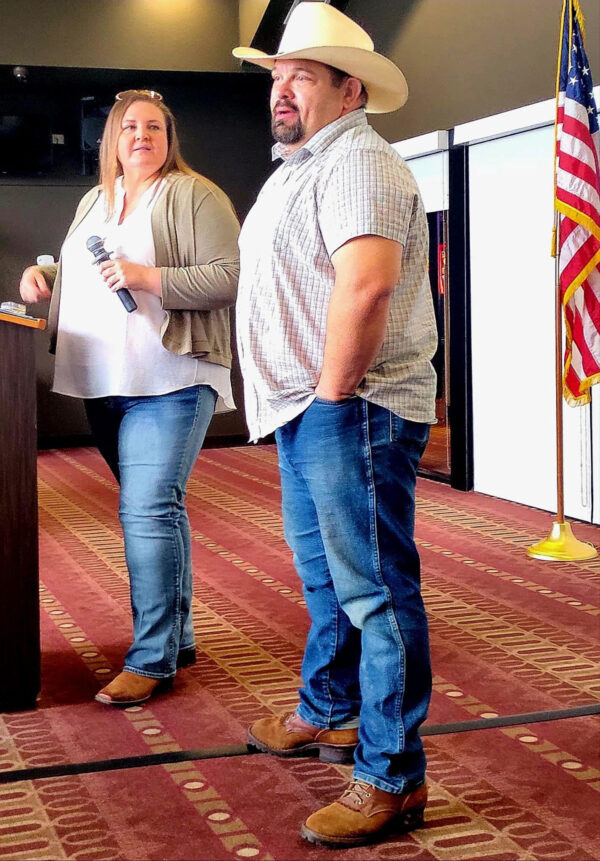
Ron & Kody speaking at a Rotary Club luncheon on the importance of a local food system.
Podcast Links and Resources
Ron’s Links
- Hanner Homestead: www.hannerhomestead.com
- Hanner Homestead IG: www.instagram.com/thehannerhomestead
- Hanner Homestead FB: www.facebook.com/thehannerhomestead
Kody's Links
- Homestead Education Curriculum – http://thehomesteadeducation.com/homesteadeducationcurriculum
- Homestead Family Reading List – https://www.thehomesteadeducation.com/homestead-summer-reading-list/
- Instagram – https://instagram.com/homestead_education
- Facebook – https://facebook.com/thehomesteadeducation
- Raising Self-Sufficient Kids Book – https://www.thehomesteadeducation.com/product/raising-self-sufficient-children/
Kody Hanner (01:01)
We are so glad that you could join us today. My name is Kody Hanner, and this is my husband.
Ron Hanner (01:08)
Ron Hanner.
Kody Hanner (01:09)
And we came here today because we want to tell you a story that we have been blessed with the opportunity to share. So Ron and I met about 10 years ago. And yeah,
He was a widower, and I was a single mom of two, just working a ton of hours. Life had been really hard as a single mom. And I mean, I know he was going through a lot as a widower. And when we met, it was like the answer to both of our prayers. Like, there was something in each other that we both needed.
ShowHide Full Transcript
It probably wasn’t even- I think it was six, seven months later we actually got engaged, and we got married, moved to Oregon to start this dream life that was exactly what we wanted. I wasn’t having to work 80-hour weeks anymore. Ron and I were in the woods every day hunting, fishing, hiking, taking the kids on adventures. Right away we got pregnant with what was our fifth child, because you know, we both brought kids into the relationship. And I mean, he has been a blessing since day one. Like, what a wonderful kid. And about when he was six or seven months old, Ron started having some heartburn issues. And he went to he was Ron’s a disabled vet. So we went to the veteran’s doctor. They, you know, put him on some omeprazole. We weren’t really getting any results with that.
Ron Hanner (03:15)
I was already on an omeprazole for the heartburn. It’s something I’ve had for a considerable amount of time, but I was getting some other symptoms where any time I ate, I started getting some stomach pains and some extra heartburn. And so didn’t really think a whole lot about it. It was just like, let’s I’m gonna go ahead and get it checked out, and I had to actually take my dad to the VA in Portland. So I went ahead and scheduled an appointment to get in at the same time that he was there, just kinda kill two birds with one stone with that trip and so we get up there and dad goes about his appointment and I go over and they want to do a CAT scan and just take a look at everything and see if they could see anything out of the ordinary. And so we go in, and we do the CAT scan, and dad finishes up. I finish up. We jump back in the truck, head home, and it’s like a day or two later I get a call from the VA that I really wasn’t expecting. They just, they were like, Hey, we did your CAT scan, and we see that it looks like you’ve got a slightly enlarged liver, and what else was it?
Kody Hanner (04:23)
Pulmonary hypertension, not pulmonary portal vein hypertension and an enlarged spleen.
Ron Hanner (04:29)
Enlarged spleen, yeah. And so we were like, huh, okay, well, they wanted to at that point they wanted to refer me to a liber specialist. And so that kind of started sounding a few alarms in our heads and hearts, and boy, what could this possibly mean? Because it was literally we saw this and we want to schedule it this specialist. And so we started digging in and searching, and we kinda came to the conclusion that it’s really not gonna be much of anything, so we didn’t get too overly concerned at that point. We were definitely concerned, but not scared. And so we just continue on with our life and of course, you know, everybody knows a VA doesn’t move fast with anything, typical government. But we went ahead and continued on with life as we normally would and are hiking and our fishing and are having fun and doing what we love to do. And next thing you know, quite a bit of time’s gone by and here it is time to go into this this li liver doctor, and this is the time that everything changed. I gotta say for the worst yet in the long run for the better.
Kody Hanner (05:50)
We went back to Portland that day. it’s funny, I actually have that day like ingrained in my brain in so many weird ways that I actually remember on the way out of town, we grabbed breakfast burritos and I spilled breakfast burrito on my new shirt.
Ron Hanner (06:06)
Go figure you
Kody Hanner (06:09)
I don’t own a shirt without a stain, but for some reason, of all the shirts I’ve stained, that one is ingrained in my brain. And we went to this liver specialist, and my gosh, they did so many tests on him that day. I mean, there were ultrasounds and,
Ron Hanner (06:26)
A couple of gallons of blood. Yeah.
Kody Hanner (06:29)
And they did something; it’s like it’s called a tap test, and I probably should have looked up the name of it, but you know how sometimes those things go. Where they actually took this probe and put it on his stomach over the liver and did like a tapping, and it gives feedback of what the sound is as it taps to his liver and back. And after that, we went into a room, and we had our baby with us. He was about six months old. And I was changing his diaper there on the table. And this doctor walks in. He was a f fellow for digestive health. And he sits down, and he brings up Ron’s chart on the computer. And he kind of quickly goes, Well, after running some tests, it looks like you’re a little cirrhotic. And goes, Hold on, I got to go look at something, and got up and left.
Ron Hanner (07:26)
What was I, thirty-four?
Kody Hanner (07:29)
Yeah, I 34, 35, not I mean, we were young.
Ron Hanner (07:33)
Really young. So it was this was incredibly hard news to take at this age.
Kody Hanner (07:38)
Well, and honestly, the way he said it, like you’re a little cirrhotic and got up and left. Right, Ron and I were like, What wha what does that mean? Like, my dad had just died of liver cirrhosis.
Ron Hanner (07:50)
Very aware of what it meant, but what did it mean at this age?
Kody Hanner (07:54)
And what does a little cirrhotic mean?
Ron Hanner (07:56)
Right.
Kody Hanner (07:58)
And I mean, we’re just like we’re we bust out our phones, and we’re trying to Google real quick. Because at the time I kind of thought that, you know, your liver aged and got scar tissue over time, just naturally kind of everybody. So a little cirrhotic, okay, he’s 35, that sounds right. Not realizing that you don’t actually s cirrhosis is the stage four level.
of liver disease. And so to be a little cirrhotic, you’re already at stage four.
Of course, this fellow did not explain that to us. He comes back in and then kind of says, Yeah, it looks like you have compensated end-stage liver disease. And at your age and how fast that’s progressed, we’re not sure what that means or what your prognosis could be. But some people live a year, some people live fifty years. Not really sure.
So we’ll see you back here in six months for another round of tests and see if you have liver cancer. Let us know if you have any questions. And got up and left again.
Ron Hanner (09:17)
Yeah.
Kody Hanner (09:19)
What a like, I mean it was just like the air was taken out of us, like the the air left the room.
Ron Hanner (09:27)
Most definitely. It was, it was terrible. You know, and I wanna, I wanna remind everybody that with this diagnosis, I’ve never was never a heavy drinker. I would maybe once in a while on a weekend, grab a six pack, hang out with some friends, have a campfire in a backyard, but not what you typically think of with somebody that comes down with liver cirrhosis. I’m a pretty firm believer that mine came through chemical exposure through my tour through Iraq. The pollution that we were in and breathing and drinking and everything else, I’m sure. I just want folks to understand that this wasn’t from alcohol.
Kody Hanner (10:08)
No, not at all. And you know, we go home, we had to sit down with, you know, Ron’s parents and a couple of local family members. We weren’t sure if we should even tell the kids or anything at that point. And a couple of days into it, after this diagnosis, when we
We were still just digging for every answer we could. I’d called my stepmom and asked what, you know, like my dad had done during the early stages of his diagnosis and stuff. And I mean, basically we with the information he gave us, I called him back, and it was a sobbing phone call. Like, you have to give me more information. And in the conversation, he did tell me that Ron’s MELD score was fairly low, which a MELD score is metabolic in life diagnosis. And it was low, but again, with his age, basically was telling me that he should probably get his affairs in order because we could only have a year. And I said, that can’t be the only answer. There has to be something.
And you know, in tune with, you know, VA doctors and the medical advice we were getting almost 10 years ago was, well, there is really nothing you can do for liver disease. But if
he pursues a more natural lifestyle, it might improve his quality of life.
Ron Hanner (11:52)
Mm-hmm.
Kody Hanner (11:54)
I couldn’t believe how nonchalant and downgrading he said that to us with what we know now. But
Ron Hanner (12:05)
Well, here’s the kicker on that one too. He says, if you live long enough, he says, I’ll tell you, there are some medications that are in the process of being made and tested right now that are gonna pretty much reverse all the bad side effects of liver disease and make people live a lot longer, he says. But chances are you’re not gonna be around long enough to experience those. And even if you are, because you’re a VA patient, you’re probably still not gonna get
So that was just like another slap in the face. Man, you gotta love your government.
Kody Hanner (12:37)
We were, I mean, we were just like, he was giving us nothing. But in a point where I had just lost my dad to liver disease and now my husband of just over a year was potentially I was potentially gonna lose him too in another year. I needed something; I needed anything. And that if you pursue a more natural lifestyle.
I grabbed onto that like it was I mean, like it was my job. Like it was everything I could. I had something. I had something that I could do. And I dove into that really deep.
But Ron wasn’t quite as on board as I was.
Ron Hanner (13:22)
Me.
But yeah, on that note, we had totally- we were planning on having another young to accompany Wade through his crazy journeys that we knew were ahead. Because when we came into this relationship, I had the two older boys still at home, CJ and Wyatt, and Kody had Savannah and Wyatt, and they were all
CJ and Wyatt were close in age; Savannah and Wyatt were close in age.
Kody Hanner (13:55)
Well, they’re twins, so close in age.
Ron Hanner (13:57)
Yeah, kinda.
Mentally, yeah. No. Physically, yes. Anyway. So we went, we had after we got married, we had Wade and we had decided that we were gonna have another one. So Wade had a buddy to grow up with. And when this diagnosis came down, I was like, I’m not doing it. I’m not having another one. I’m not gonna
Put another child through what we’re all about to live through, or you guys are about to live through.
Kody Hanner (14:32)
You already had two that had lost a parent.
Ron Hanner (14:34)
Yeah, yeah. I already had the two boys that were suffering through losing their mom. And I just, I refuse. I’m like, there’s there’s no way I’m not having another baby. So of course, with that, that threw another loop into Kody’s kind of pool of issues to deal with because she was still set on having another. And
When this diagnosis came down, she clung to the “If you live a better lifestyle, a cleaner lifestyle, you might have more time.” And for that, that meant to me, this is it. It’s over. I went to a really dark, depressed, miserable state. I already had struggled quite a bit with PTSD from Iraq. I did three tours, well, two tours through Iraq, two rotations of 15 months through the combat zone, lost friends, saw stuff that people wouldn’t even imagine. So yeah, I already had struggled quite a bit with the PTSD portion of it and then taken dumped this on top of it and the fairly recent passing of my late wife prior to this diagnosis, and it there was just a whole big ball of
darkness looming over me, and when th when this diagnosis hit it just kinda exploded. And I went to I withdrew into myself just so far. Nothing, nothing mattered. Nobody mattered to me anymore. Not my wife, not my kids. Definitely not myself.
It was a very miserable, lonely, hateful place to be.
And it definitely damaged my family. Not just damage from the diagnosis, but damage that I created from going where I did.
Kody Hanner (16:54)
From my end on that, though.
He knew that, you know, damage or not, or how where he went, it was that he was sick. And that’s gonna come with it. I mean, and a terminal diagnosis is not something that you handle lightly. And whether our pursuit of a natural lifestyle was going to be the answer or not, it gave
Ron Hanner (17:35)
Game
Kody Hanner (17:36)
me something to hold on to while going through this. It gave me hope.
And I don’t think I mean, honestly, I don’t think I would have made it through all this had I not had something to do to feel like I was making a difference for him. And the harder it was on him and, for lack of a better word, the meaner he was to us. And I mean, he wasn’t just necessarily mean. It wasn’t like an attacking type of way. He just disconnected.
Ron Hanner (18:09)
I didn’t care anymore. I was done.
Kody Hanner (18:12)
And the worse I saw him get mentally, the harder it made me work. And so, you know, I I repaid Ron for all his grumpiness by making him eat things.
Ron Hanner (18:26)
The most terrible, most disgusting food you could possibly create in
Kody Hanner (18:32)
And to clarify, I am a really, really good cook. Like, my food is delicious. And I mean, we’ve taught our daughter to cook as good as us. Like, food is something that we can handle. I mean, we love to cook; we love to do a lot of different things with that. So trying to learn how to eat healthy was, I mean, we always ridiculous. We always, I mean, I always saw myself as a home cooker. And this pursuit of a natural lifestyle really like blew that perception of myself completely out of the water. Like it was I was not I was not the home cooker that I thought I was. And that’s because I was a home cooker based on what modern lifestyle even said. Like I was taking too many steps.
Ron Hanner (19:26)
The homemade was out of a box still.
Kody Hanner (19:28)
Yeah, like I was taking too many steps as it was as a modern cook by making soup from all the different ingredients rather than just buying soup out of a can. But I was still buying broth out of a can. I was sometimes adding
Ron Hanner (19:49)
Just loaded with sodium and preservatives.
Kody Hanner (19:52)
tons. I was sometimes using the vegetables out of a can. I was buying commercial meats to put into these soups. And I mean, I’m just using soup as an example because it has so many different ingredients. And
Ron Hanner (20:05)
Loaded with chemicals.
Kody Hanner (20:07)
loaded with chemicals. I wasn’t using fresh herbs. I was using like mixes that had fillers in them. And that was what, and you know, it sounds terrible now, but you know, even
you know, maybe even yourself, you’re going, my gosh, that that’s how I cook, that’s how I make soup. And that’s what they’ve told us is home cooking in today’s day and age. And
Ron Hanner (20:32)
Especially our age range, our age group levels.
Kody Hanner (20:34)
Exactly.
The kids, you know, kids born in the eighties and nineties grew up in that age group because our parents were sold convenience. And so that’s what we were taught because that was the best and the greatest. And so yeah, we ate some really as I promise you, honey, I will never make you eat ranch dressing made out of plain Greek yogurt again. Like just
Ron Hanner (20:59)
That was terrible, but I really tried to pretend I liked it, but it was it was god awful.
Kody Hanner (21:04)
It was so bad. And I tried it so many different ways. And actually, what’s funny is at this point, the other day, we were at a sour cream when we were making some homemade ranch. And Savannah used our homemade raw milk yogurt in it. And it was so good that that’s the only way we want it now. Yeah. But this is a huge circle from eight years ago when I was like, you know, he’s trying to gag down a plain salad.
Ron Hanner (21:28)
Well
Kody Hanner (21:29)
This nasty ranch dressing.
Ron Hanner (21:32)
So here
I am. I just got this recent diagnosis of I’m gonna die and my family’s essentially gonna go through hell trying to deal with this with me as long as I can hang on. And now here’s what I had to look forward to. Absolutely disgusting food for the rest of my life to try to extend this. Where’s the fairness in that?
Kody Hanner (21:59)
Yeah, I apologize now for that.
Ron Hanner (22:03)
You were only doing what you could learn quickly.
Kody Hanner (22:06)
And that was the thing: when you have a liver diagnosis, one of the things is that you have to lose weight, and ’cause that pulls the fat out of your liver.
Ron Hanner (22:17)
It’s easy with a diet like that.
Kody Hanner (22:19)
Because you just don’t want to eat.
And another piece of that is there’s a very specific list of foods that you can eat, and it doesn’t look like the standard diet. You can’t eat the low-fat things and stuff like that because they have sugar and preservatives and enzymes and things like that that just add to the onslaught of the liver, which I’m gonna get into some of that a little bit later.
However, I had this list of foods that I had no clue what to do with it. Half of them I’ve never heard of. And they were
They like we had to use full-fat dairy, but then lose weight. Like it just felt like it was contradictory to everything that we had been taught was a quote healthy diet or how you lose weight. So we really struggled with what we were gonna do. And what kind of became our go-to was rather than trying to navigate
what foods were okay and what foods weren’t, we went for the biggest thing we could do is get foods that didn’t have preservatives, didn’t have added salt, hadn’t been treated with, you know, any type of hormones and things like that. And the only way you can do that and know that it is truly that way is to grow it yourselves.
Ron Hanner (23:54)
Yep. That’s why we now watch our cows out here in the field eat this grass that we know has been sprayed with absolutely no chemicals. And we’re
Kody Hanner (24:01)
We are required to eat the grass.
Ron Hanner (24:03)
We’re watching our food grow out here, and it’s it’s wonderful.
Kody Hanner (24:08)
So that was our I mean, there’s actually- I’ll admit the money spent at the beginning was rough because I mean we were buying pressure canners and
Ron Hanner (24:17)
It was really rough. And on that note, if Dad ever hears this, I want to give Dad a big, big shout out. He was essential in starting this journey of my stubborn wife saving my life. We went to him and said, Hey, this is what’s going on. Here’s what we need that we don’t have, and he said, Tell me how much money you need to get this going and he wrote a check, and we were on our way.
Kody Hanner (24:47)
Yeah, I mean, I mean literally I told him what we needed to be able to get all the supplies that we needed to be able to cook differently. And here’s the thing: we couldn’t afford to buy, say, organic chicken at Whole Foods for our family of seven at the time. I mean, that was an impossible feat. But so we, you know, then we’re gonna have to grow all of our own chickens. So we need chicken brooders and a bigger chicken coop and order the chickens and the feeders and the processing equipment and all this stuff. In the
Ron Hanner (25:19)
Guess who founded that bill?
Kody Hanner (25:21)
mean yeah, in the meantime, we also still had to buy this organic chicken from Whole Foods. And so I mean, it was- I made a list of everything that we needed to do this, all the cookbooks that I needed, because I was starting over from scratch on even the way I knew to cook. And I went to him and gave him the list, and he ended up- the check he wrote was to pay off my car, which I had been like before I even met you, but we were
still making payments on it. So he wanted to give us the offset there. And then I remember he handed me his Cabela’s credit card and said, ” Sit right here and order everything you need.” And I mean, what a blessing.
Ron Hanner (25:59)
‘Cause this man, he’s not gonna get something for nothing. Yeah, he’s not gonna get nothing for something.
Kody Hanner (26:03)
He wants his points for Cabela’s. So, if I’m gonna be ordering, you know, a pressure canner and meat processing equipment and all those things, he’s gonna get his new trolling motor.
Ron Hanner (26:14)
Exactly. He’s gonna get his point so he can get free hunting and fishing gear. And boy, I’ll tell you what, he got a lot of points.
Kody Hanner (26:23)
Yes, he did. And so we were, I mean, we had to really figure out how to I mean, I was in the kitchen twenty-four seven. Ron was trying to build our little mini farm in Oregon somewhat reluctantly.
Ron Hanner (26:38)
Very reluctantly. What a joke that was. So we struggled trying to get plants to grow in the high desert. It’s a sandbox of just kind of yuck. it some of y’all may know the area south of Bandorgan. It’s beautiful, don’t get me wrong. But trying to grow anything there is
Kody Hanner (27:01)
At forty-two hundred feet.
Ron Hanner (27:02)
Yeah, it is nearly impossible. So just a quick little side story on that one.
At one point we did get a kind of a decent little garden going, and things are looking all right. I mean, I say little garden; it was just that, it was little garden, it was like a maybe ten by twelve.
Kody Hanner (27:21)
I mean, we made it out of four railroad ties.
Ron Hanner (27:23)
Yeah, it was very small.
Kody Hanner (27:26)
It had a hoop house over it.
Ron Hanner (27:27)
We had, yeah, it had to be covered every night with the hoop house to keep everything alive, and it was we were growing some plants finally. So it’s hunting season, and I’ve always enjoyed archery hunting; it’s the season, so opening days are about to hit. I’m getting all my gear ready for going out the next morning. We had already scouted this area, found some really nice deer, set up my stand, and I was I was ready to go get these deer, and in all the excitement I forgot to put the hoop house over our little tiny plot of a garden.
Kody Hanner (28:11)
Mind you, this is August 28th.
Ron Hanner (28:14)
Yeah, August twenty-eighth, yes. So morning comes, I get up, jump in the truck, I’m off. I mean, it’s before sunup. I got a good twenty miles to go to get out to where I’m gonna walk into the stand, and Yeah, it didn’t cover the garden, and it’s August twenty-eighth, and I did I get a deer that morning? I don’t know.
Kody Hanner (28:38)
Yeah, I don’t remember, yeah.
Ron Hanner (28:40)
Maybe that was the next year that I got it opening.
But anyway, long, long story short. I get home from the hunt, and Kody is not happy with me. I’m like, what could I have possibly done? You knew I was going hunting. I mean, it was totally planned. We kind of both hunt, so we get it. You knew I was going to my stand, and she’s like, What did you forget to do last night? Nothing. Everything was right. All my gear was put together, my
Bo was sided in; I didn’t forget nothing. You didn’t cover the garden; everything’s dead. no.
Kody Hanner (29:24)
And you know, what was really hard on me on those types of things, and I say those types of things because it’s been eight years and he does this at least once a week,
Ron Hanner (29:37)
Mm-hmm.
Kody Hanner (29:38)
is I am literally like devoting my entire life to save his with these darn vegetables in this tiny little garden.
And he couldn’t even cover it up. Like I was just like it just felt like months of work gone because that’s what it was.
Ron Hanner (29:59)
It was months and months of work.
Kody Hanner (30:02)
And it was just gone. There was nothing saved. And it was pretty devastating. Because yeah, it just felt like we weren’t getting anywhere. But shortly after that, we had his first six-month follow-up to see if he was dead yet. Because
Ron Hanner (30:18)
Yeah, exactly.
Kody Hanner (30:19)
That’s pretty much how they put it. Like, we’re physically You’re gonna come back in six months, and we’re gonna see if you have cancer.
Ron Hanner (30:24)
He was emotionally dead. I wasn’t physically dead yet.
Kody Hanner (30:29)
And we go into that appointment and one of the things that was really like the worst about his liver. So the liver is it’s kind of like a sponge, but a lot of blood flows through it. And when it starts to get scarred, it hardens up and nothing can get through, and it can’t filter and do the things it’s supposed to do. And so
Ron Hanner (30:53)
Creates the portal potential.
Kody Hanner (30:55)
Which caused him to have the portal vein hypertension and the enlarged liver because as the blood couldn’t filter through his liver, it was backing up into that portal vein and inflaming his liver. The blood pressure in the hypertension is high because the blood isn’t flowing right. And I mean, his was pretty severe; his labs were pretty bad. And we went to this first six-month appointment and we
He went and drew blood, and then we did the ultrasound. And the ultrasound tech told we hadn’t had the results from the blood test yet, but he came out and told me the ultrasound tech said that they don’t see any portal vein hypertension.
And we were like, what? How is that even possible?
And so we went in to sit down with the doctor, and this time we got the real doctor, the actual liver specialist. Who was
Ron Hanner (31:58)
Older than the dirt. I
Kody Hanner (31:59)
She was very, very old.
Ron Hanner (32:01)
mean, she should have been retired probably forty years ago.
Kody Hanner (32:05)
And this was kind of the first time we’d actually s like sat down with a real doctor, and we thought seeing the real doctor maybe meant that things were worse.
Ron Hanner (32:13)
All right. Yeah, we did.
Kody Hanner (32:15)
And really more what it was is things were better. Not crazy better, like he wasn’t like, you’re healed, you know, but she sat down, and she goes, I don’t know what you guys are doing, but his labs came back better, and his portal vein hypertension is almost gone. So we need to talk about a long-term plan.
And we’re like, wait, we thought he was dying. What are you talking about? You know? I mean of course this was excellent news, right? But we, as we told her, we’ve done all this healthy stuff and
Ron Hanner (32:55)
were already trying to figure out how you’re just gonna spend the life insurance money. Come on.
Kody Hanner (32:59)
No, I had great plans.
It was just r it was really rude of you to start getting better. So, you know, she gives us this; it wasn’t a you’re healed, it wasn’t a you’re getting better because technically with liver disease you don’t get better.
Ron Hanner (33:18)
Not once you hit those thresholds.
Kody Hanner (33:20)
Yeah. So it was more just a, I think you guys are doing something to slow the progression. So if you’re gonna stick with whatever you’re doing, we need to, you know, kind of come up with a long-term plan. And I mean, really the long-term plan was just
Now you only need to get checked once a year. And I guess if you’re eating healthy, that’s probably a good thing. Because they still can’t admit that nutrition will help a metabolic disorder when it literally stands for your digestive tract, which is your nutrition. So I don’t know why they’re trying to separate that so much.
So with that, we decided if this is working, we need to really do this. And at that point, it was time to not live somewhere that was going to freeze in August. And we started looking for a place where we could actually grow all of our own food. And that’s when we found our now homestead in North Idaho. We have 40 acres and
Ron Hanner (34:40)
Pretty awesome story on that one too. The stubborn wife lost that battle.
Kody Hanner (34:44)
I did. I don’t lose many battles, but I lost this one, and I’m kind of okay with it.
Ron Hanner (34:51)
That’s good.
Kody Hanner (34:55)
I wanted Idaho, but I wanted to be a little closer to towns where it was a little easier to shop and for the kids to, you know, take dance classes and things like that. Cause, you know, when he was diagnosed, we kind of skipped over this part, which, as a homeschool conference, I guess we should have covered a little bit more.
Ron Hanner (35:10)
Yeah, yeah, we failed right there.
Kody Hanner (35:13)
But between some problems that the kids were having at school and the fact that we realized if we were gonna grow all of our own food, we needed a small workforce to do that. And we also wanted to spend as much time with Dad as we could in case we did only have that year. So within two weeks of his original diagnosis, we pulled the kids out of school and started homeschooling. And that was a challenge all on its own.
Ron Hanner (35:40)
Boy. Yeah, that was insane.
But after all the craziness worked out with it, and of course jumping right into the homeschooling like that, I was initially against it. There’s there’s no way in heck this is gonna happen. This is my time. The kids need to go to school. This is my time of just whatever I wanna do. How selfish was that?
With Kody’s determination to heal me and have family time while it was available. I slowly started getting on board. And we were full-blown homeschoolers within just a matter of a month. And there were a lot of battles to be had with that. I was like, okay.
This is what homeschooling means to me. We teach, we pick something to teach, we try to do it. If it works, that curriculum works, then fantastic. If it doesn’t work, we throw it aside, and we try something different. And Kody didn’t like that idea either. She was like, No, we pick a curriculum, we make a plan, and we stick with that plan through the end. And if everybody dies of it, be because of it, then that’s how it’s gonna be.
Kody Hanner (37:06)
There were a few other factors in that. It was, I mean, for one, I’ve always been a, you know, like you follow through what you start. Ron’s a little bit more lax on that. I think we probably, on a lot of things in life, we’ve had to learn how to meet in the middle on that one.
Ron Hanner (37:27)
Yeah, most definitely.
Kody Hanner (37:29)
Our biggest issue is we have one son who has really bad ADHD.
Which, that’s fine, but he also has ODD, which is oppositional defiant disorder. And things like this: curriculum isn’t working, let’s try something new wasn’t for him a new and better way to learn. He saw it as a weakness and a hole in our front. And so changing a curriculum because he didn’t like it would end up being twenty-seven curriculums, and he still didn’t know anything.
Ron Hanner (38:02)
But in the middle of those twenty-seven curriculums, trying to adjust from one to the next, it was a good solid week of not having to do solid homeschool schoolwork. So he used that as an opportunity to shut down school and not have to do it.
Kody Hanner (38:22)
So yeah, we’ve had a lot of challenges with him on that one. And that’s a whole nother talk we do on, you know, homeschooling on the homestead. But what it did is it definitely taught us different ways of letting some things go and locking down on other things. And honestly, once he quit homeschooling for the better of himself and us, we have really settled into the way we homeschool.
The rest of our kids that work for them and for us. And it’s been really good. But yeah, I wanted to be closer to a place where I could provide them more, you know, dance classes and things like that. Cause we’d always lived really rural. And that was gonna be it was always like we couldn’t they couldn’t do gymnastics because it was an hour drive to the closest gymnastics class. And so I wanted to be closer to town, but I still wanted to be in North Idaho. And Ron found an absolute gem that was for sale by owner.
Ron Hanner (39:20)
Found it on Zillow and checked it out, loved everything I saw about it, but it literally sat on the Canadian border. We referred to it as the Canadian House.
Kody Hanner (39:30)
Yeah.
It’s, and it’s it’s twenty-seven miles from the closest town, which is about a 40-minute in the US, yeah. And that closest town has like a store, a school, and a gas station. I mean, a little bit more than that. Yeah, a little more than that. But you know, at the time when we didn’t know the area real well, I mean it’s just a blip in the road town; the closest Walmart is
An hour and 20 minutes away. Yeah. So that seemed like a huge, like, there’s no way I’m doing that type thing. And then we saw it.
Ron Hanner (40:11)
Yeah, yeah, we- we actually she fell in love with a house down further south of us, and I didn’t really care for it, but whatever. Wasn’t yeah,
Kody Hanner (40:21)
We weren’t gonna live anyway, so we were good.
Ron Hanner (40:23)
Yeah, exactly. See, give you what you want. But anyway, I’m like, before we pull the trigger on this, I have to see the Canada House. So we took our city slicker realtor who was out of quarter lane, and we made him drive all the way up here to show us his house, and there’s some funny stuff that happened which we could talk about another time, but ultimately we decided on this place and what a blessing that’s turned out to be.
Kody Hanner (40:55)
Absolutely. I mean, I don’t think we could have found a more perfect home for what we did. But that meant in order it was also a little out of our price range. And at this point we had gone to Ron’s
one year follow-up from his original, or his first appointment, we had that said, okay, you’re doing better, you can come back in a year, not six months. And we had already put in an offer on this home, but knew it was a tad out of our price range. So we were definitely trying to figure out how to make that work. And at this doctor’s appointment
they actually were having to like look for liver disease.
Ron Hanner (41:50)
Yeah.
Kody Hanner (41:53)
No portal vein hypertension; no, they said his liver wasn’t enlarged anymore. Yeah, they were still
Ron Hanner (42:02)
Labs looked wonderful.
Kody Hanner (42:04)
A little elevated. So we knew that we were still, but they weren’t like critical level, they were just elevated. And so we’re like, we know this is gonna work. I like we we decided that maybe it was gonna be okay to have another baby.
Ron Hanner (42:20)
Yeah.
Kody Hanner (42:22)
And what a whirlwind that’s been.
Ron Hanner (42:27)
Y’all know him as Branch.
Kody Hanner (42:29)
That child lives in his own world, but
Ron Hanner (42:34)
Branch needs to have his own YouTube channel; it would be hilarious.
Kody Hanner (42:36)
No, right? So we knew at that point that in order to afford this place, we needed more money. But now I’m pregnant with another child, so I’m not gonna be going back to work. Ron’s a disabled vet, so that was our main source of income. I wasn’t gonna be going back to work. So if we’re gonna buy this farm and farm it f full time to grow our food, we have to make it pay. So we went from living a life of
hiking and playing in the woods and doing whatever we wanted to do on our own schedule. To now we are full-blown farmers. And I have a pretty extensive ag background. Ron didn’t. So it’s been a, but we’re like, we can do this. Like with my knowledge and he’s able to work, we can do it. He still wasn’t fully on board for work, but he was excited for a farm.
Ron Hanner (43:33)
Well, I can only work when my body wants to let me. I can’t do a full-time job because when my body says you’re not doing it, I can’t do it. That’s where my disability comes in is with the PTSD and my disabilities. Like the VA, they wanted to push all the painkillers, the narcotics, the Vicodin, the OxyContin to deal with my back.
That has been pretty messed up from my time in Iraq. I was like, no, I’m not, I’m not okay with all the narcotics. I’m not going that route. There’s gotta be something better. And ultimately, for me that turned out to be a spinal cord stimulator where they placed an implant on my spinal cord and it runs off of an implanted computer that has to be replaced every five to seven years. But with that implant, it totally made it to where I don’t have to be taking narcotics, like at all. Which is absolutely wonderful because we all know what happens with narcotic use. Everybody gets addicted to it. A lot of our vets wind up dying or committing suicide. That ultimately came from their narcotic use to deal with the pain. So I went that route, but still that doesn’t fix everything.
With my back problems, it disables me from being able to carry a full-time job because when my body says no, you’re not doing it, there’s no stopping that, and employers don’t like to understand that.
Kody Hanner (45:18)
Yeah, your current boss is a real stickler about it. Yeah.
Ron Hanner (45:21)
Yes she is.
Kody Hanner (45:23)
So yeah, we buy this ranch. We have to make it work. We’re coming up with ideas for that. And the move up here while pregnant caused me to have two pulmonary embolisms in my lungs, blood clots in my lungs from pregnancy and the long drive up here.